The various articles observed this week demonstrate that political stances were significantly altered in post-war Europe. Specifically, it appears that right-wing followers observed the changing times worked to alter their ideologies in an effort to attract more citizens.
This notion is illustrated in Tamir Bar-On’s piece, “Transnationalism and the French Nouvelle Droite” as they review the efforts of the French Nouvelle Droit (ND). Bar-On touches on the fact that ND’s creator, Alan de Benoist, took the group through three specific stages. The first stage occurred during the 1960s and was one that clearly supported white supremacy. The second stage focused on biological racism during the 1970s, while the third stage occurred during the 1980s and circled around cultural racism. This third stage is the prime focus because it shaped ND into a group that was a bit convoluted in the sense that they seemed to believe in equality between cultures, but rejected immigration. When Bar-On discusses the fact that ND argued against a culture being superior to another, this initially made me think that ND might have been working towards a diverse outlook. However, it quickly became clear that ND was referring to the fact that ‘white’ cultures in Europe were not superior to one another. This point was further emphasized when it became clear that ND was not against immigration as a whole, but rather they rejected non-white and non-European immigration. This was obviously in an effort to protect the ‘culture’ of various European countries from the ‘sins’ of multiculturalism.
I can understand why some post-war European citizens would have found ND and their fellow right-wing groups attractive. On the surface, ND looks to reject fascism and racism by advertising an appreciation for each culture. However, their inclusive persona does not necessarily reflect their true beliefs.
This week’s readings illuminated how the Far-Right has changed its dialogue on race and culture toward what Bar-On described as “spiritual racism.” Pioneered by conspiracies about ‘Hyperboreans’ in the works of Julius Evola, this fascist discourse, like other Far-Right conspiracies, maintains the traditional racial hierarchies but caches it in an obscure language that, at first, seems strange but divorced from fascism. Consequently, these readings had me consider what this shift meant for the propagation of Far-Right ideas.
Primarily, as Griffin points out, this shift in metapolitics, including away from biological determinism and towards cultural discourse, means that those who attempt to call out their fascist rhetoric are often the ones being labelled hysterical. Reflecting back to Week One’s readings, I think that the use of these conspiracies also enables the Far-Right to hide behind ‘irony’ as a defence. Thinking about the characteristics of these conspiracies, they are so divorced from reality that it would be incredibly easy to simply pass them off as satire. Really, I think we’d all be more comfortable thinking that people claiming that a secret race of ‘Aryans’ discovered Atlantis must be joking, or that their ideas are too far out to have any real bearing on political thought. But, as Tobin’s anecdote about the recent evocation of Evola by Bannon reveals, these thoughts are leaching into mainstream politics.
Similarly “white replacement” conspiracies put forward by Camus and picked up internationally by the New Far-Right also embody this shift away from overt biologized racism towards “cultural discourse”, profiting off of traditional conservative anxieties about immigration. As immigration has historically been constructed as a political issue, the idea that immigrants “destroy culture” wouldn’t seem so unreasonable to some who might hold more traditional anti-immigrant political beliefs, such as that immigrants “steal jobs”. As such, conspiracies of this type can act as a point of radicalization, maintaining and spreading deeply racist ideas and anxieties.
As such, the seemingly more covert nature of these new discourses, often centred around conspiracy, deal in very transmissible rhetoric that can play off of both far-fetched conspiratorial thought or participate in more mainstream discussion of historically politicized issues. I feel this makes them more adaptable to modern extreme political discourses. Again, reflecting back on Week One, I am left wondering how this style of metapolitics appears on the internet and how it’s designed to spread.
After the end of the Second World War, Europe was primed for massive political change. This week’s readings bring us through the efforts of the New Left and New Right to establish political revolutions in their own rights, with varying degrees of success. Although both sides of the political spectrum sought to achieve their goals by differing means, many of the tactics they used were surprisingly similar in my opinion.
The “Revolutionary Angst” article encapsulates the New Left’s desires for a new West German political system, as they believed the current one was already on the path to authoritarianism. This concept of “involution” essentially stemmed from the New Left’s perception that the state was resting on its laurels under the capitalist order— where sedentism would bring fascism. A tactic which they used to bring public consciousness to this issue was calling themselves the “New Jews,” or self-victimisation. This is common among both left- and right-wing populist groups.
The New Right (in our case the French Nouvelle Droite) originates in a similar way; ideas promoted by Armin Mohler and Julius Evola of a “Conservative Revolution” and the necessity to emerge from a “black age” put emphasis on tradition and faith. Originally based in biological determinism (i.e. an Aryan race), the ND distanced themselves from open fascists and instead based their political grievances in cultural determinism.
This conflict would force many politically-active people to the centre in West Germany or France, essentially engineering the Neoliberal movement which broadly represented the centre-right.
The camouflaging nature of fascism was a major theme in this week’s content. While we had previously discussed the gamification and coding that comes with modern fascist symbols, the ideological basis of those symbols was not discussed. Prior to this week, I had assumed that the discourses that grounded interwar fascism were inherited by neo-fascist, without considering how Europe’s political and cultural context would influence those rhetorics. I thought Griffin’s argument regarding the shifting nature of fascism from its interwar context to the postwar context was compelling and spoke to the modern challenges that come with defining current fascist movements – if fascism is only defined by its interwar appearance, then new iterations of fascist ideology relating to the modern context will never be taken seriously as “true fascism”, regardless of their potential for harm.
I believe Griffin’s quote summarizes the situation well: “ “Fascism” nor “racism” will do us the favour of returning in such a way that we can recognize them easily” (Griffin, 36). Where overt fascist dialogues are no longer acceptable, new discourses have emerged that conceal their ideological foundations. This is best observed in Bar-On’s reading, where Alain de Benoist could spread Nouvelle Droite’s ideology without raising alarm in an anti-fascist postwar era by “avoid[ing] the ‘outdated vocabulary’ associated with fascism, racism, colonialism, and antisemitism.” (Bar-On, 24).
The question that I am left with revolves around whether modern fascists are truly unable to see the relationship between their beliefs and fascist regimes of the past as a result of this heavily coded discourse. The inability to admit the fascist basis of their ideologies is a repeated occurrence in this course, where fascist disassociate themselves from the term “fascism” for something more appealing and less controversial. Is this just a technique to gain a broader appeal, or is there some truth to the idea that neo-fascists do not see themselves as fascists?
The Swiss philosopher Armin Mohler (1920-2003), looking at the Weimar Republic, took that period’s main currents of anti-democratic thought and the various artists and intellectuals who had espoused them and crafted a cohesive movement called the Conservative Revolution which stood in opposition to the egalitarian decadence of liberalism, socialism, and conservatism. This framework of non-Nazi fascist thought meshed well with the ideas of the Italian philosopher Julius Evola (1898-1974), who was concerned with the ways in which materialism, secularism, and rationalism had eroded what he characterised as the primordial Tradition. According to him, after the French Revolution, the natural aristocrat, or Traditional Man, has no choice but to detach from contemporary politics and assume “a stance of contemplation and study while waiting out the self-destruction of modern liberal society” (Tobin, 79). He termed this attitude apoliteia. When combined with Mohler’s Conservative Revolution, Evola’s ideas allowed beleaguered post-war fascists to feel as if they were “part of an imagined community of warriors against the modern world” (Griffin, 41).
Evola’s ideas proved influential, especially on the topic of race. He rejected biological racism and argued instead that race consisted of the body, soul, and spirit. Thus, an individual could be physically one race, but not actually that race, because their soul or spirit was another race entirely. After the war, this brand of cultural racism was one of the most important elements in making fascist ideologies more mainstream. Perhaps most importantly, Evola created a version of fascism that transcended national particularities to create a “universal understanding of fascist goals” (Tobin, 80) that could be exported and create an international community.
Evola’s most significant disciple was Alain de Benoist (1943 – ), the French founder of the Nouvelle Droite school of thought. His two great contributions to far-right ideology were differentialism and hegemony. De Benoist’s theory of differentialism argued that no culture is superior and that all cultures have the right to preserve their distinctiveness. Indeed, this defense of culture is imperative in an age of capitalist globalization and rapid immigration when all political ideologies which are not far-right are homogenizing ideologies that destroy Europe’s traditional cultures and national diversity. Differentialism allowed the Nouvelle Droite to neatly absolve themselves of racism while simultaneously tarring supporters of multiculturalism with that same label (“I’m not racist, you’re racist against white people”). Secondly, de Benoist co-opted Antonio Gramsci’s ideas into far-right tactics, arguing that the far-right would not gain power via electoral politics or terrorist violence but, rather, through cultural hegemony. In essence, the far-right could only triumph through its complete normalization, a normalization that de Benoist has done much to effect given the access and prestige that he has achieved within French institutions of cultural power.
Finally, de Benoist’s cultural anxieties and anti-immigrant sentiments have been echoed by the French author Renaud Camus (1946 – ) who has, since the 1990’s, argued that there is an invasion of France underway by immigrants bent on the conquest of the white population and the colonization of French cities and towns via procreation. In this formulation, immigrants, especially Muslims, do not want to integrate into French society and, instead, wish to punish it. Camus refers to this substitution of one dominant ethnic population by another and the accompanying loss of cultural identity as the Great Replacement, a term which, following de Benoist’s playbook, was thoroughly normalized during French journalist Eric Zemmour’s (1958 – ) 2022 political campaign.
Going through the Biess reading this week and reading about the protests of the Shah of Persia’s visit to West Germany, reminded me of how younger generations are generally active in their beliefs more often than passive. When the younger generation wants to be heard it will be heard at all costs. What really struck me when reading about these protests was the police response to them. While the protests were generally pretty unruly, “they threw smoke bombs, tomatoes, and balloons filled with paint at the Shah” (Biess, 196) none of these actions would warrant the response to them that would come. “One student reported that he tried to talk to a policeman but was quickly thrown to the ground and kicked in the head. When he protested, another policeman reportedly told him, “I will beat you to death if you say one more word.”” (Biess, 196) This response was one you might expect from an authoritarian government like Hitler’s, not an emerging liberal democracy like West-Germany. Just as concerningly I noticed a particular quote from police officers participating in the response, “Six policemen attacked another student, Hans-Rüdiger Minow, and dragged him across the street by his hair. Policemen reportedly called him “Jewish” and “Communist pig.”5 When the demonstrators tried to escape, police resorted to the plan of “fox hunting”—that is, the pursuit of fleeing demonstrators. In this context, police officer Karl-Heinz Kurras fired a shot that killed Benno Ohnesorg, a student of German literature.” (Biess, 196) Outside of the completely unwarranted murder committed here which is bad enough in itself, I would like to note the derogatory use of “Jewish” to one of the protestors coming from a German Police officer in the 1960’s. You would think anti-Semitic sentiments would have all but been eradicated in Germany this many years after the war, but it is clear that this was in fact not the case. In essence, the police were trying to eliminate the student movement like the Nazi’s did with the Jewish people of Europe. Last weeks discussions on German Reconciliation still strongly resonate here.
Reading Referenced:
Frank Biess, “Revolutionary Angst” German Angst: Fear and Democracy in the Federal Republic of Germany (Oxford, UK: Oxford University Press, 2020), 195-196.
The flag of the Soviet Union is lowered for the last time and replaced with the flag of the Russia, December 26th 1991. Source
On December 26th, 1991, the Union of Soviet Socialist Republics was dissolved into its 15 constituents— signifying the end of the Cold War. The capitalist western powers were finally able to reach through the Iron Curtain and begin the arduous process of democratization within states formerly subjugated by the Warsaw Pact, marking an era of increased European political and economic interconnectedness. However in the liberalization process of states such as the former East Germany, Poland and Hungary, the USSR had left behind the perfect storm of conditions for today’s populist parties to emerge; steeped in anti-establishment, anti-elitist and ultra-traditionalist rhetoric. The democratization experiment was something unfamiliar to most, and certainly had the possibility for improvement following the western powers’ first attempts in the aftermath of the Second World War. In my opinion though, we’ve gravely mishandled this situation which has allowed for the growth of a dangerous “populist plague.” If not properly amended, the inevitable takeover of Europe by right-wing populist parties will have dire consequences.
Life behind the Iron Curtain was very harshly regimented. One’s loyalty to their local communist party was of utmost importance to the authorities, lest they allow capitalist dissidents to run amok. Essentially, from 1946 to 1991 a herculean campaign of repression was undertaken across eastern Europe to foster the collectivization of society. After the dissolution of the USSR however, all of this oppressive architecture would vanish— finally allowing for these states’ transitions to democracy to occur. Initially, cooperation between western institutions and former communist states went smoothly. As time went on though, the groups most repressed by the USSR became more agitated and active in national politics; seeing organizations like the North Atlantic Treaty Organization (NATO) and the European Union (EU) as no more than mimics of their former Soviet overlords. An odd combination of nostalgia for the Soviet period and hatred for its communist governance combined to propel groups like the Alternative for Germany (AfD), Fidesz and the Law and Justice Party into the forefront of European politics.
East Germany was perhaps one of the more repressive states to have existed during the Cold War. So, how has a party rooted in authoritarian conservatism been able to rise to prominence? Under the auspices of the Soviet Union and the watchful eyes of the Stasi (East Germany’s secret police, one of the most effective in history), the East German identity was shifted away from the individual and instead towards the community. The state was to be the most important organ in everyone’s lives— and individuals were solely cogs in the machine of the advancement of socialism. Post-reunification, many young Germans born in the territories of the former East Germany felt they had no identity to rely on[1]; a major factor for AfD politicians to take advantage of. If populism can offer a solution for problems caused by the former East Germany, prospective voters are more than willing to overlook its racist and xenophobic leanings.
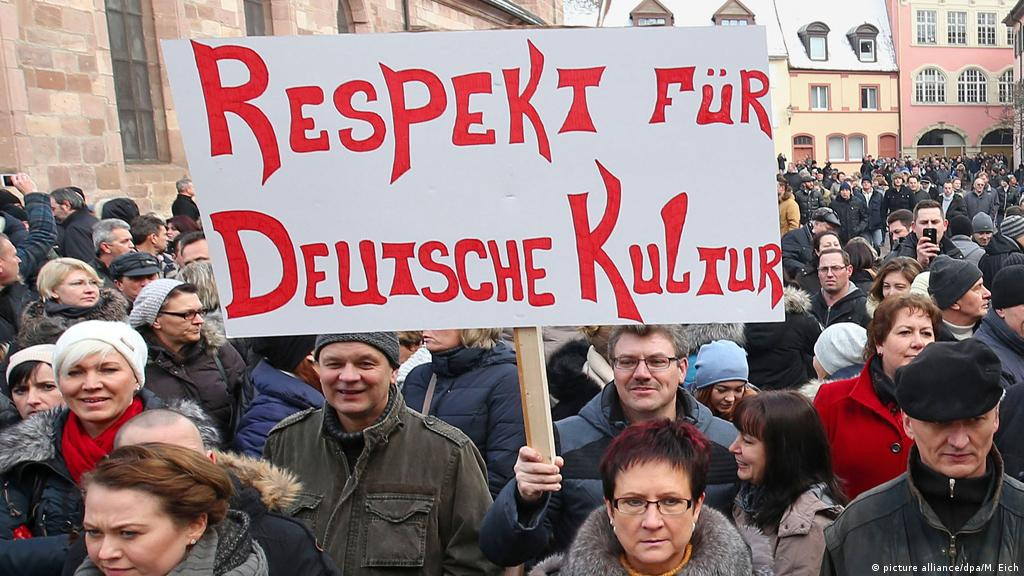
A German man holds up a sign reading “Respect for German Culture” at an AfD rally. Source
The Fidesz Party of Hungary adopted a similar strategy to that of the AfD— filling a void for voters with the promise of problem solving through direct democracy, as well as attacking democratic European institutions interpreted as detrimental to Hungary’s future[2]. Hungary too was subjugated under the Iron Curtain and was even invaded by its former Warsaw Pact allies in 1956[3], which would understandably cause many Hungarians to be weary of supranational institutions. Although a light amount of skepticism can be healthy, the skepticism promoted by Viktor Orban is rooted in antisemitism[4] and strongman authoritarianism that seeks to destroy the EU from the inside. Coincidentally, Orban is a close ally to Vladimir Putin.
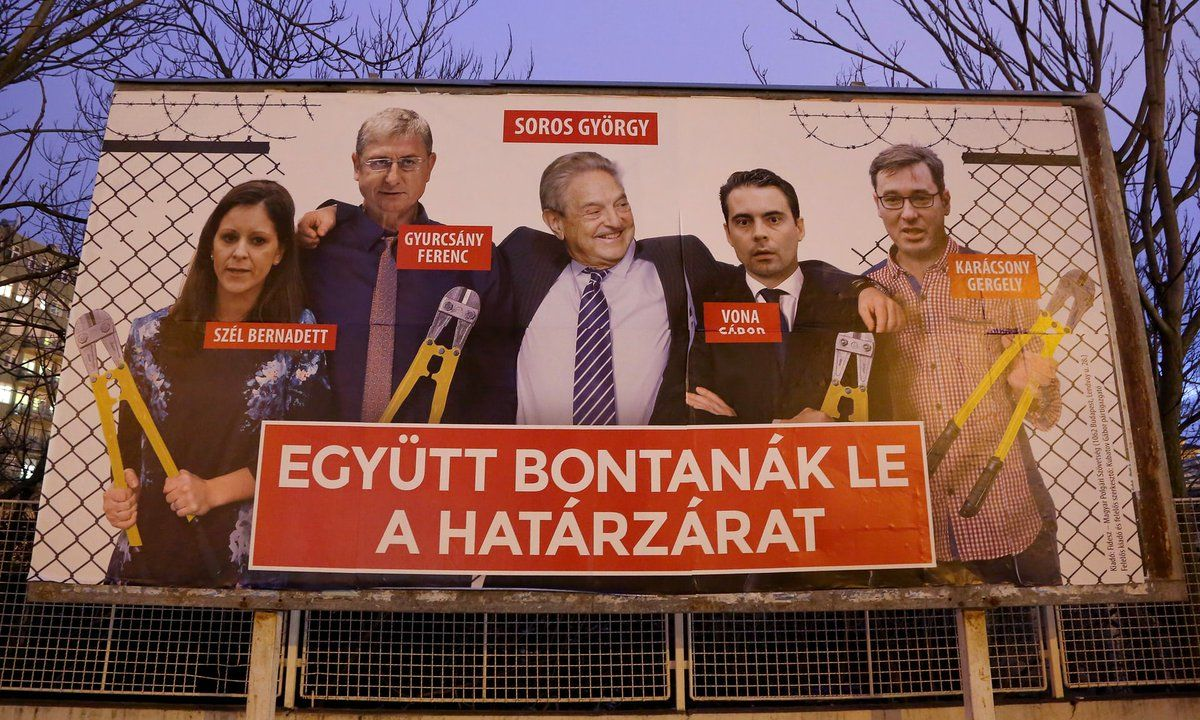
A Fidesz Party poster depicts George Soros and other Orban rivals holding wire cutters, insinuating they will cut the border fence and allow migrants to enter the country.Source
While AfD and Fidesz take advantage of the nostalgic aspects of populism, the Polish Law and Justice Party associates more with its religious aspects. Under Soviet State Atheism, Poland’s majority Christian population was severely repressed. Following the dissolution of the USSR however, this bottled-up religiosity was allowed to run wild; entrenching itself among far-right politicians and used as a tool to demonize the decadent west. Poland’s Law and Justice Party seek a return to Christian tradition and to do away with western degeneracy, such as abortions (which they have banned outright since 2021)[5] and homosexuality (which has been banned in entire regions of the country since 2019)[6].
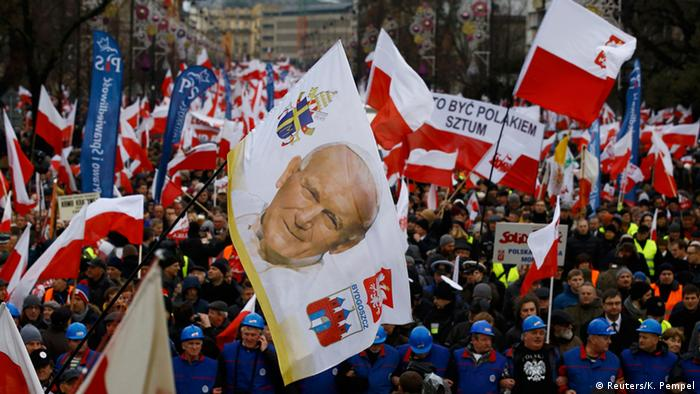
Law and Justice Party supports using religious imagery in support of the party’s controversial judicial reforms. Source
It is apparent that populist parties have their roots in the totalitarianism of the former communist sphere. The USSR laid the foundations for today’s turbulent political climate, which has been exploited by its successor state, Russia, as a means to destabilize the west. This is an issue which must be recognized— if we do not prescribe the accurate antidote for the plague of populism, we will certainly lose this second Cold War we find ourselves in.
The chapter from “German Angst” deals primarily with “New Left” student activism around 1968. It takes as a given that this period of protest was important in the maturation of West German democracy. I find this a satisfying change from last week’s “Not Narrating” piece which discounted the meaning of these times as being about experiment and sensation. A key point made here was that fear drove both the New Left (that they would miss their moment) and the opposing “liberal conservatives” who feared the revolution, and who thus attempted to create general fear of the Left. Fear was all around.
The three pieces on post-war far-right thinkers were all quite absorbing and surprisingly non-contradicting. They showed a concurrence that the far right must wait out the current period of hated liberal democracy (an interregnum), before they can expect their thinking to become dominant. Benoist promoted the “Gramscian” idea that their winning strategy is to aim to gain cultural hegemony. Once done, the way would be clear to “long-term durable power”. This is what we see in the US close-up, manipulated through social media and television.
The New Right is desperate to avoid being tarred with the Nazi brush, or even the fascist one. The Griffin article tries to make the “fascist” label stick – providing a pretty cool core definition for it – however I’m not sure that’s a worthy goal. The origin of the policies is not the point: the aim of them is.
Evola had a common theme: that the meanings of race, gender and class are “cultural and spiritual rather than biological”. This is very convenient for avoiding the racist label, for example. Benoist leverages this in advocating for “cultural” racism – that France should be for the French and Algeria for the Algerians”.
Reading the three articles on the New Right put me into an alternate universe, where progress was regress, up was down. Multiculturalism is bad, the French Revolution, the Enlightenment and the Renaissance were steps backward. Liberal states are totalitarian because they “impose administrative equality”. It’s disorienting and you can see how it can be seductive.
The Biess article provides an interesting start to the others as it covers the New Left but also hints at what appears to be a pipeline between New Left and New Right. Some things to note in the Biess article: the New Left was generally anti-Western as we see their opposition to the United States and Israel, they were utopian and wanted emotion to play a stronger role in society, and they accepted Marx’s Historical Materialism. These three points are how I understand the defection of some of the New Left’s members to the New Right.
Jumping to the Tobin and Griffin articles, some similar traits in the New Right are pointed out. Griffin says that the Nouvell Droite was anti-Western because it viewed Western liberalism and post-Westphalian nationalism as degenerate. Theirs and Julius Evola’s solutions to these problems were certainly utopian, and Evola mourns the death of tradition in terms of secularism overcoming emotion and feeling. Additionally, Tobin notes that Evola was anti-liberal because he viewed it as the step before socialism, which in turn was the step before communism. The ‘inevitable’ transformation of liberal capitalism into socialism and then into communism is very similar to what Marx described as Historical Materialism. Finally, as the Bar-On article says, the Nouvelle Droite used ‘right wing Gramscianism,’ which can be understood as a perversion of Gramscianism, but one that was able to win some support in the left because of its communist roots. With this view, it appears that New Left and New Right identified the same societal issues but came to different conclusions, allowing for crossover and defections between the two. This makes what we read in the Biess article possible.
The Russian invasion of Ukraine has revealed a serious divide among the populists of Europe -a divide which springs from Russia’s relationship with nationalism- and this couldn’t be better for the European Union (EU). The first thing to understand for this argument is that politically radical populism in Europe often correlates with euroscepticism (ie. disapproval of the EU). A political divide among populists, then, would potentially undermine the unity and political power of euroscepticism as well. The EU also faces challenges from uncooperative member states, mainly Poland and Hungary, which always had each other’s backs against liberal EU policies. However, Poland and Hungary have very different opinions on Russia, which they’ve previously been able to work around, but now it’s become impossible for the anti-Russia Poland to ignore Hungary’s pro-Russia-turned-neutral stance.
So, what does this political divide among Europe’s populists look like specifically? On the far right, it appears as one side valuing ‘European identity’ and perceived anti-communism more while the other values anti-globalism more. On the far left, it appears as a more simple East vs. West divide. The divides on both left and right are also deeply related to Russia’s relationship with nationalism and its communist past.
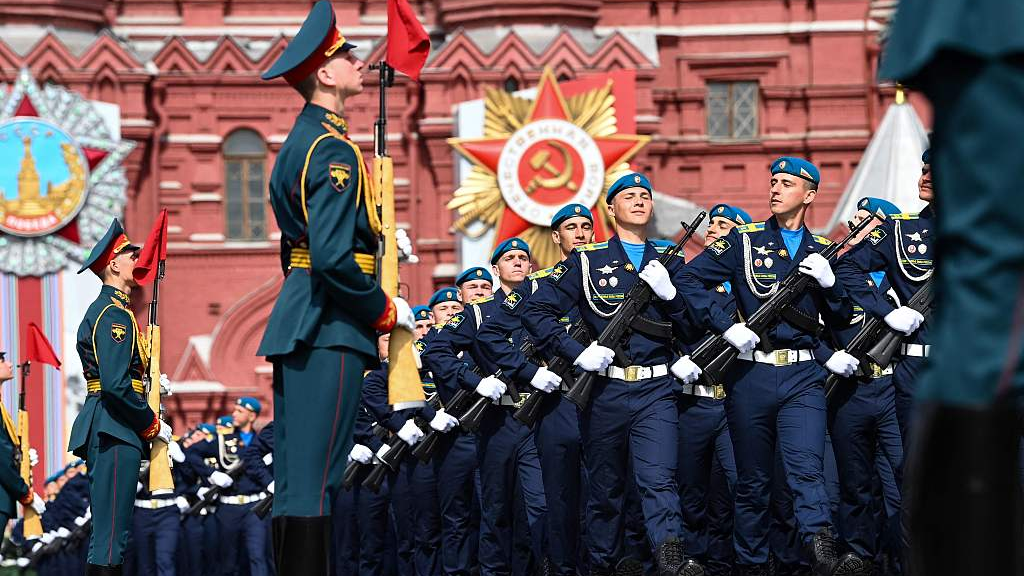
That last one should be explained first. As much as the USSR might have tried to be multicultural through its Policy on Nationalities, it was still formed from the Russian Empire and its Russian identity never went away. Certainly in the Western world, “Russia” and “USSR” were essentially synonyms. After World War Two the Policy on Nationalities was still in effect, but was greatly overshadowed by the dominance of Russian nationalism: Russian was the universal language, Russia was viewed as a ‘big brother,’ and there was a popular perception in the USSR that “the Russian People defeated the Germans.” This was the moment that Soviet identity shifted from Marxism to Russian nationalism, and from working class heroes to Russian heroes. We can still see this intimate mixture of Soviet identity and Russian nationalism in modern Russia, notably with the Soviet-imagery-filled Victory Day parades put on by Putin’s regime.
With this view of Soviet history, the divide on the far left is quite understandable: one faction is loyal to the USSR and views modern anti-Western Russian nationalism as the successor to the USSR’s anti-Western Russian nationalism, while the other is loyal to Marxism and views Russian nationalism as a force corrupting Marxism. A good example is Germany’s The Left party, which is on the verge of splitting between more Western and more anti-Western factions on the issue of Russia. Similarly, France’s old-school, anti-Western socialist Jean-Luc Mélenchon has received significant pushback from more modern leftists on his positive views on Putin.
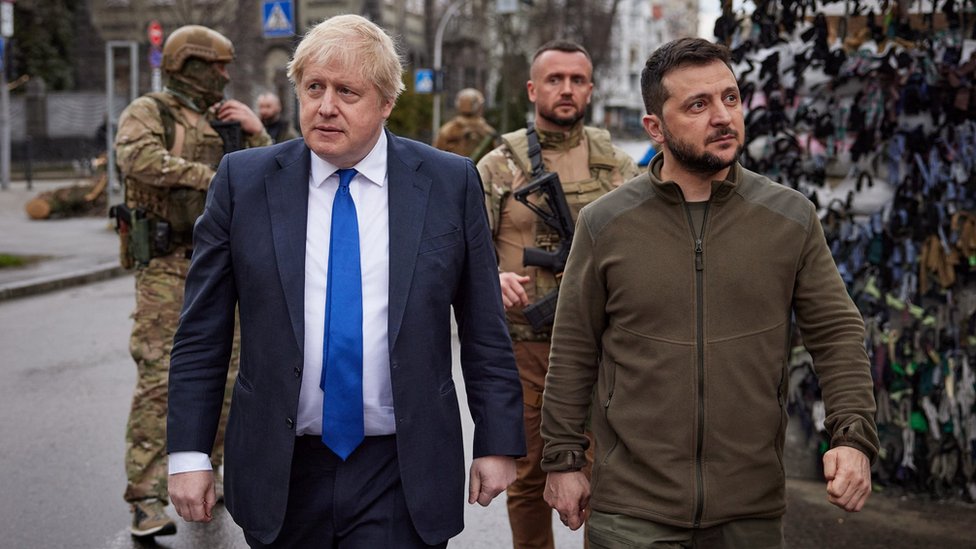
Returning to the populist far right, we can see a slightly more complicated divide arising from this view of Soviet history. There’s the anti-globalists who associate Russia’s anti-Westernism with anti-liberalism and anti-globalism, contrasted with those who fearfully view the continuation of Russian nationalism as neo-Sovietism and anti-Europeanism. Just like their far left populist counterparts, the far right populist Alternative for Germany is showing major cracks between the anti-globalist and anti-Russian factions. On a slightly different note, France’s far right populist Marine Le Pen, long known for her anti-globalist euroscepticism, has only recently walked back her support for Russia. Giorgia Meloni, Italy’s new Prime Minister, did the same, although her partners in government, Matteo Salvini and Silvio Berlusconi, have been more reluctant. And the UK, even though it’s no longer in the EU, has a similar divide between former Brexit allies Boris Johnson (anti-Russia) and Nigel Farage (previously pro-Russia, now neutral). On the other, firmly anti-Russia side, there is of course Poland as well as the far right populist movements in Sweden, Spain, and Portugal. These far right populists sharply contrast with Putin’s far right populist friends in other governments like Hungary.
Ukrainian President Volodymyr Zelensky and former UK Prime Minister Boris Johnson walking together in Kyiv. Source: https://www.bbc.com/news/uk-61052643
What we can gather from all this is that radical eurosceptic populists are now divided along the lines explained above. Currently, those who were previously viewed in the post-Brexit chaos as constituting a major threat to the EU now appear too preoccupied walking on eggshells around Russia to be a serious threat. They can no longer put up a united front against the EU, which has serious potential for helping the EU to flourish. Russia’s invasion has also forced many radical eurosceptic populists to re-evaluate their beliefs, as we’ve seen.


 Hate 2.0
You must be logged in to post a comment.