Is George Soros really responsible?

Adam Paquin

This week had some really interesting topics from antisemitism to islamophobia and of course it always leads back somehow to Nazism. But until this week I had never heard about this man named George Soros who is apparently responsible for everything that is bad in the world at least in Europe. And the Kalmar article goes further in depth as to how Soros main goal is to destroy life as we know it in Europe and how he has his hand in almost anything negative that has happened in the past several years. The article written by Ezgi Guner has a somewhat lighter topic focusing on the difference between white and black Turks in Turkey. And the major differences between these two groups that have been living simultaneously in the country. Guner describes the thoughts around many Turkish citizens and their thoughts on these terms of black and white. Which in Turkey not only seems very different than many other countries but not necessarily in a bad way but more so in a step forward for equality in the country. And then we look at the Stone article and read about the EU’s unwillingness to accept refugees from the Middle East and ask questions as to why this might be. As we have seen in the past, they were more than willing to accept them after the Second World War so why not now? What are the reasons behind the EU’s reluctance to take in people who are stranded after their homes are ravaged by war and famine?

The Years of Lead: the First Republic is put to the test [BLOG POST 1]

jacobbraungins's avatarThe Plague of Populism

By Jacob Braun

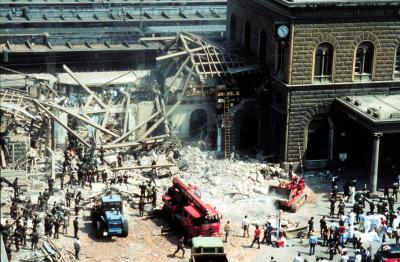
A Photo of the Aftermath of the Bologna Massacre, Beppe Briguglio, via WikiMedia Commons Attribution-Share Alike 4.0 International license

The Years of Lead (Anni di Piombo) began with the Hot Autumn strikes of 1969, where massive amounts of workers joined students protesting for social reforms in a similar fashion to the May 1968 demonstrations in France. Violence from both left- and right-wing sources would emerge, and for 15 terrible years the internal cohesion of the Italian First Republic was truly put to the test. This blog post looks to answer: is its failure what set us in motion to where we are now in 2022?

HISTORIC COMPROMISE AND SIFAR

In efforts to avoid an economic collapse following the Hot Autumn, the Christian Democratic Party reached out in a historical compromise (compromesso storico) with the Communist Party. With the tensions of the ongoing…

View original post 277 more words

Fascism and European Anti-Abortion Sentiment, is there a Plausible Connection?

Megan MacRae


While Democrats in the United States fight to keep women and their bodies protected from the hands of grimy Republican white men, women and pro-choice advocates in various countries across Europe may feel that the current affairs in America hit a little too close to home. 

Since Poland’s complete ban on abortions in 2020, pro-choice advocates have been discretely working to offer crucial medical services to women in need. This has led to the current trial of Justyna Wydrzynska. Wydrzynska, one of the founders of the Polish group Aborcyjny Dream Team (ADT), is currently at trial after being accused of illegally assisting a woman with an abortion. Wydrzynska allegedly provided pills to a woman in an effort to induce a miscarriage. Although the trial has been adjourned until January, Wydrzynska’s circumstance is a grim reminder of the obstacles that women in Poland face when they try to defend their bodily rights. Specifically, these dismal prompts can be traced back to the aggressive misogyny that has been present in Europe throughout history. 

When working to understand the roots behind European abortion bans and these violent forms of control over women’s bodies, a significant amount of scrutiny should be placed at the hands of fascism and its misogynistic ideals. It is understood that fascism is obsessed with control and aggression towards the ‘other’. More specifically, we should consider that it is most often governments and political figureheads that use fascism to impose control. It would be be drastic to consider every individual person who opposes abortion to be a fascist. However, when we see these massive institutions imposing aggression against minority groups, this extreme abuse of authority can be considered a fascist act. Whether this is with restrictive voting laws that diminish the voice of racial minorities, or abortion bans that force women to help boost birth rates, fascism leaves an impression on each radical gesture imposed by the far right authorities. In Poland, this has enabled the country’s government to ban abortion and take egregious action against women who go against this restraint. Fascism is an extremely intricate subject as there are multiple definitions attached to it. However, when it comes to connecting the concept with anti-abortion sentiment, we see that fascism is continuously used by powerful institutions to control women, their sexual identities, and their bodily rights.

Turning away from Poland and towards Southern Europe, we see that with the election of Italy’s new prime minister, Giorgia Meloni, fascist rhetoric seems to have brought with it conversations surrounding future restrictions on abortions. Meloni has openly voiced her desire to limit abortion access and represents the Brothers of Italy party which desires to place a ban on abortions in general. Along with this, the party is also against permitting Italian citizenship to children born to non-Italian parents. Not only is the Brothers of Italy party actively working to restrict the number of Italian citizens, but the group is also pushing to provide benefits to Italian women who give birth. These efforts are considered by some to be a repeat of Benito Mussolini’s ‘Battle for Births‘ campaign. Mussolini is known for his historical fascist rhetoric and aggressive actions against non-Italian citizens during the 1920s to 1940s. Specifically, Mussolini’s ‘Battle for Births’ policy actively worked to eliminate non-white foreigners in Italy while promoting the birth of children with ‘true’ Italian blood. This policy goes hand-in-hand with fascism as it works to uphold the privilege and power of Italian nationality while reducing the importance and social position of non-white foreigners. Even more specifically, the policy was implemented by the government to control the bodies and actions of women. Therefore, it is alarming to see a new Italian party echoing the actions of Mussolini and his administration.

Although the impact of fascism on anti-abortion sentiment may be stronger in some countries compared to others, the history of fascism in Europe proves to still impact right-wing aggression today, even if minimal at times. This aggression has clearly played out through anti-abortion rhetoric across different countries in Europe. Although it may seem drastic to blame anti-abortion on fascist thought, it can be argued that when massive governments and political figureheads work to oppress racial and gender minority groups, this is an explicit act of fascism.

A shifting perspective on racism in post-war Germany

By: Cyrus Hutnyk

This week’s reading by Christopher A. Molnar, “Greetings from the apocalypse” was especially provocative and interesting for me, to take a look at the ethical and moral challenges that the nation faced in the wake of its horrible leadership offers a unique perspective into the process necessary to reestablish itself and make some sort of amends and improvements. Looking at things like migration, antisemitism, race, and how democracy was impactful in Germany are all pieces of the process that the new German leadership had to face and employ. This reading went into the changes in Germany over two decades, and especially highlighted changes in perception as it related to the aforementioned topics.

The author of this week’s reading allows for a greater understanding of different kinds of racism that was occurring, both in culture and biology and how they moved from one to the other. Equally we can see how perceptions and attitudes concerning certain subjects shifted over time. Molnar demonstrates that the racism post war was radically different from that under Nazi reign, having more to do with differences in culture and behaviour rather than coming from a biological or eugenics standpoint. Interestingly, Molnar’s writing shows us that foreign presence in Germany was still a contentious subject, sparking discomfort still. Understanding the differences in public opinion and the presence of racism in Germany in the post-war period shows us a concerning image of a nation on the back of genocide and tremendously harsh and oppressive rule. Though the sentiments are drastically different from those under Nazism, the conversation concerning racism is a dangerous one in a nation with a history like Germany’s. Some of the legislation and financial efforts or decisions in the post war period generate a sense of unease given the past behaviours of the German government.

Migration and the end of the Cold War

By Blaise Rego

The idea that Europe changed massively 1989 is no shock to anyone. This year was the triggered the collapse of what once was the competing lead world power, the Soviet Union. Revolution’s across the eastern bloc overthrew communist leaders and helped establish shaky new governments that altered the power balance of the European sphere.

New governments being established across Europe meant new ideas and political sensibilities began to govern in places that had stagnant policies towards many of the problems that plague modern Europe. This is clearly seen in the issue surrounding migration in europe. The collapse of communist regimes, releasing of the steel curtain and troubles across Southern Europe (the balkans) and Africa massively increased the migration to Eastern Europe. Migration to eastern Europe was not met with enthusiasm as economic issues troubled many of the post Soviet states. States like Hungary were forced into “shock doctrine” neoliberal economic policies that massively hurts their economy resulting in social unrest towards the government.

A societal base that is unhappy with the government, is dealing with internal political/economic issues, and external issues (migration) is fertile grounds for the growth of extremist ideas such as neo-fascism. These fertile grounds have allowed for political parties such as “Fidesz” in Hungary to blossom into the leading political organization in the country. Fidesz and Vitkor Orban have allowed for Hungry’s slow slide towards an “illiberal democracy” a term coined by Orban himself. These readings have shown how a series of events can have massive ripple on affects if there are external forces at play that shift how the events affect the world.

Racism in Germany

Megan MacRae

When reviewing how Europe, Germany in particular, treated migration, race, and democratization during the last two decades, a significant piece of information to explore is the change in perceptions around racism. This week’s readings, especially the piece from Christopher A. Molnar, illustrate the moral challenges Germany experienced after World War II.

What struck me most from this week’s material was the conversation surrounding a shift in Germany from biological racism, to cultural racism. Molnar does a significant job at highlighting how Germany’s perceptions towards race, migration, and democratization stemmed from a shift in racist attitudes among Germans. Molnar explains that unlike the racism that was prevalent in the Third Reich, postwar Germany experienced a racism that was based on cultural differences, rather than divergences between bloodlines. Among the various letters explored in the article, there were also government actions to limit the number of foreigners in the postwar country. Either through legislation, or financial efforts, it was clear that rise in foreigners living in the country made many Germans feel unsafe. This led some to believe that if Germany was to remain occupied by foreigners, the nation would collapse and a civil war could breakout, causing mass murder and extreme chaos. 

What I find most concerning about these apocalyptic thoughts is that they are born from a nation that had just reunified after a history of horror and death. I understand that the type of racism present in 1990’s Germany was different than the racism enforced by the Nazi’s, but I would have thought that a country, which had just been torn apart by racism in general, would have worked to avoid the same type of laws and belief systems that caused the country to collapse 50 years prior. I believe that I am over-simplifying the situation, but it is just something that came to mind after I finished the reading. 

Cutting Off Russia from the World Op Ed # 2

By: Adam Paquin

In the past several months since Russia’s invasion on Ukraine, many countries across the world have begun cutting ties with Russia and refusing to purchase several commodities as well as oil. All of this in a hope to damage the Russian economy, slow down their flow of military funds and support Ukraine in these unprecedented times. From a far, this seemed to be an easy task as most thought that Russia was only good for exporting oil and gas, but in fact they are also massive suppliers of precious metals as well. Russia is the world’s largest producer of Palladium which is used in many electronics and cars. And they are also the world’s second largest producer of platinum which is used in jewelry and many medical devices. They are also major producers of gold, aluminum, and nickel.

In the eyes of the rest of the world this is their first step in an attempt to put Russia economy and their development several decades. As over the past few decades we as a complete human race have discovered that working as a whole world speeds up development of knowledge and technology. If Russia as a country was no longer part of this international development, they would have to create many of their own internal domestic technology and technology firms all from scratch. Now this comes with many advantages and disadvantages for not only European countries but for the Unites States as well. Let’s say that Russia never existed, and Europe ended right at the edge of Finland, Ukraine, Kazakhstan and China who would the United States have to fight with in an arms race. Would the United States be where they are now if not for their cold war with Russia during the late 20th century. Would Germany have won previous wars against Europe if Russia had not been involved. Russia although in modern times is not a part of NATO and may seem like a foreign place to outsiders. The country has been a major player in the history books, and I am sure would impact the lives of everyone if one day in the near future is cut off from the rest of the western world.

I am sure that the world would find the ability to replace Russian resources eventually if we lost them completely, but we would certainly struggle until we replaced them. As we are already seeing gas prices are rising drastically all over the world, and this is just the beginning. Some countries such as Germany, who rely on Russian gas much more than other countries. People would freeze to death in the winter months if cut off from natural gas instantly and completely. Nickel prices rising astronomically in London on the London Metal Exchange which forced a shut down for over a week. And the car industry and vehicle prices would also climb to unprecedented levels until we were able to find another source of palladium to supply the world.

 So now we need to ask ourselves who is being hurt more by the sanctions placed on Russia them or us, and if the answer is them does Putin really care enough to put an end to this war in order to restore his countries reputation with the world. But if the answer is us, is there any alternative to show our support for Ukraine? Either than starting World War Three, do we continue to aid Ukraine in sending military equipment and continue this outrageous war that Russia has started. Or do we stop helping Ukraine and let them fall to the hands of Putin, all of these questions have been on the minds of Members of NATO for the past several months and have put many countries aside from Russia and Ukraine in a very tough moral dilemma. I for one am more curious as to what will happen once this war comes to an end. Will all be forgiven as if it never happened or will Europe and the rest of the world put Putin on trial for his war crimes along with many of his military leaders who supported some of the travesties that have happened to innocent Ukrainian civilians.

A Similar Story So Far…

By: Hannah Long

Neo-facism extends itself to many sentiments revolving with an ultranationalist outlook. It seeks to continue the narrative facism during its role in WWll, while transitioning its tactics to almost catch up in a sense with the then ever changing European political sphere. A past that in the hyperallergic article likes to point out isn’t exactly the past as there is a steady progression from the 1960s and 1970s to conceal or ignore rising neo facism. Each of the readings describe that while the major and blatant characteristics of facism have disappeared they have only been replaced by more subversive concepts by parties to get their message across, they find other ways such as appealing to the working class using terms then and even now like “shared values.” In the beginning neofascist movements were appealing to those who were angry (although that aspect has still remained)-at Europe’s departure from fascist ideology, the idea that this was no longer deemed acceptable and was being replaced with a suspicious and in their eyes week democratic system provided all the necessary tools to build up hateful attacks. Fast forwarding to the present day and not much has changed, the two major departures that can be seen across all European societies is the growing number of women at the forefront of extreme right wing parties and a discrepancy between government and the population. Both of which are factors of a population who feel left behind by their democratic counterparts, to the point where democracy seems as if it is actively working against the native (namely white) inhabitants. 

Sources:

Angelique Chrisafis, “From Le Pen to Alice Weidel: How the European far-right set its sight on women” The Guardian January 29, 2019

Charlie Jarvis, “Milan Museum Commemorates Fascist Past at Expense of the Present” Hyperallergic (August 2, 2021),

Grant Amyot, “The Shadow of Fascism over the Italian Republic,” Human Affairs 21, no. 1 (2011): 35–43

Fascism but not Fascist at the same time

By Adam Paquin

The articles for this week really stood out because although we have seen plenty of radical far right movements not only in this class thus far but in general that is what is portrayed by the media. In the Jarvis article we see another picture, one of a far-left radicalism. One that is even capable of extreme terrorism and fascism ideals. And with the Ruth article we got to see another side of history, one centered around women and their voices during these ruthless times. We got to hear about women and their struggle to find their voices in a vastly male centric world. The articles from this week seemed to flow really well together as they all showed different but similar sides of fascist regimes attempting to portray themselves as not being so. And this ties very well into one of our discussions from a previous week in which we see ourselves talking about Fascist leaders always stating how they are in fact not fascist. How they are not racist while at the same time shouting racist comments and spreading racism throughout their campaigns. And we certainly get a good view of this in the Jarvis article, which is centered around multiple bombings that happened in Milan. Bombings that were produced by far-right extremists but were certainly not terrorist related. And as shown throughout the article virtually no actions were taken to prevent these or punish any perpetrators. Which again sounds like things we have already spoken about in other cases from this course.  

Giorgia Meloni; New face, same regime

Megan MacRae

Unlike what some may think after skimming the recent headlines of popular news outlets, the election of Giorgia Meloni as Italy’s first woman prime minister is not a step forward for feminism or girl power. Rather, Meloni represents a hard-right wing belief system that is anti-LGBTQ, anti-immigration, and, despite Meloni’s personal statements, seemingly pro-fascist. 

Meloni is the leader of the far-right Brothers of Italy party, or in Italian, Fratelli d’Italia. This nationalist party does little to hide the fact that they are outright anti-LGBTQ and hope to boost the Italian population through blocking abortions and ‘illegal’ immigration. Meloni helped establish the Brothers of Italy party in 2012 by shaping it to look like the National Alliance, but more nationalistic, Christian, and conservative. The National Alliance was birthed during the post-World War II Italian Social Movement and was influenced by Benito Mussolini’s fascist ideals. 

The fact that Meloni not only leads the Brothers of Italy party, but worked to establish it and shape it after a party that was founded by Mussolini supporters, makes it hard to believe her when she claims that she is an anti-fascist. Meloni has continued to contradict herself when it comes to discussions surrounding the infamous Russian president, Vladimir Putin. After Putin secured his presidency in 2018, Meloni publicly applauded him and showed her support for the autocrat. This sparked fear amongst NATO and Ukrainian allies that the sanctions against Russia which were established by Italy’s previous prime minister, Mario Draghi, would be demolished by Meloni and her government. However, when Putin invaded the Ukraine, Meloni put on a front and expressed her disproval of the president’s actions while assuring Italian voters that she would equip the Ukrainian military with weapons. Meloni’s ‘reassurance’ should be taken with a grain of salt as she has yet to take substantive action to prove that she truly is pro-Ukraine and anti-fascism. It is also incredibly difficult to believe that a politician who represents a neo-Nazi party will suddenly abandon her and her party’s core beliefs now that they have secured a win in the election. 

Meloni’s recent take on the actions of Putin can be considered a part of her strategy to appear more moderate than she truly is. Despite the fact that Meloni and her party are hard-right extremists, they are clearly aware that publicly defending this stance would cause more harm than good. Not only would Meloni divide herself from the left wing and even moderate right-wing followers, but she would face harsh criticism from politicians, journalists, and intellectuals around the globe. The efforts of Meloni to conceal her true political agenda could be considered intelligent by some, but conniving by others.

In recent years, Meloni has been compared to former United States president, Donald Trump. Despite the fact that Trump did not even try to obscure his political agenda and beliefs when running for office, there still remain similarities between the two right-wing extremists. Both Trump and Meloni refuse to accept transgender ideology as they are each stuck in their conservative, Christian ways. For Meloni, this ignorance plays out in her nationalist agenda which works to grow the Italian population by encouraging women to give birth and continue the Italian blood line. This eerily resembles Mussolini’s agenda which also worked to establish Italian dominancy through growth of the Italian empire. Like Mussolini, Meloni is clearly anti-immigration because she is looking to construct a nation that is ‘pure’ with Italian blood. Again, Meloni’s stance on gender ideology and the ‘traditional’ family makes it difficult to believe that she is unlike her fascist predecessor.

One common trend that continues to cloud around the various headlines is that Meloni is initiating a radical hard-right shift. Although Meloni and her party are radical in their political agenda, their efforts portray a direct continuation rather than a so-called ‘shift’. It was evident in the United States, and now Italy is experiencing the same phenomenon. These hard-right extremists have been around before and after the fall of Mussolini. However, there were few popular politicians who were willing to publicly take a divisive stance like the one Meloni and her party have currently adopted. Therefore, just because fascists have not been under the public eye similarly to how Meloni is right now, this does not mean that fascism had been completely wiped out after World War II. 

  1. Italy’s far-right coalition dominates in polls – The Globe and Mail
  2. Italian right-wing coalition set for majority – The Globe and Mail