Creative Liberties and their Implications

By Felix Nicol

In this week’s readings, a question stayed with me, shaping my interpretation of the readings. I wondered: to what extent is the reinterpretation and narrative-shaping present in recounting the past useful or perhaps instead counterproductive in molding our understanding of the past. As underlined in Fulbrook’s chapter Bearing the Voices of Victims, first-person accounts were often accompanied with information added by professionals to add context and perhaps give a more unbiased and “accurate” view of victims (371). It is understandable that some form of editing is necessary, as these accounts, usually recounted years after the fact, are likely to contain information warped through a post-war perception. However, on the other hand, the amazement of readers surprised by the objectivity of a victim whose work had been intertwined with a ghost-writer’s analysis as explored by Fulbrook provides problematic interpretation in the other direction (373). In this regard, there is a danger to be seen in the views of a general public who may have false understanding of the past due to objective information of a third party placed in the recountings of a primary source.

Moeller’s analysis of Kramer’s Judgment at Nuremberg underlines similar problems with the creative liberties taken in improving storytelling. Moeller explores this problem through the perspective of the American and German critics, the former of which glossed over the false recountings of the past, rather interpreting German criticism as proof that the German public was not willing to accept its past (510.) Without going into details, the use of Salomon’s work as a primary work of understanding Fragebogen explored by Sollors looks at the irony of his criticism of the survey without having submitted one himself (149). In both of these examples, though I do see merit in using creative liberties to ensure interesting work which allows a work to gain popularity, I feel we need to be careful not to create false perspectives of the past, especially towards readers and watchers who may not have the means and or the interest to inform themselves further on the subject.

Sources:

Mary Fulbrook, “Discomfort Zones” and “Voices of the Victims” in Reckonings: Legacies of Nazi Persecution and the Quest for Justice (Oxford University Press, 2018), pp: 314-336, 361-377.

Robert Moeller, “How to Judge Stanley Kramer’s Judgement at Nuremberg” German History Vol. 31, Issue 4 (December 2013): 497-522.

W. Sollors, “Everybody Gets Fragebogened Sooner or Later’: The Denazification Questionnaire as Cultural Text.” German Life & Letters. Vol 71, Issue 2 (2018): 139-153.
Experimentation in Popular Culture

By Kaileigh La Belle

Concerning major political shifts, I had often thought of them through institutionalized (often linear) processes. However, the source material consistently used in these articles was predominately popular culture, from Trial At Nuremberg (1961), analyzed in Moller’s work, to the numerous popular autobiography and novels highlighted in Sollor’s work. As such, I found Häberlen’s argument that popular portrayals of politics were a form of experimentation intriguing and it prompted me to consider how this theory might be relevant to this week’s other readings. 

In considering the qualities of this experimentation, Häberlen drew heavily on the idea of non-temporal narratives. I saw a similarity in Fullbrook’s chapter “Discomfort Zones” that highlights how these narratives, while certainly not severed from temporal contexts, are defined by personal experimentations with moral self-distancing and composure that ebbs and flows. Throughout “Discomfort Zones” Fullbrook provides numerous examples of how individuals played with the line between guilt and ignorance and that addressing their Nazi past was not a linear path. Furthermore, in considering what makes popular culture such an attractive space for experimentation, the idea that fiction can simplify the discussion and simultaneously can have a dramatic impact on how people see themselves and the world around them seems central. In his analysis of Trial at Nuremberg, Moeller examines how the directors and producers paid particular attention to what was applicable to their (mostly American) context and perspective and highlighted certain themes that they felt needed to be digested, namely how to address and avoid Nazi violence. As such, the fictional elements allow for experimentation in conceptualizing and measuring hatred, making parallels between American state oppression and Nazi violence. 

Ultimately, Häberlen introduces a very valuable concept which highlighted the various ways in which political shifts can be studied. In placing greater emphasis on intense emotions and lack of structure, we can see how people tried to conceptualize denazification on a more personal level. In applying Häberlen’s argument to this week’s other readings, it became obvious to me that denazification was a complicated and broad process, and, perhaps, one with no definitive end. 

Work cited: 

Fulbrook, Mary. “Discomfort Zones” and “Voices of the Victims.” In Reckonings: Legacies of Nazi Persecution and the Quest for Justice, 314-336, 361-377. Oxford University Press, 2018.

Häberlen, Joachim. “(Not) Narrating the History of the Federal Republic: Reflections on the Place of the New Left in West German History and Historiography.” Central European History Vol. 52, Issue 1 (March 2019): 107-124.

Sollors, W.“Everybody Gets Fragebogened Sooner or Later’: The Denazification Questionnaire as Cultural Text.” German Life & Letters. Vol 71, Issue 2 (2018): 139-153.

Denazification

By: Adam Paquin

The readings for this week bring up many interesting insights into Germany after the second world war. And although we see from the Fullbrook article that many of the German citizens during the war were simply bystanders that did not stand up for fear of being prosecuted themselves. This would bring up many questions about the everyday German citizen and one of the ways in which the west attempted to find the ones that did in fact participate with Hitler’s regime was shown in the Sollors article about the Nazi Questionnaire. Although it may have not been one hundred percent accurate, it showed that the western countries did in fact want to prosecute those in charge of any Nazi crimes committed during the war.

As to be expected not everyone was actually innocent in Germany and although many people did not agree with many of the Nazi regime and its laws. There was in fact a large portion that did and were now trying to hide in plain sight. In the Moeller article he goes in depth on many of the Nuremberg trials and explains how several of the former Nazi leaders now faced the American court system and the death penalty for their crimes. It was a particularly insightful article as it showed us the post war ramifications that would occur for the known leaders of the Nazi regime.  And one part that surprised me when reading this was how the media even went out of their way to prevent any ads being sent over the airways. Ones specifically for the sale of gas stoves, as this could potentially trigger remind the country about the atrocities that happened in Germany during the war.  

Strategic Amnesia by Aimee Brown

Coming to terms with the past in postwar West Germany was impossible until at least the seventies because the past was not really past. In fact, the way in which perpetrators and survivors were treated did not shift in favor of the latter until it was not overly inconvenient for it to do so. In regards to perpetrators, especially those of the right class, the kid gloves of the legal establishment remained resolutely on. This was because, despite the mass application of the despised Fragebogen, the establishment after the war was much the same as before and during, and until it generationally changed, ranks would continue to be closed. For example, Mary Fulbrook describes how, years after the war’s end, judges “could still appear to have more sympathy with former Nazis than with their victims” (323). The extreme leniency of the West German system when dealing with mass murderers was especially apparent when compared to East Germany where legal proceedings were swift and even low ranking perpetrators who expressed remorse could expect life imprisonment or death. In contrast, under the West German legal system, only those who went beyond what was officially required of them under Nazi rule were judged murderous, and therefore the murderous system of rule was not itself explicitly judged. Unlike East Germany, West Germany was uncomfortable with systemic indictment because the system had not been entirely dismantled to the extent that former Nazis continued to occupy positions of power. In regards to victims, they only began to gain the attention of the culture after their need for concrete material assistance had passed. As Fulbrook explains, “their public image was transformed from the initial state of diminution – the wretched, disease ridden, and dependant creatures who were widely seen as unwelcome burdens immediately after the war – to the more heroic status of ‘survivors’” (369). Victims were only heroized after it was convenient to do so, after they had stopped being needy refugees. Robert Moeller’s article on “Judgement at Nuremberg” describes how the German past could be used to talk about the American present. The past can indeed be useful, but sometimes it needs to be strategically forgotten until it truly is no longer the present.    

Coming to terms

By Jim Dagg

From “Discomfort Zone” we know that most Germans were insistent that they didn’t “really” know what was going on in the death camps. Marianne B’s memoir shows the conflict between pride at her achievements, and willful blindness to what was going on. People did this to save their own self-image and sanity for the rest of their lives.

In both “Hearing Voices” and “Judgment” we see that the West was keen to find and prosecute leading figures in the late forties. By the early 50s, West German were focusing more on their own suffering and re-building. In the late 50s, they developed a new desire to examine the guilt of the German people for the Nazi era. This was prompted partly by a high-profile trial of a “mobile killing squad”. Willie Brandt’s speeches emphasized that shame and guilt were appropriate.

The “Fragebogen” article shows how the 131-item questionnaire could never be up to the task. But was there an alternative? None comes to hand. Its use in literature helped show its weakness at subtlety. There was no “why” around choices that individuals made in the Nazi era. Filtering was necessary and this tool was chosen. The idea may have come from Germans (Marxists!) working in the Office of Strategic Services. Considering the level of intrusion and stress caused by the survey, how well were the results used? We know from “Judgment” that many Nazi judges sat on the courts.

“Not Narrating” argues that informal self-emancipation groups were experimenting, and not trying to drive democratic change. Such groups in fact produced their own internal tyranny.  Rather than driving change, activist groups were interested only in the rush of the moment, which had to be genuine, and non-planned.

Reconciliation

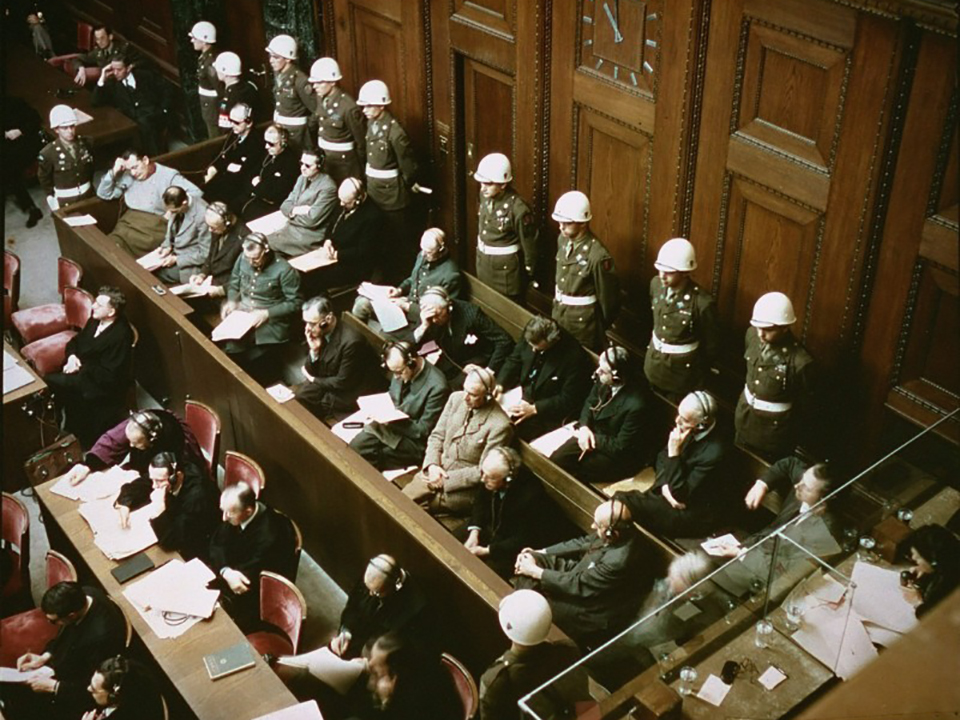
Post-war Germany was certainly a mess to say the least. It was a country that was torn apart by the great powers, with new governments established on both sides. The economy was in shambles, and reconciling with its past actions during the war would not prove to be an easy task. As mentioned by Fulbrook regarding the Zimmerman trial, Zimmerman was very upfront regarding his actions and tasks he was assigned pertaining to the liquidation of the Jews. He did not bear any concern with incriminating himself, and clearly wanted to no longer bear the weight of those actions. (Fulbrook, 316) What is interesting here is that we look at this situation and many of the other situations faced by other Germans involved in the killings, and see how complex these situations really are. While he was indeed directly involved in the carrying out of the killings, evidence points to him potentially enjoying the authority early on, but then slowly becoming uncomfortable with the more serious actions carried out later on. On top of this he made it clear that he did not drink alcohol to make the killings easier on him due to it being forbidden by superiors. The fear of being punished took precedence over the suffering of others. (Fulbrook, 317) Protecting ourselves from punishment is a natural human instinct, If we have to make others suffer in order to prevent ourselves from suffering, more often than not we will take that trade off. It’s sad to say but humans are a sad bunch. On a separate note, I would like to highlight a point made by Moeller regarding the film Judgement at Nuremburg. “When in the closing courtroom scene, Haywood reflects on the crimes the defendants have committed—‘The sterilization of men because of their political beliefs . . . A mockery made out of friendship and faith’—he is quick to admit ‘how easily it can happen’ and to add that ‘there are those in our own country today, too, who speak of the protection of country. Of survival’. But, he goes on, ‘Survival as what?’” (Moeller, 520) This quote causes me to beg the question, how can someone reconcile with the fact that they are “sterilizing” an entire religion, race, etc. What are the reasons for why anyone can believe in something like “its a matter of survival for the Arian race”?

Image from https://www.nationalww2museum.org/war/articles/the-nuremberg-trial-and-its-legacy

Readings used:

Mary Fulbrook, “Discomfort Zones” and “Voices of the Victims” in Reckonings: Legacies of Nazi Persecution and the Quest for Justice (Oxford University Press, 2018), p. 316.

Robert Moeller, “How to Judge Stanley Kramer’s Judgement at Nuremberg” German History Vol. 31, Issue 4 (December 2013): p. 520.

Guilt

Owen Billo

The denazification questionnaires from the Everybody Gets Fragebogened Sooner or Later article raise a question that I want to use the other articles from this week to explore: how do we qualify guilt? We already know that the American occupation authority used 131 questions to answer this, but of course this was not effective. Its true ineffectiveness becomes even more clear upon considering the Hearing the Voices of the Victims article, where it points out that non-Jewish Holocaust victims were often still stigmatized and oppressed long after the end of the war. Evidently, Nazi beliefs against these groups were not stamped out by denazification. The Discomfort Zones article further proves this observation, as it notes the flaws in Germans’ excuses for not knowing. In the case of Marianne B., the Holocaust was just down the road, but she -along with many other Germans- exercised willful ignorance despite incredibly obvious signs. She would not be criminally guilty, but she is morally guilty.

The article on Stanley Kramer’s Judgement at Nuremberg goes beyond German guilt, but then also returns to it. Moeller’s theory (which I agree with) is that Kramer was using the film as a way to hold up a mirror to America’s own sins by focusing on victims that could just as easily be victims of American McCarthyism or segregation. Kramer was using German guilt to illicit American guilt. However, this approach also contributed to reducing German feelings of guilt and emboldening the Nazi sympathizers that denazification had failed to get rid of. In that way, Kramer himself became a guilty part of German guilt. Not criminally guilty by any stretch, but, perhaps like Marianne B., morally guilty. In the end, I think the difference between moral guilt and criminal guilt is the best way to qualify and understand guilt.

Willful Ignorance in the Far-Right

By Liam McCrorie

One of the main facets of Far-Right political groups is their ability to pick and choose facts which help support them while dismissing the more unappealing aspects of a Fascist regime. In many of this week’s sources people are shown to be drawn to these Fascist groups, and we see they are drawn to these groups for a wide variety of reasons.

They usually seem to support a few of the ideas of the regime, but any negative aspect of the regime is a ‘false narrative’ said to be pushed by liberals. They choose to not see all the bad these regimes are responsible for, especially if they weren’t affected. Take for example in Vice’s video Inside Spain’s Fascist Fandom, the Interviewer talks with a woman who says how much Franco has done for Spain, such as bringing 40 years of peace to Spain, which is clearly false, Franco killed anyone who spoke out against the regime, yet she chooses not to remember that. She even then goes on to defend Hitler, saying he never really wanted to kill the Jews he was trying to relocate them, which is so hard to even comprehend how someone can truly believe that. This willful ignorance could also be seen in other readings such as the Lopez and Sanchez reading in which the Blue Angels, who supported Franco because they upheld Catholicism, so they ignored other aspects. Or in the Crumbaugh reading people tended not to mind the atrocities when the economy was doing well.

This aspect is used in essentially all Far-Right groups, like the U.S. Republican party which everyday becomes more and more Far-Right, with false narratives being pushed by entertainment outlets like Fox ‘news’ everyday.

Community in far right movements – Blaise Rego

These readings touch on topics that ranged from transvestitism in Nazi Germany to tourism in Franco era Spain, in this post I will focus on far right movements, both modern and historic and how individuals look to navigate the idea of community. In the Cynthia Miller Idriss personation she talks about how Neo nazi clothing brands market their clothes in a coded manner to create group acceptance and notification to like minded individuals. In Idriss’s presentation she talks about her interviews with with members of Germanys far right who feel that the clothing helps them join the far right “scene” and identifies them to like-minded individuals.

The idea of community is essential in the Thomas Kuhne Reading on masculinity in Nazi Germany. The article revolves around the idea that masculinity as a construct was more fluid than one would originally anticipate when regarding Nazi history. Masculine ideals such as hardness ( in a mental, physical and emotional way) were propagandized to be seen as the only way a man could act in this culture. The reality though was much different especially in the military. In the military, men had to able to take on more feminine roles as it was an all male society, which required some men to take on the roles that women would do back in civilian life. This idea of flexible gender roles helped shaped community in the Nazi military. Multiple members of the German military are quoted saying that the sense of community built on emotional connection, a feminine trait, was an essential aspect of getting through the war. The soldiers rely on their emotional connection with one another in order to create a deeper bond within the military community and to trust one another when going into battle.

The Importance Culture of Gender Roles to Fascism

By Melyssa Clark

Culture is an important institutional mechanism through which fascist ideology has attached itself to be more appealing. From this week’s course material, this is achieved, namely, through gender roles and attaching those roles to be of service to the state. Kuhne illustrates how the Nazi’s constructed masculinity served as a means to justify societal power hierarchies as well as a way to depict the ideal soldier. Moreover, masculinity, as presented to soldiers, allowed for the justification of killing others as well as the development of the importance of the collective over the individual as discussed in the concept of comradeship. Despite protean masculinity existing during the Nazi regime that allowed flexibility to men to show more traditionally feminine traits, there were limits to the frequency and the extent that this was acceptable that was only permissible after the hardness of masculinity was already established.

Similar trends are also discussed by Lopez and Sanchez in highlighting the importance that traditional female gender roles played for the Nationalists during the Spanish civil war. As discussed in the article, Nationalist women were encouraged to play along traditional female gender roles and also having that role be associated with being a “true Spaniards”. Although the participation in espionage did not fit with the feminine architype to help Nationalists, traditional roles and power dynamics were still applied. Women who participated were still idealized to be well directed and controllable by men as well as to remain virtuous. The culture of women’s gender that was constructed by Nationalists still exists today amongst Franco supports. This is best depicted in the Vox video where Francoists reacted to the ideology of feminism as well as towards the protesters.