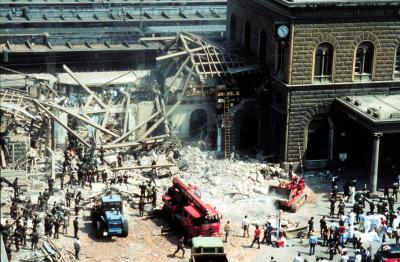
In efforts to avoid an economic collapse following the Hot Autumn, the Christian Democratic Party reached out in a historical compromise (compromesso storico) with the Communist Party. With the tensions of the ongoing…
Going into these readings I already knew a lot about the Hungarian government’s disdain towards George Soros. They believe that Soros is behind some plot to destroy Europe and Christianity by filling it with Middle-Eastern refugees. Of course the idea that these refugees are dangerous is islamophobic, but the use of Soros also implies a Jewish-ness to the conspiracy. However, Hungary can escape accusations of anti-semitism by dancing around the question and using dogwhistles (the triple-parentheses dogwhistle comes to mind). This was the focus of the Kalmar article, but the Stone article and the articles about QAnon also discuss this.
In the Stone article, the connection is made between Eastern Europe not dealing with its anti-semitic past and the existence of its islamophobic present. Open anti-semitism isn’t allowed, but anti-semitism can be rerouted through conspiracies that are subtly implied to be Jewish in nature. It reminded me of the movie Look Who’s Back where (as far as I remember) Hitler comes back in modern Germany and becomes a far-right, anti-refugee “””comedian””” who mirrors the islamophobic rhetoric Stone is talking about.
The Guner article feels slightly separate from the others in discussing the ‘whiteness’ of the Turks. The racial ambiguity of Turkey reflects the social construction of race: the Turks originated from Central Asia but have been often considered white and now have a perception of themselves as black (in what seems to be a spiritual/cultural way). I remember Looks Who’s Back very briefly poking fun at this as well.
While Democrats in the United States fight to keep women and their bodies protected from the hands of grimy Republican white men, women and pro-choice advocates in various countries across Europe may feel that the current affairs in America hit a little too close to home.
Since Poland’s complete ban on abortions in 2020, pro-choice advocates have been discretely working to offer crucial medical services to women in need. This has led to the current trial of Justyna Wydrzynska. Wydrzynska, one of the founders of the Polish group Aborcyjny Dream Team (ADT), is currently at trial after being accused of illegally assisting a woman with an abortion. Wydrzynska allegedly provided pills to a woman in an effort to induce a miscarriage. Although the trial has been adjourned until January, Wydrzynska’s circumstance is a grim reminder of the obstacles that women in Poland face when they try to defend their bodily rights. Specifically, these dismal prompts can be traced back to the aggressive misogyny that has been present in Europe throughout history.
When working to understand the roots behind European abortion bans and these violent forms of control over women’s bodies, a significant amount of scrutiny should be placed at the hands of fascism and its misogynistic ideals. It is understood that fascism is obsessed with control and aggression towards the ‘other’. More specifically, we should consider that it is most often governments and political figureheads that use fascism to impose control. It would be be drastic to consider every individual person who opposes abortion to be a fascist. However, when we see these massive institutions imposing aggression against minority groups, this extreme abuse of authority can be considered a fascist act. Whether this is with restrictive voting laws that diminish the voice of racial minorities, or abortion bans that force women to help boost birth rates, fascism leaves an impression on each radical gesture imposed by the far right authorities. In Poland, this has enabled the country’s government to ban abortion and take egregious action against women who go against this restraint. Fascism is an extremely intricate subject as there are multiple definitions attached to it. However, when it comes to connecting the concept with anti-abortion sentiment, we see that fascism is continuously used by powerful institutions to control women, their sexual identities, and their bodily rights.
Turning away from Poland and towards Southern Europe, we see that with the election of Italy’s new prime minister, Giorgia Meloni, fascist rhetoric seems to have brought with it conversations surrounding future restrictions on abortions. Meloni has openly voiced her desire to limit abortion access and represents the Brothers of Italy party which desires to place a ban on abortions in general. Along with this, the party is also against permitting Italian citizenship to children born to non-Italian parents. Not only is the Brothers of Italy party actively working to restrict the number of Italian citizens, but the group is also pushing to provide benefits to Italian women who give birth. These efforts are considered by some to be a repeat of Benito Mussolini’s ‘Battle for Births‘ campaign. Mussolini is known for his historical fascist rhetoric and aggressive actions against non-Italian citizens during the 1920s to 1940s. Specifically, Mussolini’s ‘Battle for Births’ policy actively worked to eliminate non-white foreigners in Italy while promoting the birth of children with ‘true’ Italian blood. This policy goes hand-in-hand with fascism as it works to uphold the privilege and power of Italian nationality while reducing the importance and social position of non-white foreigners. Even more specifically, the policy was implemented by the government to control the bodies and actions of women. Therefore, it is alarming to see a new Italian party echoing the actions of Mussolini and his administration.
Although the impact of fascism on anti-abortion sentiment may be stronger in some countries compared to others, the history of fascism in Europe proves to still impact right-wing aggression today, even if minimal at times. This aggression has clearly played out through anti-abortion rhetoric across different countries in Europe. Although it may seem drastic to blame anti-abortion on fascist thought, it can be argued that when massive governments and political figureheads work to oppress racial and gender minority groups, this is an explicit act of fascism.
“There’s no government; there’s no pope.” What better sentence to begin this second op/ed that explores the strained and ultimately corrupt relationship of Italy’s state and religion. While Italy plays a huge role on the global stage many people overlook the country’s deeper history, which has come to shape the place where many only see it as their favourite vacation destination and nothing more. Failing to understand the dramatic shift this society has taken post Second World War, which forced Italy to rethink and restructure their society to meet the new democratic standards. And while many European countries immediately flocked to either progressive or conservative government structures Italy found itself never really finding any permanent footing to begin with.
Since 1948, the country has had 68 governments, one of the many reasons for this volatility is in large part due to the Catholic Church’s long historical ties to political undertakings within the country, such was the case in 2005 when the Church encouraged voters to abstain from voting, after a referendum was likely to occur. Many Italian citizens have felt this constant shift back and forth, with many stating the consistent failings of politicians and the increasingly out of touch role the Catholic Church has with the public in modern times. By having a society that is so entrenched in tradition the translation to fully hit the mark in terms of having a free uncorrupted state is difficult to obtain, with the main question being how does one progress away from such an ingrained system of religious interference? And is less interference really needed? As many would argue, it has worked so far.
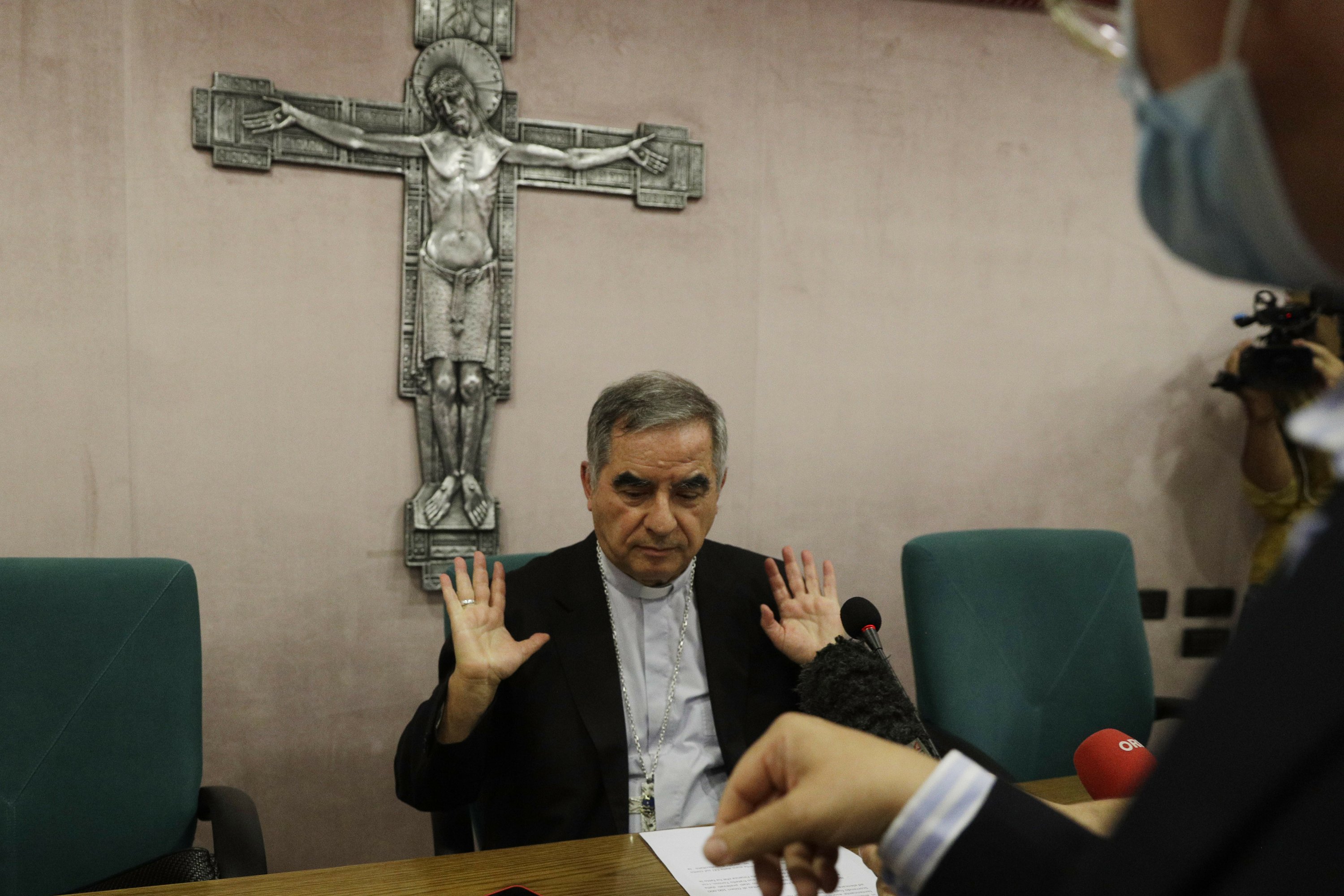
Many sources highlight the complex relationship both the state and Church had with one another under a historical lens, influencing each other and the future they would take during the 20th century, ultimately shaping much of what encompasses modern Italy today. With such a large portion of the population adhering to Catholicism or having some relation to the religion, it becomes difficult to separate the two from each other becoming a common reality in everyday life. While the arrival of Silvio Berlusconi at the end of the century did bring some relative calm to the rapidly succeeding rate of heads of state, much of his party’s philosophy was derived from Catholic rhetoric, which reintroduced conservative religious politics on a majority scale for the first time since the fascist regime. There may be a sense that the Catholic Church’s authority has faded in recent years, as many have become further disillusioned over scandals such as Vatileaks back in 2012 which exposed tax cover-ups, sex scandals and blackmailing towards homosexual clergymen, and also being given the title of most corrupt state in Western Europe in 2021, the reality is that there history with the people and spiritual significance over Italian society still outweighs wrongdoings.
With the recent induction of the Country’s first Fascist party since Mussolini it will be difficult to predict what the future may bring between state and religion, perhaps nothing will and everything will remain the same, or as many sources are already hinting, maybe there will be a better environment for both politicians and the clergy alike to cross paths. As many young Italians may find their priorities aligned with the ideals of an Italy that was once was, like so many others have who find themselves in right wing politics. A longing for a past and a better time is a key thought in the minds of everyone globally as Covid-19 kept the country gridlocked for much of 2020, and with religion providing a comfort in times of uncertainty many young Italians are finding themselves becoming more spiritual. In addition to more up and coming leaders not being shy about their ties with Catholic beliefs, one thing is for certain this new religious Italian landscape remains just as robust and fragile as it once was.
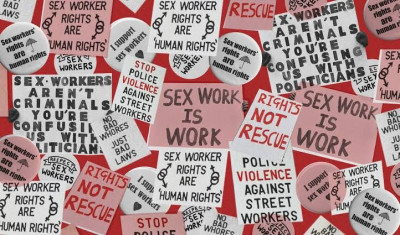
From bans on LGBTQI “propaganda” to yearly debates about kink at Pride, it is no secret that we are seeing an uptick in popular, transnational conservatism about sex. While much of the responding conservation has focused on protecting the LGBTQ+ community, one equally vulnerable group is often neglected: sex workers. Recent attacks on sex workers include a notable rise in SWERFs [Sex Worker Exclusionary Radical Feminists] in England, Spanish attempts to ban prostitution, and votes in Bristol town council to ban strip clubs. However, unlike previous attacks on the industry, these movements are not solely originated from the Right, but also from the Left. As such, anti-sex work movements, grounded in sexist and moralist populist trends, reconstruct Far-Right ‘traditionalist’ views on sexuality and gender, which threaten to bring down the liberation of women, femmes, and queers.
Sexist Populism and the ‘Victim Narrative’
As historian Kate Lister notes, the “Victim Trope”—a staple of anti-sex work narratives on both the Left and the Right—“repackaged [sex workers] as a pitiful victim in an uncaring world” who ultimately need to be saved for their own moral good by non-sex workers. These narratives take on a moral dimension laced with chauvinistic tendencies and situate them within the trend of sexist Populism. Many historians and theorists define populism as a political style that positions the everyday man as ‘pure’ against the ‘corrupt elite’, drawing particularly on emotional reactions against the ‘Other’ and institutions. Yet, sexist Populism takes on a gendered dynamic, presenting ‘traditional’ gender roles as endangered to radicalize ‘the people’, usually with an emotionally-driven paternalistic or chauvinistic flare. ‘Victim narratives’ present (white, female) sex workers exclusively as subjects of male abuse or rescue, upholding a ‘traditionalist’ perspective on gender. In keeping with their Victorian origins, such anti-sex work narratives present the non-monogamous, transactional nature of sex work as inherently ‘damaging’ and ‘abusive’. Therefore, monogamous (often heterosexual) partnerships rooted in love and/or marriage become the safe moral norm, a key viewpoint of Far-Right populism.
When women and girls are placed in this victim role, an abuser must emerge as the “Other” against whom the everyday man must take a stand. It is here that the populist anti-institutional, ‘othering’ process is injected. In modern takes on victim narratives such as this one, consensual sex work is conflated with sex trafficking and, for Dworkin Feminists, rape. In this way, states who have legalized sex work (the majority in Europe) become enablers of abuse who “wash their hands” of blame. Variousconspiracy theories have made the rounds on social media, positing that ‘global elites’ are sex trafficking children for “sexual rituals” or “blood libel”. In their evocation of sexual deviancy, ‘deep state’ plots, and blood libel, they push antisemitism. Evidently, the emotionally-charged image of imperilled women and children functions to maintain myths of ‘Otherness’ and weaponize a dichotomy of pure/un-pure.
Populist Threats to Feminism
Many sex workers have voiced concern about this rise in whorephobia. Firstly, they fear that it does not reflect the realities of the industry and ignores sex workers’ critique. For example, many sex workers point out that they are going after the wrong people when making conflations between sex work and trafficking. While, as a high estimate, 1 in 7 sex workers in Europe could be trafficked, sex workers clarify that a total ban would drive the industry further underground, dragging these victims down with it. By ignoring these lived experiences in favour of ‘rescue’ narratives, both Left and Right populists maintain the chauvinistic, sexist populist trend and make things harder for real sex workers and the victims they claim to ‘protect’.
Secondly, these populist narratives endorse ‘purity’-based rhetoric that are fundamentally exclusionary. SWERF narratives often present Suffrage-era feminism as the foundation of the feminist movement. They repeat the First Wave argument that women are morally superior, embodied by the ‘motherly’ image, to men as they’re ‘inherently’ prone to uncontrolled, sexualized violence. Furthermore, in this popular memory, the Sexual Revolution becomes an extension of patriarchy, having “hurt” feminism and women by centring sexuality. With the Sexual Revolution positioned as antithetical to ‘true’ feminism, its emancipatory elements can easily become ‘un-pure.’ Everything—the normalization of casual sex, trans liberation, and especially the acceptance of sex work—becomes a threat to women. As such, by romanticizing earlier, exclusionary periods of feminist history and ignoring the voices of sex workers, SWERFs align themselves with a conservative moral purity argument that has historically been used to deny liberation to those outside the gender-sexual norm.
As these victim narratives leech into the public consciousness through apps like Tik Tok and manifest in mainstream political institutions, we must remember that they do little to protect women. In fact, by identifying the use of populist tropes that misplace anger surrounding very real issues of patriarchal and capitalist violence, we can see how they maintain gender essentialist binaries and drive us towards sexual conservatism. If anything, understanding this process should shed light on why feminism must make room for the voices of all women, regardless of their profession.
all photos in this post were taken by me unless linked in photo caption
Over the past week I was in Montreal and was able to go to the Museum of Fine Arts (MBAM), an incredible art museum that bridges art and cultural history. What stood out to me was art from German artist from the post war period that used abstractism to convey deeper ideas and emotion. Three paintings stood out more than the rest did, they each expressed the nature of post war Germany but each painting did it a unique way.
Abstractism in art links the philosophical idea abstractism, the idea that your mind links new concepts with ideas that you have already learned with the artistic properties of abstract art. In a sense it explains why heavy brush strokes and dark colours can create emotions such as anger and sadness whereas light brushstrokes and light colours can harken happy or lighter emotions.
In Nazi Germany art was heavily censored. Adolf Hitler had rigid views on the art that the Third Reich would produce. He sponsored a campaign against “degenerate art” (i.e., what is viewed as modern art) stating that it had no place in Nazi Germany. Similar to most fascist ideology, they viewed artistic modernity as an extinction of modern ideals and wished to go back to “the good old days”. Hitler felt that art being produced at the time was too contaminated by Jewish influences and instead wished for Nazi artists to be inspired by Roman and Greek painting and art styles (romantic realist art). The postwar art on display at MBAM used the degenerate art style that was banned against by the Nazi to display the emotion and conflict that engulfed Germany in the post-World War 2 period.
The painting “Landscape near Koblenz” struck me as I walked into the gallery as unlike the rest of the room, it seemed photo realistic and vivid. What struck me when reading the plaque was how the painter Gerhard Richter looked to weave a space in-between socialist realism (art that was viewed to be communist) and abstraction. His painting described by the artist himself was stated to be “capitalist realism”, it evokes memories of the art the Nazi’s pushed to the forefront of the German art world with one striking difference. He states that any landscape that he creates is only temporary and it could be wiped out and erased in a moment. This harkens back to the idea that the war and the devastation that followed the invasion of Germany was still in the German collective imagination.
The other two paintings “Rechts und links eine Kirche – Jörg” (Right and Left a church – Jörg) and “Deutschland Café XIII” deeply pull at the idea that the German collective imagination was still fractured in the post war state. In “Deutschland Café XIII” by Jörg Immendorff (the subject of the other painting) there is clear symbolism of a broken Germany in the dead eagles strewn on the left side of the painting. With their necks seemingly broken it pushes the idea of the once strong and powerful German culture being killed in the conflict between the east and the west.
The second painting “Rechts und links eine Kirche – Jörg” by Georg Baselitz evokes the divide between the east and the west using one white church and one muddled colour church with the painter Jörg Immendorff strung upside down between them. The dark colours contrasting with the bright paint and heavy brush strokes surrounding the strung up Immendorff create emotional weight when looking at the painting. The red brush stokes give the viewer a sense that a violent act occurred and that the body that it upside down is being pulled in between the two churches. It evokes a notion that Germany was being pulled in two separate ways and the end result may be bloody.
Rechts und links eine Kirche – Jörg – Georg Baselitz
When viewing these paintings in person they evoked deeper emotions than I was expecting. The feelings of brokenness and conflict were palpable and the small placards beside the paintings gave greater depth to these feelings. I realized that the greatest asset of modern art was the ability for greater depth of emotion for the viewer through colours, textures, and symbols. This flies in the face of the Nazi logic about painting as realist art cannot always convey the emotions brought through abstractism. In the post war period German artists use degenerate art to demonstrates the conflict and the discontent that was created within the German collective imagination following World War II.
The following is just a quick art museum review – NOT PART OF OPED
So it was awesome, I had no expectations but the collection was extensive. The permanent collection had artists ranging from Picasso to Salvador Dali to Monet. Seeing paintings by these painters was bit awe inspiring and felt a little like checking a box off on the ever growing list of artists and art that I want to see before I die.
I was super fortunate to go when a Jean Michel Basquiat exhibition was being shown. I knew a little about him and his life before but I was blown away by his story and his artistic range. Before his death at 27 he worked with Andy Worhal, created TV and films, painted and created music. I will not do him justice by explaining here but if you are at all interested take an hour and do so research on him, it is well worth the effort.
The only criticism I would have of the museum was that the flow (ie. how you walk through and see everything) was less than optimal. Over the course of 4 hours I was only able to see maybe 1/2 to 3/4 of the collection. There is a who collection of Canadian art through history that I wasn’t able to get too but it gives me something to look forward to next time I am in Montreal.
Tensions between Greece and Turkey, two of the oldest NATO’s members, have been gaining attention from the rest of Europe in the past. It is said that diplomacy is going so poorly between the neighbors that a war could break out if the situation isn’t defused. But since the dissolution of the Ottoman Empire following the Great war and the Greco-Turkish war ending in 1922, no military conflict was able to emerge between them even with their history of competition and liberation. While it seems that the two countries are preparing for war, it will never happen as their dispute is about being superior to the other, not their rival’s elimination.
The modern relationship between Greece and Turkey begins with the recognition of Greece independency by the Ottoman Empire in 1832, but the point of focus will be after 1922. Hatred between the Turks and the Greeks never went away, and some events came close to start a new war, but it never happened. One of the best example would be the Istanbul pogrom against Greeks of 1955, as the Turk authorities hindered the influence and wealth of the Greek community in their largest city to provoke their rival and gain more economical autonomy in that region. Although outrage by this turn of events, Athens did not act on it, denouncing the pogrom and helping its Greek migrants. One of the particularly important element of the ongoing conflict is Cyprus. The island was invaded in 1974 and forced the island to split between a Greek and a Turk regime, even though most of the country’s population was of Greek descendancy. While the Cypriots live there in a relatively peaceful manner with one and other of different origins, they got into a political issue between their homelands. The island represents a special case because it embodies the essence of the battle between the two. While they have not taken direct action against the main territories, their nationalist ways have dictated their movements with the goal to humiliate and gain an edge on the other. Since the Turkish side of the island is still not recognized by the world, negotiations with Greece and the other half of Cyprus are still in progress with periods of more stability, with the 2000s having some non concluding attempts at closing the situation peacefully. Yet, direct war has not been declared while menaces of it are looming.
As of today, the tensions are rising once again over the militarization of the Greek side following the arms embargo lift on the Greek Cyprus administration. Furthermore, there has been some discoveries of natural gas and oil in this region of the Mediterranean Sea. The Greek government justifies its more aggressive stance as a mean of defense against Turkish bullying. They made a political calculus; the situation for the Northern Turkish government in Cyprus places them in a corner as they are stuck between the international stage not recognizing their legitimacy and the Greek side arming up. While the world consensus is to avoid war on the island, it would be difficult to impose sanctions on Greece or Cyprus as it will basically be a “liberation” war. Again, if an event like this happen, Turkey nor Greece will push the matter on their territories as the ONU and the United States will condemn the attacker and probably support the invaded. This will only be a blow to Turkish efforts of gaining influence over a foreign territory that has some Turkish individuals, and both of the competitors will go back to finding ways to harm the other.
Realistically, the only way Greece and Turkey are getting into a new war would be through Turkish minority sovereign movements in Greece in the Western Thrace. It would look similar to the situation in Ukraine with Crimea in 2014 and the current invasion, but since Turkey is definitely a lot weaker, they would require quite the mobilization effort from within Greece. Furthermore, after the tragic events of the 1955 Pogrom in Istanbul, there is approximately 2 500 Greeks in Turkey. Since one of the principal arguments to invade a country is justified through “protection” of their cultural population and its getting less and less possible for both sides, there is less interest to conquer territorial parts as the local population would still be very homogenous. It seems that for now that Greeks and Turks will simply continue to hate each other rather than look for the complete annihilation of the other.
Racist thought has been prevalent and an issue of varying degrees of severity over the last century with great frequency, whether you look to the terrible systematic racism in the structure of the United States that continues to negatively impact largely non-white people and people of lower income, or to the most drastic in cases of Nazi Germany under Hitler and the massive killing of Jewish people that occurred throughout World War II, the issue of racism in its different forms remains consistent. This being understood though, shifting attitudes and forms that racism takes are equally present in periods of upheaval for various nations. Sometimes this appears as a change in leadership, as present in post-war Germany. In Christopher A. Molnar’s work “Greetings from the apocalypse” that we analyzed in this week’s readings we see the shift from a case of racism having to do with a genetic level of racism promoted by oppressive government and relentless propaganda, to a racism coming from a cultural standpoint, attitude and regulation coming from a place of fear and social upheaval after the radical changes in Germany post-World War II.
In a more modern setting, the age of the internet and a culture of capitalism and intense connection to the internet we can see another example of shifting and developing racism. Despite the western part of the world continuing to develop and (hopefully) evolve past this archaic racist thought, there are still many who not only hold these views but are able to use the internet as a megaphone to project them now more than ever.
As long as the internet has been present there have been individuals using it nefariously. Websites like 4chan or similar message boards are infamous for their knack to amass people with hateful and harmful ideas into one spot, but equally racist rhetoric is alive and well on every popular social media platform, whether it be Facebook, Instagram, or most importantly: Twitter. Hateful and racist behaviour on Twitter has always been a problem, even more so due to a previous lack of moderation. Sometimes this looks like using racial slurs in tweets, but often it can take different forms, like in the case of Twitter accounts owned by influential people who start to promote or incite violence or hate against others, people like Donald Trump, and more recently celebrity figures like Kanye West who started spreading misinformation on the murder of George Floyd and tweeting anti-black rhetoric.
These social media platforms tend to have a dangerous ability to amplify these messages, they get more traffic, more likes, more replies, more shares. Despite this Twitter was beginning to do some clean up, but have recently been bought out by capitalist Elon Musk, best known for his racist work environments and massive intake of government subsidies on his companies SpaceX and Tesla. Musk promises to unban users like West and Trump and welcome them and their ideas back on to the platform. He tweets often about turning Twitter into a truly free-speech platform. Problem with that is that Twitter already is that the only speech that is against the terms of service is that which is hateful and bigoted. What exactly are his intentions when he says he wants to create free speech on the platform? This is exactly the way that racism begins to shift, instead of how in the post-war Germany example, where racism thought changes its origin and attitude from genetics to culture, racism in the west is moving to a much less manageable digital space, where those in power either hold the hateful ideas, or want to promote the ability of users to spread them.
If we expect to see positive change and reduction in racist thought massive upheavals in allowance for hateful speech need to be implemented. As it stands now bigoted speech and behaviour is looking to be more prevalent and louder than ever before in the digital space, one that is more impactful than ever before itself.
Set a thousand years before the original series, the Harfoots (ancestral predecessors of the Hobbits) are the first in the franchise to take on an Irish accent. The depiction isn’t flattering. Where RP-speaking Elves are at the forefront of science and combat great evils, the Harfoots stumble through mud with twigs in their hair, stuffing themselves with berries in what some have called “famine cosplay”. Having not yet founded the Shire, the migratory Harfoots reside in raggedy camps, writing in a rudimentary form of pictographs and acting as the light-hearted interlude between more serious plotlines. With rosy cheeks and dirt under their fingernails, it is hard not to view the lovable Harfoots as undeveloped when compared to other fantasy races.
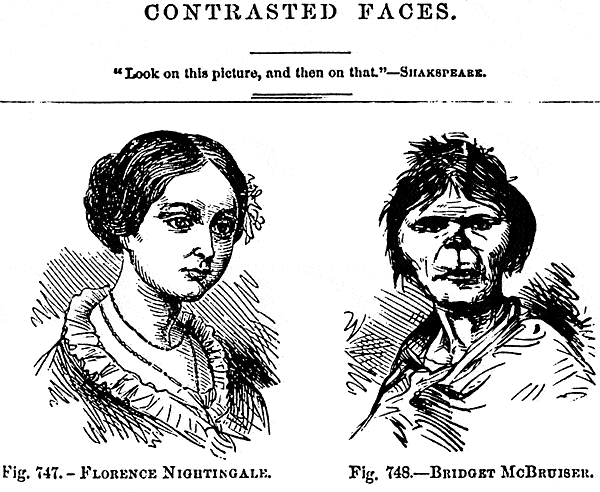
The parallels between the Harfoots and discriminatory Irish stereotypes are staggering. Irish people were seen as incapable of reasoning, whose mental deficiency was linked to superstition, alcoholism, and minimal emotional control. Much like the Harfoots, the Irish were depicted as dressing in filthy rags that suited their “naturally” pre-industrial character. In this view, the Irish lacked the discipline to work their way out of squalor, reducing them to a ‘child-like’ race unable to achieve civility without Britain’s colonial supervision. What’s more concerning is that these characteristics were considered hereditary – preventing the Irish from being seen as anything beyond “amusing savages”.
The Harfoots’ exaggerated Irish accent reproduces the stereotype of Irish simplicity. With research showing that accents are connected to judgments about social status, the show’s reliance on “Irishness” as a shorthand for “primitive” demonstrates the continued relevance of these discriminatory representations. The Harfoots’ Irish accent is especially suspicious when considering our favourite Hobbits spoke with British accents – creating a dangerous implication that as Harfoots “evolve” into sedentary farmers, they mature out of their Irish accent. The deliberate use of Irish accents reveals the deep hierarchy of whiteness that lay at the heart of Rings of Power, where Irish under-development is counter-opposed by English civility.
Anti-Irish British Fascism
While hibernophobic representations are well-established in British history, these ideas found a new life on the extreme right. Between 1920s and 1930s, British fascists revived anti-Irish sentiments as a point of radicalization for right-leaning conservatives, utilizing ideas of Irish inferiority to garner support for more extreme anti-immigration policies. These efforts were supported by groups like The International Fascist League (IFL), who in emphasizing British identity as heritable and rooted in whiteness, stoked fears of the Irish as a biological threat to the purity of the British race.
Following Britain’s failure to prevent Irish Independence, fascists capitalized on feelings of “national humiliation” to generate anxieties about Britain’s decaying political system and racial vitality. With Irish Independence posing a serious threat to images of Britain’s biological superiority, fears of an Independent Ireland became a gateway to radical anti-Semitic Judeo-Bolshevik conspiracies. Fascist parties like The Britons depicted Irish populations conspiring with Jews to establish a Communist state on Britain’s backdoor, reframing Irish nationalism as part of a global plot to overthrow English civilization.
In light of what was interpreted as Britain’s imperial decline, parties like the British Fascists and The British Union of Fascists positioned themselves as saviours of the empire. For the far-right, the firm hand of authoritarianism was essential to ensure imperial unity and protect the empire. Latching onto understandings of British imperialism as a “civilizing mission”, fascists added a moralistic dimension to their politics. Calls to re-conquer the Irish became tied not only to the reassertion of racial hierarchies, but to global stability itself. The power of their anti-Irish position was immense, appealing to mainstream British citizens by emphasizing British biological superiority and affirming their dedication to the empire.
It would be alarmist to suggest that Rings of Power is a sign of anti-Irish action to come. However, when we look at historic connections between Irish racism and British fascism, the fact that Irishness remains synonymous with “primitiveness” is worth interrogating. The Rings of Power reminds us of the power these representations hold – prompting us to look backwards, consider how they’ve been manipulated in the past, and question our own prejudices in the present.
This week’s reading by Christopher A. Molnar, “Greetings from the apocalypse” was especially provocative and interesting for me, to take a look at the ethical and moral challenges that the nation faced in the wake of its horrible leadership offers a unique perspective into the process necessary to reestablish itself and make some sort of amends and improvements. Looking at things like migration, antisemitism, race, and how democracy was impactful in Germany are all pieces of the process that the new German leadership had to face and employ. This reading went into the changes in Germany over two decades, and especially highlighted changes in perception as it related to the aforementioned topics.
The author of this week’s reading allows for a greater understanding of different kinds of racism that was occurring, both in culture and biology and how they moved from one to the other. Equally we can see how perceptions and attitudes concerning certain subjects shifted over time. Molnar demonstrates that the racism post war was radically different from that under Nazi reign, having more to do with differences in culture and behaviour rather than coming from a biological or eugenics standpoint. Interestingly, Molnar’s writing shows us that foreign presence in Germany was still a contentious subject, sparking discomfort still. Understanding the differences in public opinion and the presence of racism in Germany in the post-war period shows us a concerning image of a nation on the back of genocide and tremendously harsh and oppressive rule. Though the sentiments are drastically different from those under Nazism, the conversation concerning racism is a dangerous one in a nation with a history like Germany’s. Some of the legislation and financial efforts or decisions in the post war period generate a sense of unease given the past behaviours of the German government.










 Hate 2.0

You must be logged in to post a comment.