Germany’s reliance on Russian oil Op/Ed 1

By: Adam Paquin

In the early days of February 1980 Germany would make a deal with the devil and sign a contract with Russia a deal that would prove to result in major repercussions down the road. This deal would look like a small negotiation for the supply of Russian oil into Germany. With Germany to supply the material such as pipelines and other industrial goods Russia would in turn supply Germany with crude oil for years to come. After warning signs from NATO Germany assured the rest of the world that they would remain far from reliant on Russia for oil and only receive no more than ten percent of their nations supply from the country. This ten percent would end up slowly rising over the coming years. This brings us to present day Germany where more than half of the countries supply of crude oil is imported from Russia which places them in a very dangerous place.

Not only simply because it is Russia which over the past several decades has been proven to be a very unstable country socially and economically. But through Germany’s reliance on Russian oil can prove to put them in a very unsettling position especially for the general public living in the country. This became even more of a problem beginning at the start of the year. With the current war in Ukraine, many other countries within NATO have been cutting off their supply of Russian oil and other resources that have been coming out of the country. But this may not be as easily settled with Germany and their situation, if they were to completely cut off their supply of oil this would create a lot of chaos and confusion in the country. Especially in the coming months leading up to this coming winter this would lead to many cold homes with rely on natural gas for survival. This puts Germany in a very unsettling place because as of right now they do not have the ability to just shut off their connection with Russia without disturbing many households throughout the country.

Germany over the past several years has become known for their anti-nuclear protocols and their use of natural gas since the Chernobyl catastrophe in 1986. As many other countries searched for other alternatives for clean renewable energy such as wind, solar or nuclear. This along with the chancellor of the free democrats in 2009 decided to begin what they called a phase out of nuclear power. This would begin the process of shutting down a large amount of the nuclear reactors in the country with remaining to be completely closed by 2022. Germany although doing other research into several forms of clean energy as well, appears to be reliant on a future of natural gas heating their homes and fueling their cars.

Which brings us back to why Germany is so dependent on oil from Russia, if they were to cut off their entire supply of oil from Russia as many other countries have done in the midst of the war on Ukraine. This would severely hurt the German economy and people more than it would have any actual effect on the Russian Economy. It would end up shutting down large corporations and factories which have a heavy dependence on natural gas and put several gigantic companies out of commission. Now in the recent months they have been working with United States and other NATO countries to secure energy partnerships. This has actually resulted in them lowering their dependence on Russian oil by as much as fifteen percent. Which shows that a massive amount of work has been in the works to aid in the worldwide ban on Russian products, but this is only a start. But many are hesitant in completely cutting off the supply chain with their neighboring country Russia as this has been a major part of their economy for the past fifty years.

So needless to say, with all the debates between positives of cutting off a massive country with is in the middle of self-provoked war on a smaller neighboring country. A country that has for the past year been creating catastrophe and chaos under the leadership of an insane dictator. While they may have been essentially keeping your country afloat for the last half century being the largest supply of power to your economy. It can certainly be a large decision and a very difficult one at that. But a decision that needs to be made and cannot simply be put on the back burner for this could potentially create a rather large problem down the road both politically and economically. Ones that may leave the citizens of the country into literal dark and cold times.

‘We were all wrong’: how Germany got hooked on Russian energy | Germany | The Guardian

How Germany Became so Dependent on Russian Natural Gas (businessinsider.com)

Germany’s Reliance on Russian Energy Forces a Nearly Impossible Choice (businessinsider.com)

Why is Germany so reliant on Russian gas? Investment Monitor

Germany is Dependent on Russian Gas, Oil and Coal: Here’s Why – The New York Times (nytimes.com)

Two Dichotomies

By: Hannah Long

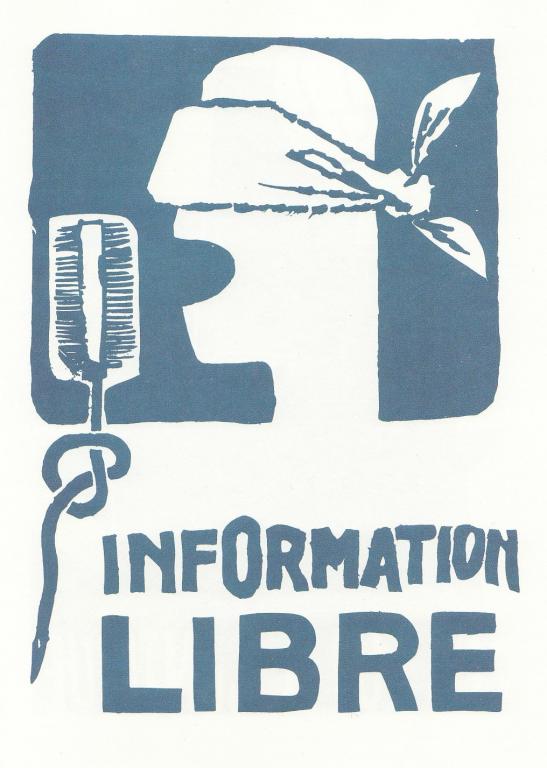
Image : georgelmosseprogram. “Confrontation: Paris, 1968.” YouTube. 5:45, November 1, 2012. 

The intriguing aspect of post-war politics has to be the extreme shift and impact the left and right had democratically, so much so that I believe we can still feel the effects today. Each of this week’s readings seamlessly flowed over one another to provide a detailed perspective of both the historical events and thoughts of societies who were looking to reestablish themselves. Bar-On’s work delves into this matter by discussing the birth of Nouvelle Droite and many French national’s subsequent scramble to defend cultural identity. The need for a cemented identity in France took two turns, one in a liberal standoff for the emerging adolescent portion of the population in the 1968 student riots, and the other form of cultural homogeneity. 

The riots challenged the democratic foundation to change traditional institutions as well as a contempt for leftover imperialist attitudes that were embedded in the conservative system (Confrontation Paris, 1968). This far-left movement wanted to uproot the seemingly unchanging right wing to move to a new era that better represented the rapidly growing interconnectedness more youths were feeling that the access of post-secondary education was allowing them. This unprecedented confrontation between the state and students changed the cycle of conservatism, shutting down the Gaullist Regime and the economy. 

In a measure of opposition Alain de Benoist (founding member of the Nouvelle Droite) sought to annihilate the far-left as it was up-rooting societies across Europe. There was a belief that hierarchy was key in maintaining a functional and secular society away from international influence. The founding of the ND provided “new spaces” for other far-right wing political parties to emerge (217, Bar-On). Benoist provided growth for the extreme right wing in Europe that can still be seen to this today, which circles back to the present day facist movements that were discussed two weeks ago, which I believe further shows how widespread and rooted the ND has become since its inception more than fifty years ago. 

As I stated prior, when anlyazing each of the readings closely the remnants and more so the influence WWll has had can be easily spotted when looking at the actions and beliefs of those around this time. On one hand we see a part of society who wanted to permanently get as far away as possible from the past, seeking to change it and move their nation into the then “global/modern” liberal concepts. On the other there is a seeking out of fascist concepts, masquerading them as traditionalism, to focus on internal matters such as recementing ideas of hierarchies, ethnic identity, and Judaeo-Christian world-view. All of which are straight from Nazi rhetoric. What is interesting to me as a final thought is the internal struggle that comes up each week with these readings, there is a present “need” to hang onto the past however it seems that when it comes to discussing the past and pulling back the layers of the rationale and history behind these concepts there is almost a denial of fascists to state that what they are doing is derived from Nazism.

The Paris Review - May '68: Posters of the Revolution
Image: The Paris Review. “May ’68: Posters of the Revolution.” The Paris Review, May 1, 2018. https://www.theparisreview.org/blog/2018/05/01/may-68-posters-of-the-revolution/.

Sources:

georgelmosseprogram. “Confrontation: Paris, 1968.” YouTube. YouTube, November 1, 2012. 

Tamir Bar-On, “Transnationalism and the French Nouvelle Droite.” Patterns of Prejudice, vol. 45, no. 3 (July 2011): 199–223.

OP-ED Fascism: Past Present and Future

By: Cyrus Hutnyk

As of September of 2022, the Nationalist Brothers of Italy party in Italy are looking bound to make the move into power as a prominently far-right group looking to lead the nation, a party with its history attached to infamous fascist Mussolini and his fascist rule nearing one hundred years ago. The leader of the Nationalist Brothers of Italy party Giorgia Meloni has a reputation as being against the European Union, migrants, and Italy’s ties to the west among other things, and she and her party are spreading these concerns and beliefs nationally. Despite winning with over a quarter of all votes for Meloni’s party this year, in the past the Nationalist Brothers of Italy has failed to amass anywhere near this much attention, indicative of Italian’s growing attention for far-right or otherwise nationalist ideology or movement. Furthermore it is known that individuals associated with Meloni are supporters or otherwise admirers of Putin which draws troubling parallels and creates anxiety over the future of the relationship between nations.

Benito Mussolini was a politician and journalist who eventually founded and was leader of the National Fascist Party, to then become Prime Minister of Italy up until his removal in 1943 during World War II. Initially Mussolini was a socialist and a member of the Italian Socialist Party, but was removed for his opinions and avocation for military and violent intervention during the events of World War I. This train of thought and ideology eventually led to his now well known fascist rule opposing egalitarianism and class conflict and supporting an extreme nationalism. While the movement that he led was based in radicalism and conservatism, what shone through was taking violent action. Arguments and debate surrounding opposition to fascism began to become silent through constant imprisonment, exile, and removal of people via deadly force. Divides in ideas concerning the implications of fascism arose in the period between World War I and World War II when it became clear the ideology was the difference between being involved in war or not.

Beyond what is or has happened in Italy or other nations across the water, the West can be found to have its own form of right leaning ideologies and politics through its own leaders. Trump has cemented himself in history through his term as president of the United States. His campaign was created and run based on a powerful sense of nationalism crafted through techniques of promising a restoration of the nation to a mystical former glory that it supposedly once held in its shockingly short history. To remedy the problems present and brought up by earlier leadership as well as promise of being above or tearing down supposed enemies of the nation are the tools that can be identified in any other instance of fascist or far-right rule beyond Mussolini or potentially Meloni.

With the impacts and lessons that can be learned from Trump’s time in office, western powers as well as European ones are fearful of a far-right rise, evident in the fervent support of Ukraine in it’s budding territory war with Russia. Liberal powers taking this action also creates the contrast and connection between opposing ideologies and right leaning ideology, not being in support of a foreign war becomes being against the potential of far-right rise, and so on and so forth to republicans becoming more and more far-right or even extremist.

Fascism and far-right ideology is not something that will ever completely disappear, people will always have a diversity of thoughts and ideas, and that should be welcomed and fostered. That being said its about understanding the limits to controversial thought and understanding where the line is that moves into ideas harming people, which is exactly what fascism promises to do historically.

Op/Ed #1: Fascism is back on the rise

By: Nicole Beswitherick

Son of a blacksmith, born in 1883, Benito Mussolini was named after the Mexican revolutionary leader, Benito Juarez. He was a born revolutionary as people may say. Growing up, Mussolini saw the hunger and the struggles people in the working class had been experiencing; he was one of them. Later on, he became a leader of the Socialist party and editor of its newspaper but broke ties with them over an issue of Italian neutrality in WWI. When Mussolini began his banner, an army of followers soon came underway, some of them known as the “Blackshirt Militia”.[1] People funded this movement when seeing Mussolini as a tool to suppress the radical revolution that they were afraid of.

Mussolini’s fascist movement promised a lot of things like extreme radicalism and extreme conservatism. But its main goal was action, which was achieved through violence. Fascism was fought in parliament, the press, etc. The arguments and fights to get rid of it were stopped when those of the opposition had been sent off to prison, exiled, and in some other cases, murdered.[1] Fascism later turned out to be a more subtle reason to win the support of the Italian people.

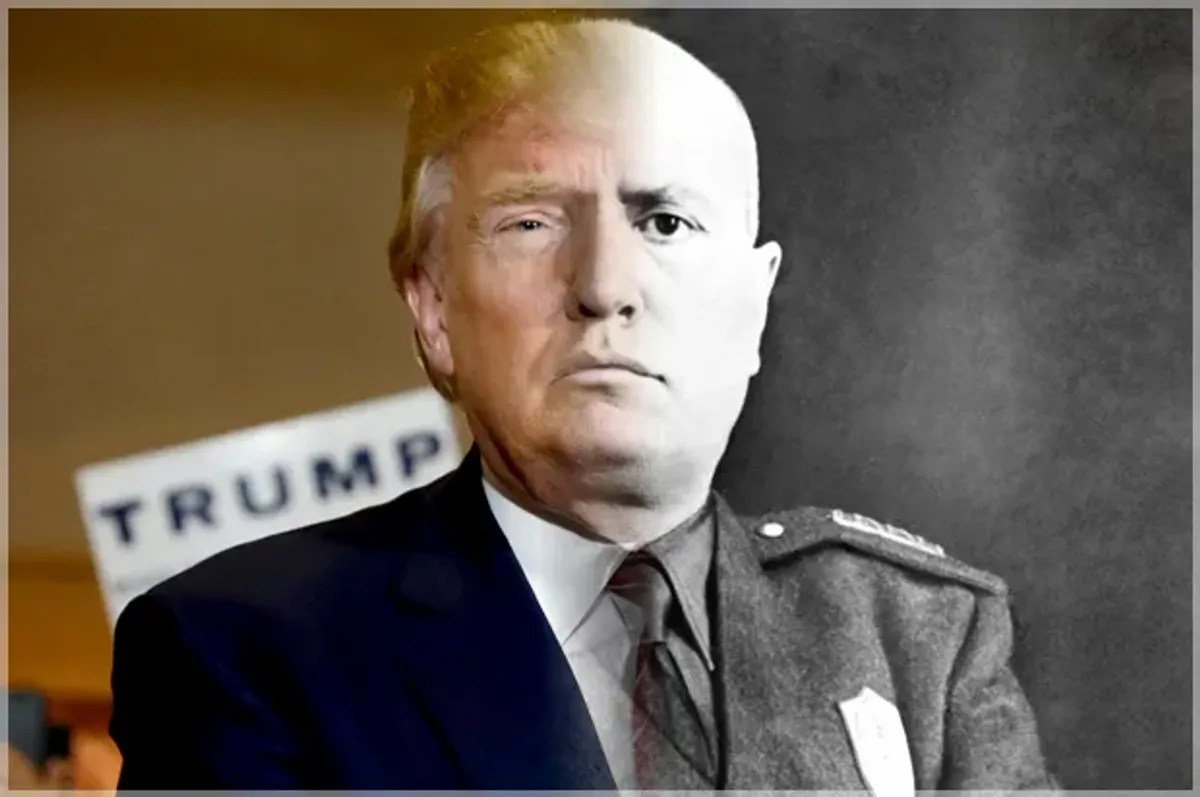
A photo merging the faces of Donald Trump and Benito Mussolini, as people see a resemblance is their leadership styles [Photo courtesy of AP/Richard Drew/Salon)

In 1935, the Ethiopian war rallied nationalists more strongly around the fascist regime and showed Italians that fascism meant war. During and right before WWII, (1936-1943) there was a bigger distinction between fascism and antifascism. Underground movements were increasing in popularity, and fascism did not collapse entirely until Mussolini’s lieutenants cast him away, allied military victories got involved, and there was a rebellion of the people.[1] Although fascism did eventually fall, could it be on the rise again? Could it be seen in North America?

On 25 September 2022, Giorgia Meloni (leader of the nationalist Brothers of Italy) took the lead in a far-right victory for Italy. She is set to become the first female PM in Italy, with her party that is directly descended from the fascist movement of Benito Mussolini.[2] Meloni is known to pummel the European Union (EU), international bankers and migrants, and this has all spread concern about the reliability the nation has in the Western alliance.[3] The Brothers of Italy party had won 26 percent of the vote, the highest of any single party. In 2018, her party won only 4.3 percent of the vote.[4] This makes Meloni the “prohibitive favourite” to become the first female prime minister in Italy. Undoubtedly, the Italian population is slowly gaining interest in a far-right nationalist group.

Even though Meloni is a strong supporter of Ukraine, many of her coalition partners have a deep-rooted admiration for Vladimir Putin and have criticized sanctions against Russia.[1] This is another issue the West is seeing. Seeing as Meloni is the leader of such a far-right party which comes directly from the fascist Mussolini, it is no wonder that people are worried about a rise in fascism. It’s happening in Italy right now. But is fascism an issue in the West?

Food and gas bills are skyrocketing under the “onslaught of inflation and prolonged wage stagnation.”[5] Billions of dollars have been redirected by Western nations in this time of economic crisis to fund a war in Ukraine. The liberal class is terrified of a rise in neo-fascism and characters like Donald Trump who subserviently bid in the war industry and corporations.[5]

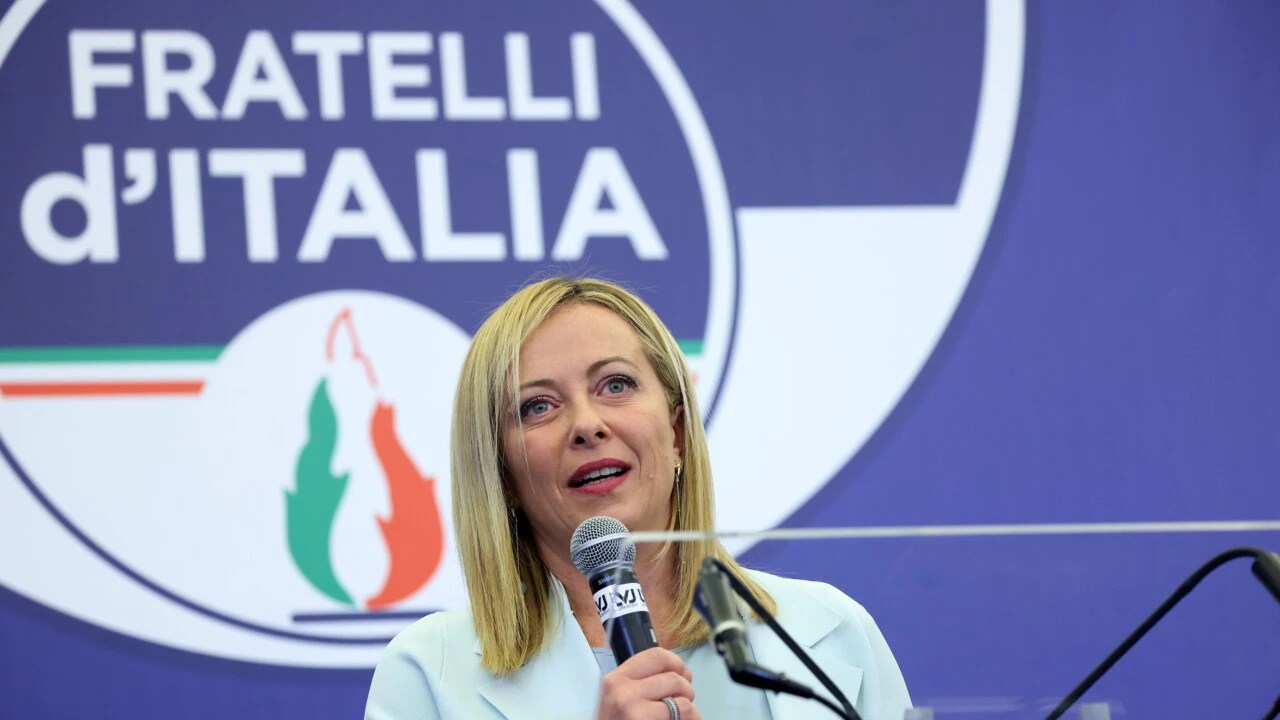
Brothers of Italy leader, Giorgia Meloni [Photo courtesy of Sky News Australia]

The liberal class is in debt, and that means that those who publicly denounce the foolishness of permanent war and NATO expansion, exploitation of workers in globalization, neoliberalism, etc, come increasingly more and more from the far-right.[5] This rage from right-wing people has been classified as “Christian fascism” in the United States and is making gains in Hungary, Poland, Italy, France, and others. Extremism is a holding of extreme political or religious views, also known as fanaticism. It is essentially radicalism, and there are political leaders (demagogues) who are promising moral and economic renewal, revenge on “enemies” and a return to lost glory. Remind you of a guy with orange skin, yellow hair, and who shouts, “Make America Great Again?”

Fascism has always been with us, and it might never truly go away even though it was already thought to. Far-right activists are gaining more supporters, especially over the COVID-19 pandemic. Although it may not rule out democracy, fascism and far-right nationalists are on the rise and the groups keep getting bigger.


[1] The Rise and Fall of Fascism – American Historical Association

[2] Is Italy Seeing the Rise of New Fascism? – Foreign Policy

[3] Giorgia Meloni Wins Voting in Italy, in Breakthrough for Europe’s Hard Right – The New York Times

[4] https://www.theguardian.com/world/live/2022/sep/25/italy-general-election-2022-results-live-giorgia-meloni-latest-news

[5] https://canadiandimension.com/articles/view/the-return-of-fascism

Corruption through and through

By: Adam Paquin

The readings from this week have several things in common in my opinion and that centers around the changing of the tides of European politics shortly after the second world war. During a time of recovery, there are several individual things going on, one of which is a changing of not only extreme right views but to an extent left views as well. We see this in the Biess article when he writes about all the changes going on throughout the system many similar to their past tactics some may argue were verging totalitarianism, while some state they were just rebuilding a destroyed economy from the dirt.

He also goes in depth into the student riots/protest that go on and how out of hand they become. He gives many quotes to insight the true extreme of the events that unfolded. I kind of blew me away the intensity that it was driven to with the police not only working on a protective basis. But in fact, beating and shooting the students to the extent that one is shot in the back while running away from the chaos. When reading this article, it becomes obvious that although the country of Germany was obviously hurting after the war. Many of the people in authority during the time of the Nazi regime could have very possibly still been in power. And article such as this one sort of tell the public that it was certainly time for a change in tactics to weave out the corrupt people in power.

How the New Left and New Right Created the New Middle: Neoliberalism

Jacob Braun

After the end of the Second World War, Europe was primed for massive political change. This week’s readings bring us through the efforts of the New Left and New Right to establish political revolutions in their own rights, with varying degrees of success. Although both sides of the political spectrum sought to achieve their goals by differing means, many of the tactics they used were surprisingly similar in my opinion.

The “Revolutionary Angst” article encapsulates the New Left’s desires for a new West German political system, as they believed the current one was already on the path to authoritarianism. This concept of “involution” essentially stemmed from the New Left’s perception that the state was resting on its laurels under the capitalist order— where sedentism would bring fascism. A tactic which they used to bring public consciousness to this issue was calling themselves the “New Jews,” or self-victimisation. This is common among both left- and right-wing populist groups.

The New Right (in our case the French Nouvelle Droite) originates in a similar way; ideas promoted by Armin Mohler and Julius Evola of a “Conservative Revolution” and the necessity to emerge from a “black age” put emphasis on tradition and faith. Originally based in biological determinism (i.e. an Aryan race), the ND distanced themselves from open fascists and instead based their political grievances in cultural determinism. 

This conflict would force many politically-active people to the centre in West Germany or France, essentially engineering the Neoliberal movement which broadly represented the centre-right.

Moving Away From Nazism and Modern Parallels

By Cyrus Hutnyk

This week’s discussion primarily concerned Nazism, moreover the lasting impacts and aftermath that the ultimately devastating ideology had. The authors of this week’s readings each touched on Germany’s experience in this post-war environment and how they had a serious mess to clean up, having to do the the terrible consequences of their former leader’s actions, the massive debts placed on the nation post-war, as well as simply addressing the many atrocities committed. The process of “denazification” as Werner Sollers described it, garnered international attention. Alongside this experience for the Germans was the experience for the tremendously traumatized Jews. Mary Fulbrook describes how Holocaust survivors moved from extreme scrutiny to empathy. These two perspectives offer a valuable insight into either side of this move away from Nazism and how it impacted different groups who were ultimately part of the experience.


This highlight on victim’s testimonies is one that is very interesting and holds modern parallels, both obvious ones with the ongoing presence of Nazi behaviours and far right sentiment in the United States, but equally with the scrutiny of already marginalized communities globally, whether on a basis of sex, race, gender, etc. Perhaps we will continue to see this sort of transformation into societies that value empathy and trust of those victimized in the future, the positive change and strictness that we see in modern Germany can be mirrored elsewhere without a doubt.

Playdough

By: Hannah Long

It was never in my mind to draw such a strange comparison, but history is indeed like playdough. As anyone can alter the frame of the events, key figures, and ultimate outcome. It possesses the unique quality of being adaptable, for better or worse people of the past and present still use it today to come to terms, most often with prominent events in world history. 

A week like this wouldn’t be complete without a discussion of Nazism, more specifically the aftermath of it all. Each author from this week focuses on some aspect of Germany having to figure out how to deal with the resulting consequences of the war on top of the sheer number of atrocities committed by their regime on a global stage. Arguably this was the first major time in which a single country in the aftermath of the war became the center of the world’s attention, with the major on everyone’s mind being what now? Author Werner Sollors describes the ensuing response by Germany to be both “a bureaucratic nightmare” and a “a site of German cultural memory… And denazification” (Sollors, 139). 

On one part of history there is the political side of Germany, pushing the narrative of denazification on all of its citizens, wanting to instill into the minds the dangers of this ideological sphere and muting any remaining members of the Nazi Party/Nazi affiliation (Sollors, 141). Sollors goes on to describe the lengthy measures made to ensure the group would never rise again and also how the public was made to go through a re-education and lengthy process themselves to become a part of this “new Germany” (Sollors 142). 

While the state wanted to refocus German society the media seemingly wanted to counter that idea by staying on the topic of Nazism by deconstructing it to its very core. The media of which I speak of is that of global media of the time, as Author Robert Moeller discusses in his work, “How to Judge Stanley Kramer’s Judgement at Nuremberg” (Moeller, 497). 1961 seemed to be rife with a global re-examination on the Second World War, with Adolf Eichmann’s trial bringing about much public discourse and reflection of the past sixteen years (Moeller, 498). Kramer himself was inspired to release the film in Berlin as he felt it was a testament to “how far Germany has come” (Moeller, 498). Personally I have always found the post-war media’s fascination of the fallout of the War to be interesting in itself as it almost demonstrates how different people come to terms with something so monumental.

History became a useful tool for the rebuilding of Germany post-war, as  for them it became an opportunity to reflect and formulate a plan to reform their fractured society. Vergangenheitsbewältigung was never about re-imagining their own history but rather process of coming to terms with it all.

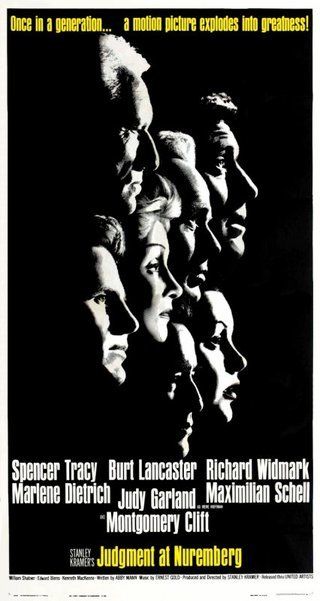
A poster for the film Trial of Nuremberg.  Stanley Kramer, Judgement at Nuremberg (1961: United Artists).
Image courtesy of https://elcinema.com

Sources:

Robert Moeller, “How to Judge Stanley Kramer’s Judgement at Nuremberg” German History Vol. 31, Issue 4 (December 2013): 497-522.

W. Sollors, “Everybody Gets Fragebogened Sooner or Later’: The Denazification Questionnaire as Cultural Text.” German Life & Letters. Vol 71, Issue 2 (2018): 139-153.

The Road To Hell Is Paved With Good Intentions, The Fragebogen

By Blaise Rego

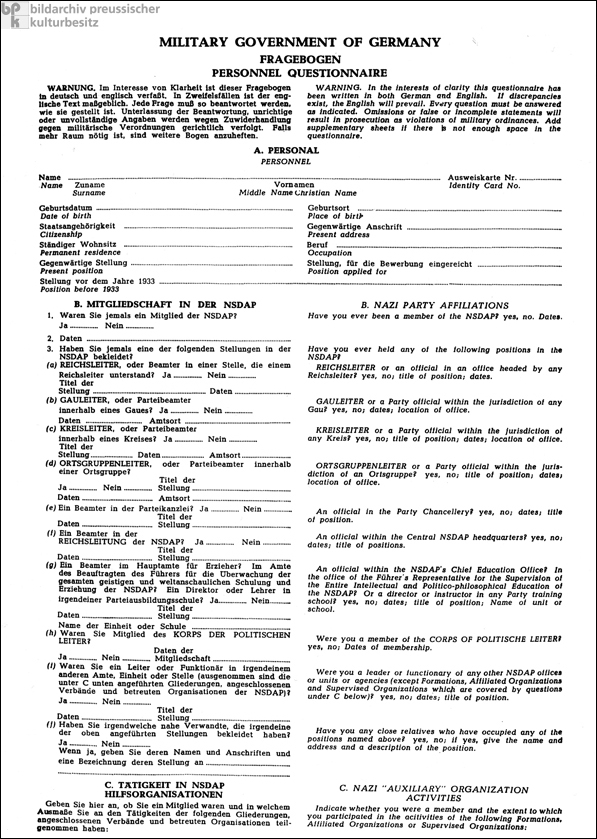
A copy of part of the Fragebogen, this section is about Nazi affiliation

I’d like to hope that everyone reading this post would agree with the idea that after WW2 Germany needed less Nazi and even less in positions of power. This idea was the basis of the allied task following the end of the war. Germany had to be rebuilt, institutions must be reconstructed and Nazi must be punished but figuring out who would be able to help on this task and who would hinder progress being made was the primary task before much could be accomplished. The American military government created what became a 131 question questionnaire most commonly know by its German name, Fragebogen, the German word for questionnaire. This questionnaire asked everything from eduction history to voting history to questions of ones height and weight. This was deemed to be a necessity as there were millions of germans living in allied occupied areas and it was deemed inefficient to interview and investigate very single person in the country. So this bureaucratic form was made to root out who needed to be sought out and investigated deeper.

This is were the crux of the issue lies, this questionnaire is good on face value, if people are honest, at determining who was or was not a collaborator with a Nazi regime. However it lacks the nuance necessary to root out deeper reasons why people join the party. Some as the reading state joined out of fear, in one particular example from the book Small Victory a man joins the party in an attempt to save his implied jewish daughter. Stories such as these, fictional as they may be place the idea in our brains that maybe individuals might’ve had deeper reasonings for joining the party than just antisemitism and hate.

This leads to the deepest issue with the Fragebogen the hypocrisy of the American state. In the “everybody gets Fragebogened sooner or later” reading there is a story of American officers being openly antisemitic in post war interment camps. This story demonstrates an idea that the Americans were doing this less to root out those with hatefully beliefs but more to push their enemy even in defeat. When speaking of American hypocrisy on hate, it must be mentioned that at this time segregation was still alive and well and wouldn’t be made illegal for another 20 years. The idea of the Fragebogen was well intentioned as a way to root out those who may have participated in heinous acts during the war but it turned into a bureaucratic nightmare that exemplified American hypocrisy and insensitivity to what those in Germany may have truly believed.

Nazism’s Lessons & Legacies

By: Nicole Beswitherick

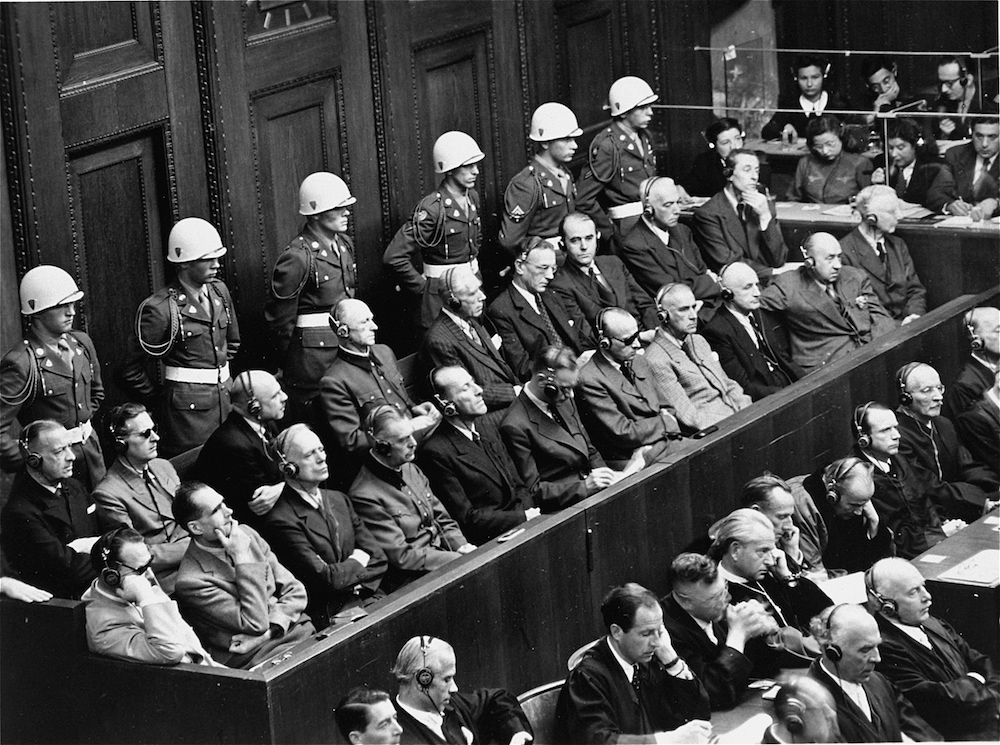
The defendants in the dock at the International Military Tribunal at Nuremberg. ——US Holocaust Memorial Museum, courtesy of John W. Mosenthal

As someone who had great grandparents who either fought on the front lines of WW2, nursed the injured or yielded crops, the topic of West Germany and Nazism is not completely unfamiliar. The main question in regard to this week’s readings is “What did coming to terms in the past (Vergangenheitsbewältigung) look like in postwar Germany?” If we look at the reading from Fulbrook, “The Diffraction of Guilt”, we see that a West German judge could still appear to have more sympathy with former Nazis than with their victims, even more than 20 years after the end of the war. It was added that a long prison sentence for the accused, in their advanced stage of life, also destroys their economic existence; and this makes it difficult to build it up again after the sentence is done (Fulbrook 323). West German interpretations of the law offer the idea that killing was a less odious crime if the victim had no suspicion that it was going to happen. From what I’ve gathered from these readings, the Nazis and West Germans were simply coming up with excuses to make their crimes come off as justifiable – which they are not.

In Sollors’ work, I found the explanation of the title of the reading quite interesting. “Everybody gets fragebogened sooner or later”, was described to summarize the American literary responses of the period (Sollors 147). It is seeming that Sollors makes many connections to America and its involvement and perhaps progression toward Nazi Germany. In Salomon’s version of the questionnaire in the chapter,  it not surprising to Sollors that Americans are viewed as the true anti-semites (Sollors 150). He tries to expand on this, but I find this particular reading did not do fantastic in translating or explaining the quotes written in German. But in Moeller’s “How to Judge Stanley Kramer’s Judgement at Nuremberg” there is also a connection to Americans being that Mann asks: was postwar America inching toward Nazi Germany? (Which I will be asking in this week’s discussion for those who stumble upon my reflection). In this article, in particular, Moeller gathers the theory that Kramer and Mann used the film to reflect on what America had done, and America’s transgressions. They did this, according to Moeller, by focussing on the fatalities and presenting German fascism as a tool to measure the forms of injustice that permeated the daily life of Americans in 1961.

Works Cited:

Mary Fulbrook, “Diffraction of Guilt” and “Voices of the Victims” in Reckonings: Legacies of Nazi Persecution and the Quest for Justice (Oxford University Press, 2018), pp: 314-336, 361-377.

W. Sollors, “Everybody Gets Fragebogened Sooner or Later’: The Denazification Questionnaire as Cultural Text.” German Life & Letters. Vol 71, Issue 2 (2018): 139-153.

Robert Moeller, “How to Judge Stanley Kramer’s Judgement at Nuremberg” German History Vol. 31, Issue 4 (December 2013): 497-522.