Last week, the Anna Cento Bull article introduced the related concepts of the ‘empty signifier’ and the ‘chain of equivalence’. This week, they’re everywhere. To review, empty signifiers are symbols invested with a different meaning for multiple groups through a chain of equivalence. Thus, A also means B and C so TERM X means whatever you want it to mean. Empty signifiers are necessary for populism because if a signifier (a word, term, or symbol) had a fixed meaning (if it only meant one thing), then it would only be able to capture the imagination, or represent the interests, of one group. Populism needs to be popular with multiple groups by being all things to all men. It does this by taking a term and abstracting it until it loses all actual substance, so that it can then be invested with multiple diverse significations simultaneously.
For example, the Kalmar article describes how, in Hungary, ‘George Soros’, a signifier accurately representing one very rich man, has come to signifier ‘the Jews’, Freemasons, the Illuminati, immigrant hordes, being anti-Christian, and being anti-Hungarian. ‘George Soros’ has been emptied of its particular meaning through a chain of equivalence (now this guy means all of these things), until it has been rendered a universal negative. As Kalmar says, “Orban and Fidesz blamed George Soros for just about everything they opposed” (189).
This is all pretty boilerplate European antisemitism, but the Moses article explicates a less familiar linguistic taxonomy in Indonesia. There, a complicated history of colonialism has resulted in ‘antisemitism’ being emptied of meaning and conflated with anti-imperialism and anti-capitalism. Actual Jewish people are a very, very small minority in the country, so ‘the Jew’ becomes ‘the colonist’ becomes ‘the foreigner’ becomes a rationale for violence against Chinese people.
Finally, in the Vice video about Germany, being opposed to Covid vaccinations is, through a chain of equivalence, connected to a shadowy cabal plotting to enact a new world order, which leads to antisemitism, because the shadowy cabal is Jewish, because of course it is. And herein lies the power of a movement like QAnon. It’s not ridiculous and nonsensical, it’s an infinitely big tent constructed to accommodate all of the empty signifiers in the world. It’s stupid like a fox.
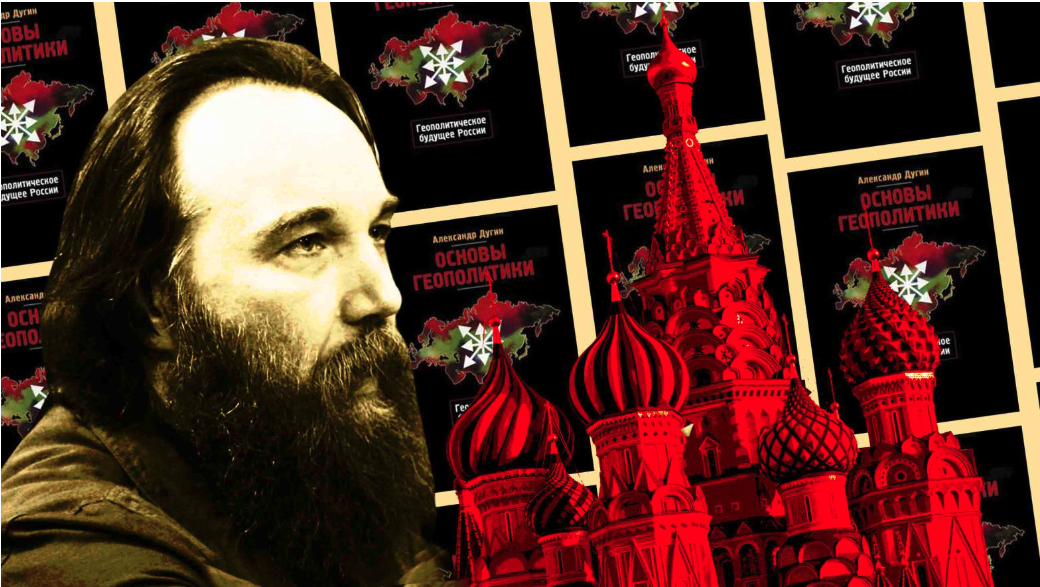
More than eight months after Russia’s February 2022 invasion, the War in Ukraine continues to be waged. Putin and a cast of murderous Russian officials continue to make headlines. But perhaps no figure is as curious as the neofascist Russian “philosopher” Alexander Dugin. His name resurfaced last August after his daughter (herself a far-right journalist) was killed in a car bombing in Moscow.
Relatively obscure in the West before Russia’s pre-February military buildup, Dugin has been a considerable intellectual force in Russia during the last two decades, advocating for a new Russian Empire built on anti-liberal and authoritarian values. But what is perhaps most curious about Dugin is that he was heavily influenced by the Italian fascist and neofascist thinker Julius Evola.
How did this Italian fascist theorist’s ideas reach Russia? How did Dugin use them to form his own political ideologies? Is there a connection between Dugin, his ideas, and Vladimir Putin?
Evola’s writings consistently denounced modern progress, liberalism, capitalism, socialism, and communism. It differed from traditional conservatism by also decrying Christianity, democracy, individualism, and the bourgeoisie – epitomized by the neoliberal USA. Evola was also a proponent of mythical Hyperborean histories of European ethnic origins. He even appropriated religious and cultural traditions from Buddhism and Hinduism to promote essential psychic and spiritual differences between “races,” classes, and sexes.
Alexander Dugin and Evola’s Ideas
Alexander Dugin was a Soviet dissident who first encountered Evola’s works in the final days of the USSR: “These readings changed my life,” Dugin said in a 2018 interview, “I had never heard anyone describe the contradictions of the modern world like Evola.” Dugin was expelled from university for “unorthodox activities,” which included the translation and samizdatpublication of Evola’s Pagan Imperialism.
Dugin remained in relative obscurity during the 1990s. But his status as an international far-right intellectual was elevated thanks to his “Eurasia Movement” launched in 2001, which claims to have a presence in 29 countries. Moreover, his ascent to academic respectability was completed through his appointment as chair of the international relations section of the sociology department at Moscow State University in 2009.
As is the case with many far-right intellectuals, Dugin’s political theories are complex and convoluted. Nevertheless, there are some major themes that can be extracted. First stated in his seminal work, TheFoundations of Geopolitics (1997), Dugin argued for the revival of Evola’s fascist idea of traditionalism: an eradication of modern, polyethnic, egalitarian, feminist, and democratic cultures, which he reduces to “American Globalism.” Dugin’s vision for Russia is of a vast, Eurasian, authoritarian empire of racially pure regimes in which women are confined to the home and breeding. Furthermore, Dugin also stated in a book to Hyperborean theory that Russia has a theological destiny to leader the “modern day Hyperborean societies” of Eurasia against the American-rule “Atlanticist” civilization.
Dugin and the War in Ukraine
Dugin’s vision for a vast, Russian-ruled Eurasian Empire rejects the idea of a distinct Ukrainian culture and nation. In The Foundations, Dugin argued that “Ukraine as a state has no geopolitical meaning, no particular cultural import or universal significance, no geographic uniqueness, [and] no ethnic exclusiveness.”
Furthermore, Dugin warned Ukraine in 2003 that embracing a pro-Western “Atlanticist model” would expose Ukraine to the menace of “gays, and homosexual and lesbian marriage,” values which he saw as threatening to Eurasian civilization. Here, Dugin applies Evolian ideas to the regional geopolitical situation.
Dugin’s ideas clearly reject Ukraine’s existence, as well as his threats against the country moving closer to the West. But establishing clear links between Dugin’s ideas and Putin is challenging, since the Kremlin is veiled in a shroud of secrecy that makes any decisive claim untenable.
It is also difficult to overlook the convergence between Dugin’s ideas and Putin’s rhetoric, in particular the claims which deny Ukraine as a distinct nation and culture. The February 2022 Invasion and the ensuing brutal war waged by Russia further reinforces the idea that Putin and the Russian Military are acting on the denial of Ukraine’s right to exist under historical, philosophical, and cultural pretexts, which itself constitutes a genocidal practice.
We can glean a few important ideas from the case of Alexander Dugin’s relation to Julius Evola’s ideas, as well as his non-negligible ties to formal Russian Power. Firstly, ultranationalist and neofascist ideas – like the ones espoused by Evola – can travel outside of their original national context. Secondly, right-wing thinkers (like Dugin) in other national contexts (like Russia) absorb and appropriate these ideas to develop their own right-wing and neofascist theories. Finally, under certain conditions and in certain critical moments, these ideas can draw the attention powerful people who use them to rationalize imperial projects and atrocious wars.
The Scott article and the Vice news video provide interesting insight into an issue that I’ve not considered until now. Qanon has been a pseudo cult like conspiracy theory for years now. Traditionally they would often only be associated with their unfounded claims on things like the existence of a global elite group of pedophiles. “Its roots date back to late 2017 when an anonymous social media user — using the name Q — published several cryptic messages on 4Chan, a platform often used by fringe conspiracy theorists and online extremists.” (Scott) However, the spreading of their influence has also led to a spread in their beliefs across the pond. As the Scott article also notes, the outbreak of Covid-19 has allowed the conspiracy to do exactly that. Many groups within Europe like the one highlighted in the Vice News video have embraced Qanon and reinterpreted it by adding their own spin on it in the form of anti-vaccination conspiracies, anti-Semitic beliefs, or even believing in Chancellor Angela Merkel being a puppet of the previously mentioned global elite. Specifically with the anti-Semitic part, this has been a trait that has remained particularly synonymous with Qanon conspiracies wherever they go. In all honesty, this conspiracy group stands testament to the fact that Societies will always have loonies, and if you give them the means to communicate easily with one another (like with the internet), they can spread and thrive in sometimes uncontrollable ways. In other words, we should tread carefully to not enable groups like these to evolve into anything more than what have seen, as this leads down a dangerous path that Germany unfortunately took in the 30’s.
The Far-Right has been around for a very long time but lately we’ve seen a rise in new tactics used by the Far-Right which is leading to the rise of the Far-Right groups and to a rise in Far-Right extremism. The Internet has given rise to the ability for people from all over the world to connect and share ideas and for people who otherwise would never have gotten the opportunity to meet one another to form online groups. This has led to a new wave of Far-Right extremists finding groups on social media and websites like reddit and 4chan. This is leading to a much more dangerous version of Far-Right extremism the likes we haven’t seen before.
The Far-Right are very different from what they were, say 20 years ago. It used to be very easy to see who was a Far-Right extremist and who wasn’t. But gone is the Skinhead look of shaved heads, combat boots and swastikas, now replaced by people who dress just like everyone else, dressed in nice suits or dresses, or regular everyday clothes. Brands like Thor Steinar capitalize on making Far-Right shirts that fit in with everyday life, even if their shirt was hateful its so hard to tell with all the secret coded language like having a shirt with ’88’ on it since the 8th letter of the alphabet is H and so 88 stands for HH which stand for Heil Hitler. The Far-Right is no longer a fringe group on the outskirts of politics they are now front and center and gaining a lot of support all over the world.
The Far-Right wants to be as mainstream as possible and always be in the public eye which is why the Internet and its far reach is invaluable to them. With more and more Far-Right politicians and groups using the internet and other platforms to spread their hateful messages the more normalized it gets in society and especially on the Internet. As the Far-Right tries and spread their message online they use many platforms which will pick up parts of their hate speech and will repost or share this message in other forums through the use of memes and various other means. This makes this type of speech seem normal and for some people especially youths this can be enough to persuade them to come to the Far-Right. This normalization of Far-Right hate speech can be very dangerous as it can and has many times led to hate motivated crimes against women or Muslims or immigrants.
Through the normalization of hate and hate filled speech by the Far-Right they have motivated people all over the world to commit horrible hate motivated crimes, fueled by Far-Right conspiracies. Many hateful groups have begun to spring up online all usually a bit different or targeting their hate towards a particular group but they are all essentially the same just following Far-Right conspiracies and using them to justify committing horrible acts. Groups online like Incels mix their sexual frustration with traditional Far-Right conspiracies, such as the Great Replacement Theory, to spew hate against women and immigrants, who they perceive to be taking women from them. People like Elliot Rodger who went on a killing spree in California in 2014, Rodger went on this spree because of his hate for women since he perceived himself to be the “ideal magnificent gentleman” and couldn’t understand why women did not want to have sex with him. Another notable Far-Right extremist is Brenton Tarrant, the man responsible for killing 51 people in two Mosques in Christchurch New Zealand in 2019. Not only was Tarrant’s attack fueled by hate towards Islam which was fostered in online chat rooms, he then proceeded to live-stream the shooting to further promote the hate towards Islam.
There are so many other examples of Far-Right extremists I won’t get into but it just shows how this hate is growing and is growing fastest online, where small groups of people with fringe ideas can meet and discuss and fuel one another’s hate. It used to take large groups of people all with the same ideas to form a strong group with the power to affect modern politics and society, but that’s what’s so dangerous about today, a small group or even a lone extremist can be motivated by online forums and videos of Far-Right politicians and Far-Right mouthpieces, people like Andrew Tate, and these small groups can do unprecedented damaged through domestic terrorism and hate motivated crimes.
European identity has a lot to do with collective memory. It’s how states like Italy and Germany came to unify, and how new states emerged within the European continent following the end of the First World War. Fast forward to the end of the Second World War, decolonization and the dissolution of the USSR, this collective memory has been diluted by years of immigration and emigration. Faced with the challenge of adapting their identity, Europe has been divided amongst their responses.
Memory also serves in determining this response. Among progressives, imagery of the Kindertransport (the rescue effort of children in Nazi-occupied territory) and Jewish refugees seeking to escape Nazi persecution are conjured. In response to the Syrian Civil war and the ensuing migrant crisis, Germany was one of the most eager European states to open its doors to migrants because it had come to terms with its Nazi past; “remembering to remember.”
Populists on the other hand in states like Poland and Hungary have not been confronted about their country’s Nazi-collaborationist history, and have thus not been able to come to terms with their pasts. Political action in these states is dependent on having immigrants as an “other.” As G.M. Tamas puts it, “only racism promoted by the state can persuade people to vote for the ‘dismantling of the few remaining elements of social services and social assistance.’” Through this rhetoric, we see groups like QAnon take root in circles with already similar thought processes.
The myths surrounding European identity buckle in the face of postcolonialism and mass migration because they were created by “othering” foreigners more so than engineering their own identity. It’s a lot easier to say “you’re not me!” to someone who looks and speaks a different language from you than to instead stop and question yourself, “who am I?”
In efforts to avoid an economic collapse following the Hot Autumn, the Christian Democratic Party reached out in a historical compromise (compromesso storico) with the Communist Party. With the tensions of the ongoing…
Going into these readings I already knew a lot about the Hungarian government’s disdain towards George Soros. They believe that Soros is behind some plot to destroy Europe and Christianity by filling it with Middle-Eastern refugees. Of course the idea that these refugees are dangerous is islamophobic, but the use of Soros also implies a Jewish-ness to the conspiracy. However, Hungary can escape accusations of anti-semitism by dancing around the question and using dogwhistles (the triple-parentheses dogwhistle comes to mind). This was the focus of the Kalmar article, but the Stone article and the articles about QAnon also discuss this.
In the Stone article, the connection is made between Eastern Europe not dealing with its anti-semitic past and the existence of its islamophobic present. Open anti-semitism isn’t allowed, but anti-semitism can be rerouted through conspiracies that are subtly implied to be Jewish in nature. It reminded me of the movie Look Who’s Back where (as far as I remember) Hitler comes back in modern Germany and becomes a far-right, anti-refugee “””comedian””” who mirrors the islamophobic rhetoric Stone is talking about.
The Guner article feels slightly separate from the others in discussing the ‘whiteness’ of the Turks. The racial ambiguity of Turkey reflects the social construction of race: the Turks originated from Central Asia but have been often considered white and now have a perception of themselves as black (in what seems to be a spiritual/cultural way). I remember Looks Who’s Back very briefly poking fun at this as well.
While Democrats in the United States fight to keep women and their bodies protected from the hands of grimy Republican white men, women and pro-choice advocates in various countries across Europe may feel that the current affairs in America hit a little too close to home.
Since Poland’s complete ban on abortions in 2020, pro-choice advocates have been discretely working to offer crucial medical services to women in need. This has led to the current trial of Justyna Wydrzynska. Wydrzynska, one of the founders of the Polish group Aborcyjny Dream Team (ADT), is currently at trial after being accused of illegally assisting a woman with an abortion. Wydrzynska allegedly provided pills to a woman in an effort to induce a miscarriage. Although the trial has been adjourned until January, Wydrzynska’s circumstance is a grim reminder of the obstacles that women in Poland face when they try to defend their bodily rights. Specifically, these dismal prompts can be traced back to the aggressive misogyny that has been present in Europe throughout history.
When working to understand the roots behind European abortion bans and these violent forms of control over women’s bodies, a significant amount of scrutiny should be placed at the hands of fascism and its misogynistic ideals. It is understood that fascism is obsessed with control and aggression towards the ‘other’. More specifically, we should consider that it is most often governments and political figureheads that use fascism to impose control. It would be be drastic to consider every individual person who opposes abortion to be a fascist. However, when we see these massive institutions imposing aggression against minority groups, this extreme abuse of authority can be considered a fascist act. Whether this is with restrictive voting laws that diminish the voice of racial minorities, or abortion bans that force women to help boost birth rates, fascism leaves an impression on each radical gesture imposed by the far right authorities. In Poland, this has enabled the country’s government to ban abortion and take egregious action against women who go against this restraint. Fascism is an extremely intricate subject as there are multiple definitions attached to it. However, when it comes to connecting the concept with anti-abortion sentiment, we see that fascism is continuously used by powerful institutions to control women, their sexual identities, and their bodily rights.
Turning away from Poland and towards Southern Europe, we see that with the election of Italy’s new prime minister, Giorgia Meloni, fascist rhetoric seems to have brought with it conversations surrounding future restrictions on abortions. Meloni has openly voiced her desire to limit abortion access and represents the Brothers of Italy party which desires to place a ban on abortions in general. Along with this, the party is also against permitting Italian citizenship to children born to non-Italian parents. Not only is the Brothers of Italy party actively working to restrict the number of Italian citizens, but the group is also pushing to provide benefits to Italian women who give birth. These efforts are considered by some to be a repeat of Benito Mussolini’s ‘Battle for Births‘ campaign. Mussolini is known for his historical fascist rhetoric and aggressive actions against non-Italian citizens during the 1920s to 1940s. Specifically, Mussolini’s ‘Battle for Births’ policy actively worked to eliminate non-white foreigners in Italy while promoting the birth of children with ‘true’ Italian blood. This policy goes hand-in-hand with fascism as it works to uphold the privilege and power of Italian nationality while reducing the importance and social position of non-white foreigners. Even more specifically, the policy was implemented by the government to control the bodies and actions of women. Therefore, it is alarming to see a new Italian party echoing the actions of Mussolini and his administration.
Although the impact of fascism on anti-abortion sentiment may be stronger in some countries compared to others, the history of fascism in Europe proves to still impact right-wing aggression today, even if minimal at times. This aggression has clearly played out through anti-abortion rhetoric across different countries in Europe. Although it may seem drastic to blame anti-abortion on fascist thought, it can be argued that when massive governments and political figureheads work to oppress racial and gender minority groups, this is an explicit act of fascism.
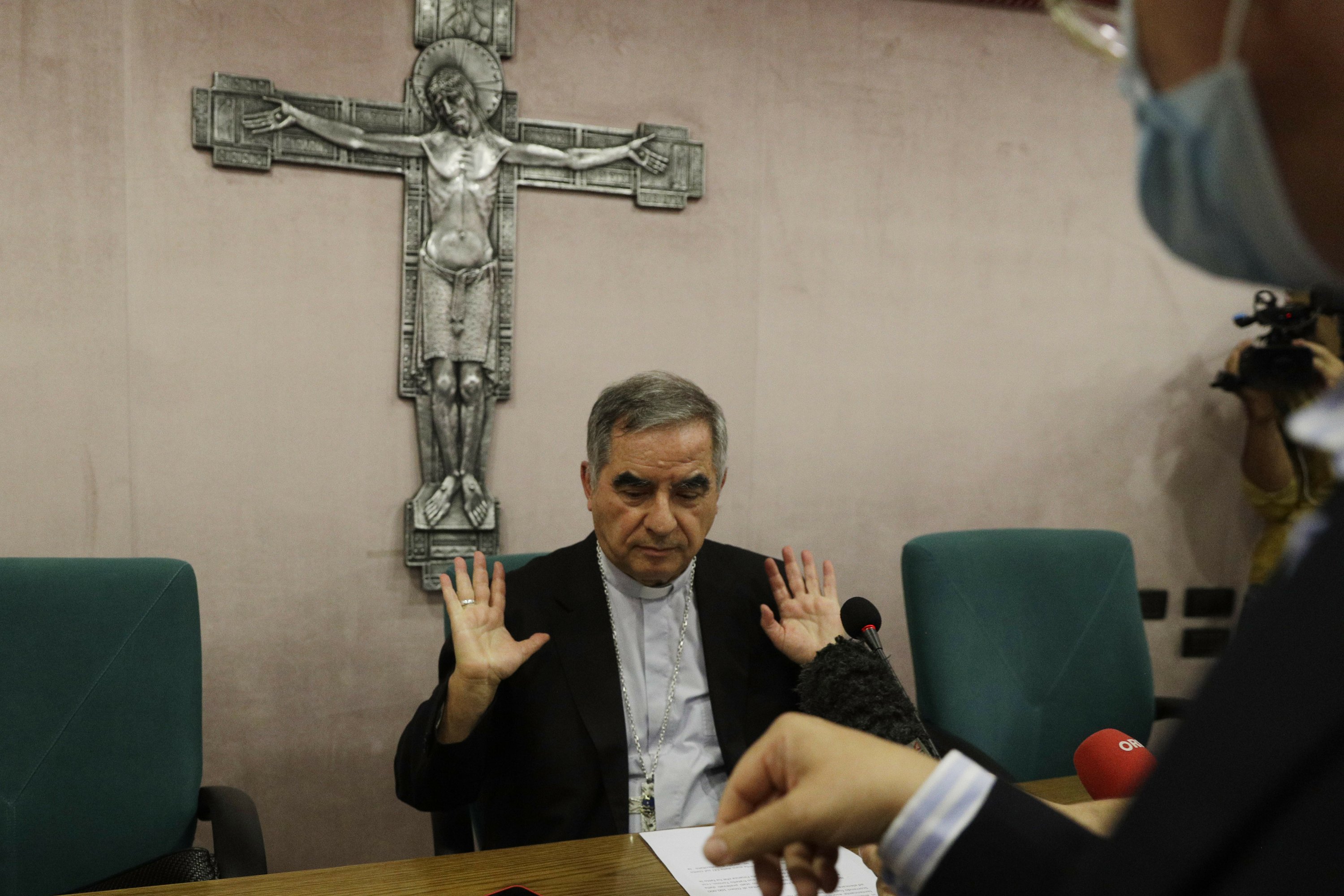
“There’s no government; there’s no pope.” What better sentence to begin this second op/ed that explores the strained and ultimately corrupt relationship of Italy’s state and religion. While Italy plays a huge role on the global stage many people overlook the country’s deeper history, which has come to shape the place where many only see it as their favourite vacation destination and nothing more. Failing to understand the dramatic shift this society has taken post Second World War, which forced Italy to rethink and restructure their society to meet the new democratic standards. And while many European countries immediately flocked to either progressive or conservative government structures Italy found itself never really finding any permanent footing to begin with.
Since 1948, the country has had 68 governments, one of the many reasons for this volatility is in large part due to the Catholic Church’s long historical ties to political undertakings within the country, such was the case in 2005 when the Church encouraged voters to abstain from voting, after a referendum was likely to occur. Many Italian citizens have felt this constant shift back and forth, with many stating the consistent failings of politicians and the increasingly out of touch role the Catholic Church has with the public in modern times. By having a society that is so entrenched in tradition the translation to fully hit the mark in terms of having a free uncorrupted state is difficult to obtain, with the main question being how does one progress away from such an ingrained system of religious interference? And is less interference really needed? As many would argue, it has worked so far.
Many sources highlight the complex relationship both the state and Church had with one another under a historical lens, influencing each other and the future they would take during the 20th century, ultimately shaping much of what encompasses modern Italy today. With such a large portion of the population adhering to Catholicism or having some relation to the religion, it becomes difficult to separate the two from each other becoming a common reality in everyday life. While the arrival of Silvio Berlusconi at the end of the century did bring some relative calm to the rapidly succeeding rate of heads of state, much of his party’s philosophy was derived from Catholic rhetoric, which reintroduced conservative religious politics on a majority scale for the first time since the fascist regime. There may be a sense that the Catholic Church’s authority has faded in recent years, as many have become further disillusioned over scandals such as Vatileaks back in 2012 which exposed tax cover-ups, sex scandals and blackmailing towards homosexual clergymen, and also being given the title of most corrupt state in Western Europe in 2021, the reality is that there history with the people and spiritual significance over Italian society still outweighs wrongdoings.
With the recent induction of the Country’s first Fascist party since Mussolini it will be difficult to predict what the future may bring between state and religion, perhaps nothing will and everything will remain the same, or as many sources are already hinting, maybe there will be a better environment for both politicians and the clergy alike to cross paths. As many young Italians may find their priorities aligned with the ideals of an Italy that was once was, like so many others have who find themselves in right wing politics. A longing for a past and a better time is a key thought in the minds of everyone globally as Covid-19 kept the country gridlocked for much of 2020, and with religion providing a comfort in times of uncertainty many young Italians are finding themselves becoming more spiritual. In addition to more up and coming leaders not being shy about their ties with Catholic beliefs, one thing is for certain this new religious Italian landscape remains just as robust and fragile as it once was.
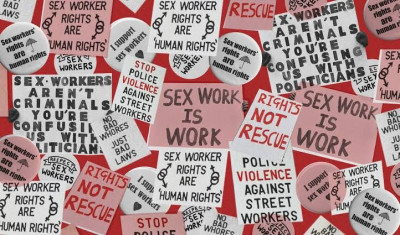
From bans on LGBTQI “propaganda” to yearly debates about kink at Pride, it is no secret that we are seeing an uptick in popular, transnational conservatism about sex. While much of the responding conservation has focused on protecting the LGBTQ+ community, one equally vulnerable group is often neglected: sex workers. Recent attacks on sex workers include a notable rise in SWERFs [Sex Worker Exclusionary Radical Feminists] in England, Spanish attempts to ban prostitution, and votes in Bristol town council to ban strip clubs. However, unlike previous attacks on the industry, these movements are not solely originated from the Right, but also from the Left. As such, anti-sex work movements, grounded in sexist and moralist populist trends, reconstruct Far-Right ‘traditionalist’ views on sexuality and gender, which threaten to bring down the liberation of women, femmes, and queers.
Sexist Populism and the ‘Victim Narrative’
As historian Kate Lister notes, the “Victim Trope”—a staple of anti-sex work narratives on both the Left and the Right—“repackaged [sex workers] as a pitiful victim in an uncaring world” who ultimately need to be saved for their own moral good by non-sex workers. These narratives take on a moral dimension laced with chauvinistic tendencies and situate them within the trend of sexist Populism. Many historians and theorists define populism as a political style that positions the everyday man as ‘pure’ against the ‘corrupt elite’, drawing particularly on emotional reactions against the ‘Other’ and institutions. Yet, sexist Populism takes on a gendered dynamic, presenting ‘traditional’ gender roles as endangered to radicalize ‘the people’, usually with an emotionally-driven paternalistic or chauvinistic flare. ‘Victim narratives’ present (white, female) sex workers exclusively as subjects of male abuse or rescue, upholding a ‘traditionalist’ perspective on gender. In keeping with their Victorian origins, such anti-sex work narratives present the non-monogamous, transactional nature of sex work as inherently ‘damaging’ and ‘abusive’. Therefore, monogamous (often heterosexual) partnerships rooted in love and/or marriage become the safe moral norm, a key viewpoint of Far-Right populism.
When women and girls are placed in this victim role, an abuser must emerge as the “Other” against whom the everyday man must take a stand. It is here that the populist anti-institutional, ‘othering’ process is injected. In modern takes on victim narratives such as this one, consensual sex work is conflated with sex trafficking and, for Dworkin Feminists, rape. In this way, states who have legalized sex work (the majority in Europe) become enablers of abuse who “wash their hands” of blame. Variousconspiracy theories have made the rounds on social media, positing that ‘global elites’ are sex trafficking children for “sexual rituals” or “blood libel”. In their evocation of sexual deviancy, ‘deep state’ plots, and blood libel, they push antisemitism. Evidently, the emotionally-charged image of imperilled women and children functions to maintain myths of ‘Otherness’ and weaponize a dichotomy of pure/un-pure.
Populist Threats to Feminism
Many sex workers have voiced concern about this rise in whorephobia. Firstly, they fear that it does not reflect the realities of the industry and ignores sex workers’ critique. For example, many sex workers point out that they are going after the wrong people when making conflations between sex work and trafficking. While, as a high estimate, 1 in 7 sex workers in Europe could be trafficked, sex workers clarify that a total ban would drive the industry further underground, dragging these victims down with it. By ignoring these lived experiences in favour of ‘rescue’ narratives, both Left and Right populists maintain the chauvinistic, sexist populist trend and make things harder for real sex workers and the victims they claim to ‘protect’.
Secondly, these populist narratives endorse ‘purity’-based rhetoric that are fundamentally exclusionary. SWERF narratives often present Suffrage-era feminism as the foundation of the feminist movement. They repeat the First Wave argument that women are morally superior, embodied by the ‘motherly’ image, to men as they’re ‘inherently’ prone to uncontrolled, sexualized violence. Furthermore, in this popular memory, the Sexual Revolution becomes an extension of patriarchy, having “hurt” feminism and women by centring sexuality. With the Sexual Revolution positioned as antithetical to ‘true’ feminism, its emancipatory elements can easily become ‘un-pure.’ Everything—the normalization of casual sex, trans liberation, and especially the acceptance of sex work—becomes a threat to women. As such, by romanticizing earlier, exclusionary periods of feminist history and ignoring the voices of sex workers, SWERFs align themselves with a conservative moral purity argument that has historically been used to deny liberation to those outside the gender-sexual norm.
As these victim narratives leech into the public consciousness through apps like Tik Tok and manifest in mainstream political institutions, we must remember that they do little to protect women. In fact, by identifying the use of populist tropes that misplace anger surrounding very real issues of patriarchal and capitalist violence, we can see how they maintain gender essentialist binaries and drive us towards sexual conservatism. If anything, understanding this process should shed light on why feminism must make room for the voices of all women, regardless of their profession.





 Hate 2.0

You must be logged in to post a comment.