The Missing Definition

By Blaise Rego

The article by Catherine Fieschi defines three types of populist from the most salient “the strictly populists”, these populists use dog whistle words to spark xenophobia without being overt in their othering of groups. The other side of her definitions were “the democratic activists”, they are populists who focus their emotions towards a particular law or political figure.

I feel though that she has missed a new type of populist that is more dingoes politically and socially than any of the other groups. I would call this group “the quiet part loud”, these populist forgo social and political norms and quite simply say the quiet part out loud on most things. This has been clearly seen with two recent political lighting rods, Donald Trump and Jair Bolsonaro. Donald Trump is a particularly important example of this group as he maybe be the original member. During his 2016 presidential campaign Trump’s openly racist vitriol endeared him to constituents who say him as a man who would say what they were thinking. His statements about immigrants from Latin America, demonizing them and demanding that they stop coming to the USA galvanized a part of the population that had felt othered.

I believe that to define this group it would look something like this; this group are figures that play on openly racist or xenophobic tropes or ideas to grow their base. Not only do they other an ethnic/ ideological group but they also other their opponents. These figures state that their opponents are willfully killing their nation and that the leader is the only way to save the state.

Populism as a Comparative Tool for Democracy

Populism has always been a torn in the side of democracy. As argued by Catherine Fieschi in A Plague on Both your Populisms, resentment is a sentiment that is as the foundation of populist groups. It deviates their beliefs of democracy into emotions rather than sticking to facts and the legal process. One of the big issues of democracy would be the time it takes to create policies, enforce them, and to change the current government. This means that populist discourses are always enticing for people that are tired of slow process and are not happy with the results, their resentment and anger is drawn to form a mob mentality that is promised radical changes. In a way, populism is necessary for any democracy to properly work. On earth, there is no perfect societies and no communities that think exactly alike. This means that on the political spectrum, there will always be a lot of individuals close to the center, on the right or on the left, with always a handful of people on both extremes. Populism is always a small group of people that makes more noise and its normal that they have more visibility than other political groups, because their takes are more radicals and they challenge the concepts of our society. While it does not mean that they are right or necessary wrong, it helps people think about what they agree with and what they don’t; it reveals that moderation in politics is probably better than too much radical changes or too fast ones. It is true for both left and right populism, as ultimately their goals are similar, change their society in the way they see fit the most.

Populism for all the people

By Jim Dagg

I don’t know how it feels to everyone else but, as a Canadian who believes he lives in a mostly just pluralist welfare state… left-wing populism seems to make a lot more sense than right-wing populism. Characterized as wanting to address socio-economic challenges, rather than socio-cultural ones seems clearly the better way to deal with societies ills. If people are working and/or feeling supported by their government, then they have less to be resentful about.

The inclusionary vs exclusionary comparison further validates this viewpoint. Where the left tends to want the state to provide material support to the poor (“including” them in beneficial policies), all the right seems to offer is an enemy (“excluded” immigrants and assorted others) on which to place blame for their problems.

Further, the targeting of elites seems so much more natural for the left. Neo-liberalism, as a jobs-killer is an excellent external elite. Also large corporations which don’t pay enough taxes and don’t give their workers a fair wage are great targets. On the right, when they want to make enemies of immigrants and others they have to blame someone for the policies that permit such things to happen. When the right is in power, that could be trouble. Luckily in Europe you can always blame the EU – which is so naturally an elite.

I appreciated the authors (Fieschi and Mudde/Kaltwasser at least) who spoke about populism’s relationship to democracy. It can be “both a threat and a corrective for democracy”. Because they give voice to groups that feel ignored by government, populist parties can alter the political discourse in a positive (say corrective) way. Mind you, they don’t necessarily want change (particularly on the right): they benefit from a thriving resentment.

Definitions, definitions…

By Felix Nicol

I’m sure we are all used to hearing and talking about this theme, but time and time again, the problems of defining terminology comes back up. March’s article identifies a core three, including “people-centrism, anti-elitism and popular sovereignty.” On the other hand, Fieschi identifies a core refusal of the democratic process. This was something that different articles this week tackled, with a few drawing the conclusion that populism was not present in the centre. Perhaps most interesting in their analysis was Fieschi, who outlines xenophobia not only in the far-right, but also in the left. While I certainly understand her point, I feel that the shifting of our understanding of terms is often problematic in the process of better understanding populism. Should we consider the pliability of xenophobia, or reassess our understanding of populism? This is especially relevant in the discourse around identifying populist parties, which often seems closely tied to constant redefinition of the concept. Perhaps, in this regard, if we need to contort the core foundations we understand in order to place these parties in the same groups, considering their fundamental difference could be useful.

Apart from this recurring theme, I felt a bit conflicted reading Fieschi’s statement that left wing populism explains “why populism is attracting the favours of otherwise reasonable people.” I felt there was some bias that needed to be underlined here, because certainly this looks to paint the right in a demeaning light. In this regard, I feel something that needs to be considered in understanding the growth of far-right populism is the societal perceptions placed on them. If general conservative ideology is pinned as “non-reasonable,” are we not pushing these people further towards the extreme? I feel like this kind of statement over-glorifies the left, implying a clear moral and intellectual superiority over those who identify with the right. In this sense, while I somewhat understand where the author is coming from (certainly, liberal ideas on women’s and LGBT rights should be recognized as AT LEAST “reasonable”), I can’t help but feel she left her bias at the door. What do you guys think?

Are Populism’s really so different?

By: Cyrus Hutnyk

This week’s readings focus largely on comparing the intersections between left-leaning and right-leaning cases of populism. The two ends of the populism spectrum are actually more aligned with one another than one might expect given our preconceived understanding of what it means to separate things politically by the left or right-leaning ideologies. In the Rooduijn/Akkerman as well as Rieschi works that were assigned for this week, we can see that the right and left of populism aren’t that far apart. Rooduijn and Akkerman create the basis of an argument through a study that looks at the use of populist strategy and tactics historically, and how they are essentially utilized equally in the scope of both right and left-leaning populism. I find that while the arguments in the Mudde/Kaltwasser and other articles are able to outline the ways in which the different populisms are distinguishable from one another using terms like inclusionary and exclusionary, that presenting the practices and behaviours within the ideology in terms of their intersections creates a fuller picture Even if you distinguish right populism as exclusionary and right populism as inclusionary, boiling things down to the literal actions and behaviours driven and inspired by or done for populism make more sense in trying to define populism.

The argument that Firschi makes especially that has to do with the multiple different “styles” of xenophobia that can exist and are attributed to both the right and left is an excellent microcosm representing the similarities and intersections of differently leaning populisms. By and large while there are differing arguments put into perspective on whether these two ideologies are close or far to one another, it can boil down to a persuasive argument or fascinating evidence that can end up swaying an opinion on a subject where I don’t believe there is an objective truth or answer.

If Everything is Populist, Then Nothing is Populist by Aimee Brown

If you can’t adequately define a term, don’t use it, because otherwise it will be embarrassing. For example, according to the Fieschi article, populists are xenophobic, but ‘xenophobic’ just means being against a group, any group, so ALL politicians are a little bit populist, and what even ARE words, man? Similarly, the Rooduijn and Akkerman article made the absolutely mind-blowing discovery that, once the term ‘populist’ had been emptied of all meaning, it could be applied to both the political left and right! It is my assertion that populism cannot be applied to both the left and the right without becoming meaningless, applicable to everyone and no one at the same time, and analytically useless as a term.

Though Mudde, Kaltwasser, and March all (wrongly) accept the existence of a left populism, they also provide useful tools for ultimately dismantling what is far too large a terminological category. In their case study of Europe and Latin America, Mudde and Kaltwasser differentiate between exclusionary (right) and inclusionary (left) forms of populism. I would suggest that those two categories should be fully untethered from each other, because if populism is going to be a useful category of societal and historical analysis, it can’t include both. Nothing is gained from Mudde and Kaltwasser’s comparison of the two, other than a clearer sense that they have very little in common. March’s suggestion to refer to most inclusionary forms as demotic (close to ordinary people) rather than populist is worth considering in this context.

However, Mudde and Kaltwasser feel that their comparison of Le Pen and Chavez is warranted given their much-quoted definition of populism as “a thin-centered ideology that considers society to be ultimately separated into two homogenous and antagonistic groups, ‘the pure people’ versus ‘the corrupt elite’, and which argues that politics should be an expression of the general will of the people”. I would argue that the elements of this definition are necessary but not sufficient (yes, but also other stuff), and object to the inclusion of ‘thin-centered’. This is the idea that populism is chameleonic, an empty vessel that can be filled with whatever one’s ideological proclivity demands. In essence, populism can only encompass right and left varieties if it trumps ideology. But populism doesn’t trump ideology, it IS an ideology. Following Finchelstein (from way back in the day), I believe that populism is best conceived of as an evolution of fascism, and fascism is immutably right-wing.    

Explaining the Difficultly with Discussing Populism on the Left

By Kaileigh La Belle

In examining populism across the left-right political spectrum and ultimately comparing populism on both the left and the right, this week’s readings fleshed out the question of populism on the Left. For me, it particularly re-ignited the question: why is it so difficult for us to acknowledge populism on the Left? As authors such as March have highlighted, populism is typically associated with the right; and, especially as Mudde and Kaltwasser add, in a very dichotomous manner. Previously, I had chalked it up to difficulty confronting the reality in our own political biases, preferring instead to associate Populism with historically extreme (usually right-wing) political ideologies, which become more distant to us in the Neo-liberal democratic world. But these readings demonstrated the multifacetedness of this issue. For example, as Firschi indicates, xenophobia is traditionally treated as a defining feature of populism and due to the Right’s usually overt xenophobia and racism, it becomes easier to attribute populism solely to the Right. However, Firschi demonstrates that there are numerous styles of xenophobia, which can be attributed to both the Left and Right respectively. Consequently, by understanding the relationship between xenophobia it becomes evident that part of the difficulty in acknowledging populism on the left could be our narrow definition of xenophobia. Meanwhile, in his analysis of the British populist Zeitgeist, Luke March argues that populism of misused and consequently over-used. For March, the anti-elitist rhetoric on both the left and right could easily be examples of demoticism. Therefore, looking at the examples of demoticism in left parties, he disagrees with Mudde and Kaltwasser arguing that the Left is less populist than the Right. As such, the difficulty of accurately labelling populist movements can also be attributed to the erasure of demoticism in favour of populism in popular vocabulary. Overall, this week’s readings expand explications on why it becomes difficult to label the Left populist; however, many simultaneously demonstrate the importance of nuanced understandings and labelling of both left and right populism.

The Populist Horseshoe?

Owen Billo

Comparing left and right populism this week immediately brought to mind the horseshoe theory. Essentially, the idea is that the far left and far right are closer to each other than they are to centrism, as illustrated above. Specifically, this is the gist that I got from the Fieschi and Rooduijn/Akkerman articles. Fieschi brings up the same question we’ve had in discussions for a few weeks now, which is how xenophobia plays into definitions of populism. She argues that it should be included in the definition of populism because both create an ‘other,’ but tries to include left populism in there. Rooduijn and Akkerman similarly argue (although via a study) that the radical left uses populist tactics as much as the radical right. However, I found their definitions problematic. They define “radical” left as no longer being communist, no longer celebrating the proletariat, and no longer rejecting liberal democracy. That just doesn’t sound very radical to me. Yet in their study they look at nominal communist parties, which contradicts their definition.

The Mudde/Kaltwasser, March, and Vampa articles, on the other hand, seem to disagree with the horseshoe theory – and their arguments are much more persuasive to me. None of them deny that the populist left exists (because it’s undeniable), but they do greatly distinguish the two kinds of populism while linking them with that common label of “populist.” They also define populism the same way as the first authors we read in this course did, that is, as being vessels for ideology. Therefore, we can greatly distinguish populisms by the ‘pilot’ ideology. Mudde and Kaltwasser primarily distinguish them as left populism = inclusionary while right populism = exclusionary. Vampa distinguishes them (specifically in Spain) as being left populism = regionalist while right populism = centralist. Overall, I think that understanding populism as a vessel in this way works very well to overturn the horseshoe theory.

Misunderstanding Memes as a Vessel for Fascism

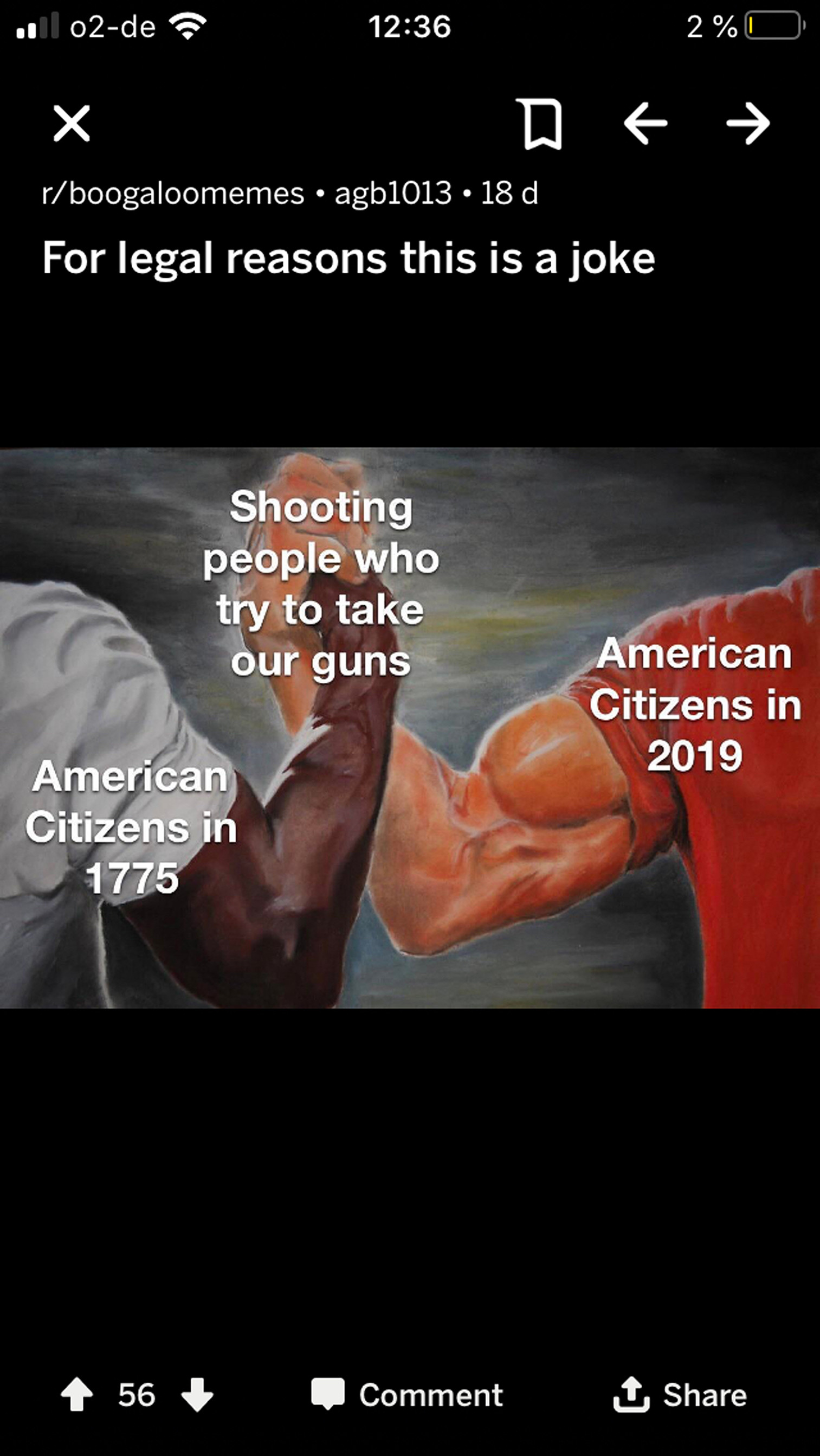
The Strick article for this week was a particularly interesting case as we touched a bit on this topic in our first class week if I am not mistaken. I mentioned back then that it came as a complete surprise to me that what I had perceived as a harmless medium for people to get a cheap laugh could be utilized in a way that “repeats or reiterates historical fascism.” (Strick) What I feel is of utmost importance to remember is that we should not use the term fascism lightly. Like Strick notes, before applying fascism to any contemporary issue, we must acknowledge that the scenario we are applying it to may not necessarily match the circumstances for which the term “fascism” was born from. (Strick) On a side note, Özçetin also notes that populism is in a similar basket where it is a very vague term that is hard to pin onto things. (Özçetin)

Image from https://journals-sagepub-com.proxy.library.carleton.ca/doi/10.1177/16118944221110451#fig1-16118944221110451.

On this one I’m going to play a little “devils advocate.” After reading the passage the author gave on this image, I couldn’t help but think that this meme was being made to be a lot more than it is. Strick deeply analyses and attempts to explain the meaning behind the meme, and its connection to the far-right. While I don’t think he is necessarily wrong about any of that, I do not think that an internet s***post is going to be the catalyst for some kind of far-right revolution within America. The actual underlying image of Schwarzenegger and Weathers grasping each others hands has no direct connection to linking the war of independence to the present “anti-gun war” It is nothing more than a meme template that is also used for things like the following image… I mean look at the title of the original post, even the author acknowledges that it is nothing more than a s***post.

Image from https://knowyourmeme.com/editorials/collections/the-best-of-epic-handshake

I think that the big takeaway here is that memes can serve as a potential host for political rhetoric, but we must remember that in the end they are mostly if not entirely harmless s***posts that no one should give the time of day to. Because that is where the real problem can arise. If you give these posts your time of day, you are doing exactly what their creator wants you to do (aka reading and trying to understand their discourse).

Sources:

Simon Strick, “Reflexive Fascism in the Age of History Memes” Journal of Modern European History 22 (2022) https://doi-org.proxy.library.carleton.ca/10.1177/16118944221110451

Özçetin B, “‘The show of the people’ against the cultural elites: Populism, media and popular culture in Turkey” European Journal of Cultural Studies. 22(5-6) (2019):942-957.

https://knowyourmeme.com/editorials/collections/the-best-of-epic-handshake

Pop Culture and Social Media as Political Spaces

By Kaileigh La Belle

This week’s readings focused heavily on media and the transmission of far-right ideas therein. Popular culture and the internet feature heavily in nearly every article. One of the things that I found most intriguing was the construction of popular culture, social media, and the internet as a political space, one which can be connected to but is ultimately distinct from legacy media. The characterizations of the internet/pop culture as flexible, transmissible, and translatable are recurrent in these articles and are, particularly in Doerr’s article, constructed as something conducive to the spread of far-right ideas. While I do agree with these authors that the internet is a space where knowledge can be transferred more rapidly, I nonetheless found myself wondering how these subcultures deal with a ‘containment breech’ so to speak, when these memes/images/narratives are shared outside of their intended audiences and used in ways other than the intended. As these authors highlight, these images/tv shows/memes/etc are manifestations of and situated within particular discourses that are familiar to and therefore legible to a particular person/group. Yet, they are put into a space that is not exclusively occupied by people of that mindset. For example, I was particularly shocked to see the ‘I know the feel bro’ meme in this context, as I have seen similar ones spread in leftist/left-leaning Indigenous online spaces to poke fun at and highlight the irony of settlers panicking about ‘invaders’. While I think the plurality of interpretations can act as a shield from criticism, I do think that the transmissibility of the internet is multifaceted. As such we should consider how it can also be muddling and how that might affect politics.