Putins Foreign Policy

Liam McCrorie

Over the past few decades Russia has been going through a phase of reinvention. The dissolution of the Soviet Union changed the way international politics and foreign policies play out all over the world. With the fall of the Soviet Union, Russia was left weakened and not the international powerhouse it once was. Once the Cold War ended the U.S. had thought they had won the war, which in a way they did, but it gave them the freedom to undertake more foreign missions without the worry of angering the Soviet Union, essentially the States were free to do whatever they wanted internationally, and they did. Immediately after the dissolution of the Soviet Union the EU emerged and rapidly expanded, pushing Western ideals further East and closer to Russia’s borders. Following this the U.S. led a coalition of Western allies to engage in the Gulf War. Without needing to worry about Russia, the U.S. and the West have been able to push their new world order on any nation that resists, which has continued over the past 30 years in many nations, especially in the Middle East, where the U.S. many times has left a nation in a state of total destruction.

            But as time has gone on Russia under Putin has begun to become a player on the international stage once again. And there is clearly one goal in mind for Russia and Putin, to push back against the West encroaching on their borders. With NATO continuously pushing nations to become more Western oriented Russia has been pushed to the brink and when in 2014 Ukrainian President Viktor Yanukovych was removed from office by pro-Western forces, Russia had had enough and Russia has felt it needed to respond with an Iron Fist. This prompted the Russian annexation of Crimea, and since then Russia has backed opponents of Western allies in places such as Syria.

            Putin wishes place Russia back into its place of power it held for a majority of the 20th century and he is doing that by his military campaigns and proxy wars to install pro-Russian leadership, the same way the U.S. has been doing for the past 30 years. But unlike the Soviet Union, Putin is much more proud and less willing to back off from his goals when it angers the West. With the current war raging in Ukraine, Putin is clearly showing he is ready to push back against the West and recreate a buffer zone around Russia.
“It’s Just a Joke, Bro”

Owen Billo

You’ve probably seen someone say the title of this post before. You’ve probably thought about how “”jokes”” can still carry political messages (political cartoons are a thing after all). Maybe you’ve even applied the term “post-irony” to it. This is the underlying theme I noticed in the readings this week.

The Doerr article makes this point the most clearly in discussing the ‘black sheep’ political ads. The ads are creating a moral panic over an issue that doesn’t really exist, and are doing so using subtly racist dogwhistles. However, they can get away with this by playing up the cartoon aspect and using a logo with a cute sun rising over a field. If anybody sees through this facade, the ad’s creators can simply deploy “it’s just a joke” and a series of rehearsed “”free speech”” soundbites.

This series of rhetoric is also present with Charlie Hebdo as shown in the Neffati article. Under Philippe Val, Hebdo published comics portraying muslims as dark, barbarian invaders aiming to colonize Europe. When this was criticized, Val simply labelled his critics as anti-semites. Val’s reaction exemplifies the next stage of this rhetoric: the victim complex.

Present in both Hebdo and the online circles discussed in the Strick article are islamophobes comparing themselves to Holocaust victims. Obviously, none of these people are anywhere near as oppressed as Jews were, but as Strick points out they still (falsely) claim to be victims of a genocide – the “great replacement” conspiracy theory. The great replacement conspiracy theory was already present in Hebdo, but it takes much longer to write and debate these ideas in magazines than it does online, so these online discourses accelerate the conspiracy theory.

Relevant documentary, if you have the time. There is a good discussion to be had about this on whether it’s post-irony or meta-irony (terminology explained in the video)

Anti-Genderism and it’s intersection with Right-Wing Populism

By: Cyrus Hutnyk

This week’s content looked at Anti-Genderism and largely how Right-Wing Populism ties into the conversation on the issues. Notably, the reading from Paternotte and Kuhar go into detail outlining the differences between these topics and makes clear that these are not the same, despite might what be the expected association. At first glance, even before doing any reading I make the connection straight away seeing only the words “anti-genderism” next to “right-wing”. As a rule of thumb I understand the further right leaning a person is the more they might subscribe to ideologies like anti-genderism, alongside a whole host of other hateful thought patterns. I associate right-wing ideologies and stereotypical thought to be largely associated with hate and enforcing often religious beliefs on to others, which is often a key point in the discussion on anti-genderism. The discussion concerning the divergence of the two topics is interesting because of how often associated aspects of each are associated with the other. Anti-genderism is understood to have grown from Catholic and Evangelical origins; religious origins, with the parallel being that right-wing arguments and ideologies often hold religion close the heart of them. Obvious examples being that of arguments against abortion or in homophobic or trans-phobic thought.


This subject matter is very important and very topical, understanding anti-genderism alongside many other right leaning ideas about gender and sex are unfathomably harmful and serve only to hurt innocent individuals who don’t fall within the worldview of those who subscribe to these ideas of right-wing populism. Despite the arguments that these are separate issues present in the readings it is important to identify and understand the intersection of these topics to best comprehend and work to abolish issues of hate and bigotry.

The Deal with Overt and Subvert

By: Hannah Long

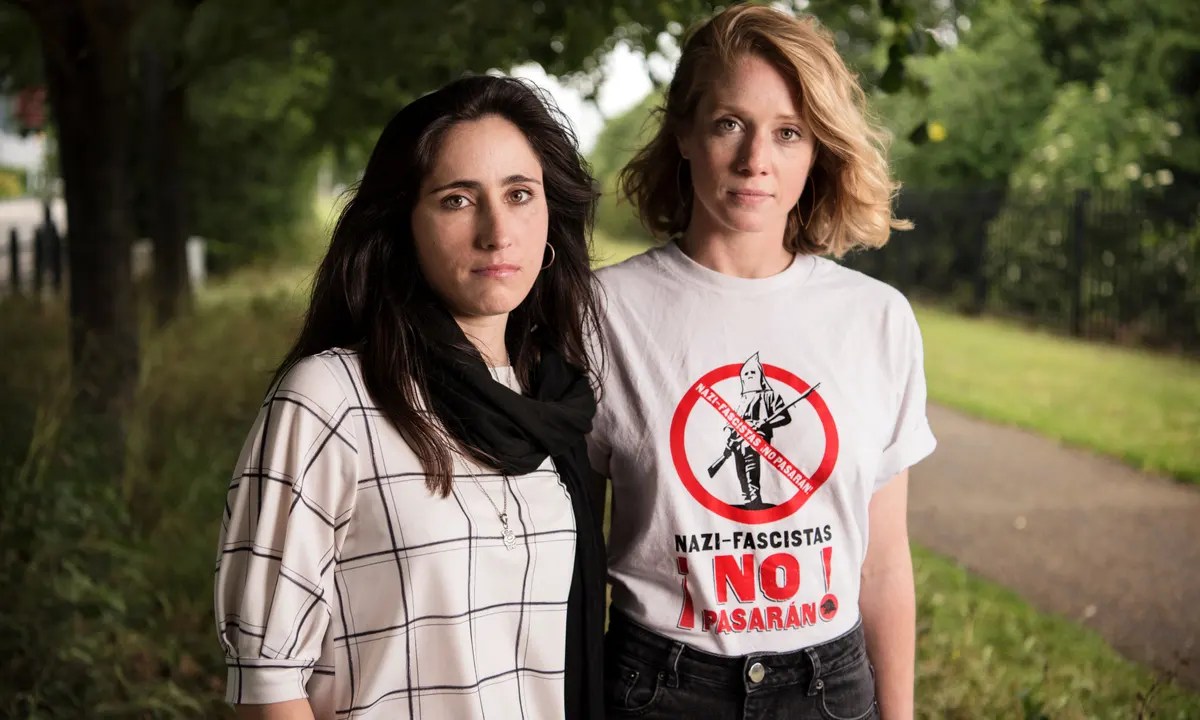
Melania and Chris. Credits for Photograph: Linda Nylind/The Guardian

The role that anti-gender populism plays is either an overt game or is subvert, all of which heavily depends on the social and political factors of a given nation. The two best examples from this week’s readings to prove this are the analysis of Poland, Hungary, and the UK’s struggle with anti-gender populism. All have the similar struggle of overt opposition towards members of LGBTQ+ communities but it is only the latter where this growing problem is seldom seen as a major issue both nationally and internationally. The fact that some countries are under more scrutiny than others over anti-genderism comes down to their international reputation and their further relationship with the Western World, as both Poland and Hungary are two countries in Europe who are constantly discussed as being one of the most dangerous places for LGBTQ+ members to live, with the homophobic rhetortic being much more inforced than other countries such as the UK. Both Hungary and Poland have had difficulty transitioning into a democratic society Post Cold War, with having no direct sense of where and how each government wants to direct national politics this can provide some clarity as to why both are leaning in to the far-right agenda more than the UK, as they both were countries in a constant state of transition due to two World Wars and the resulting aftermath of the Cold War. 

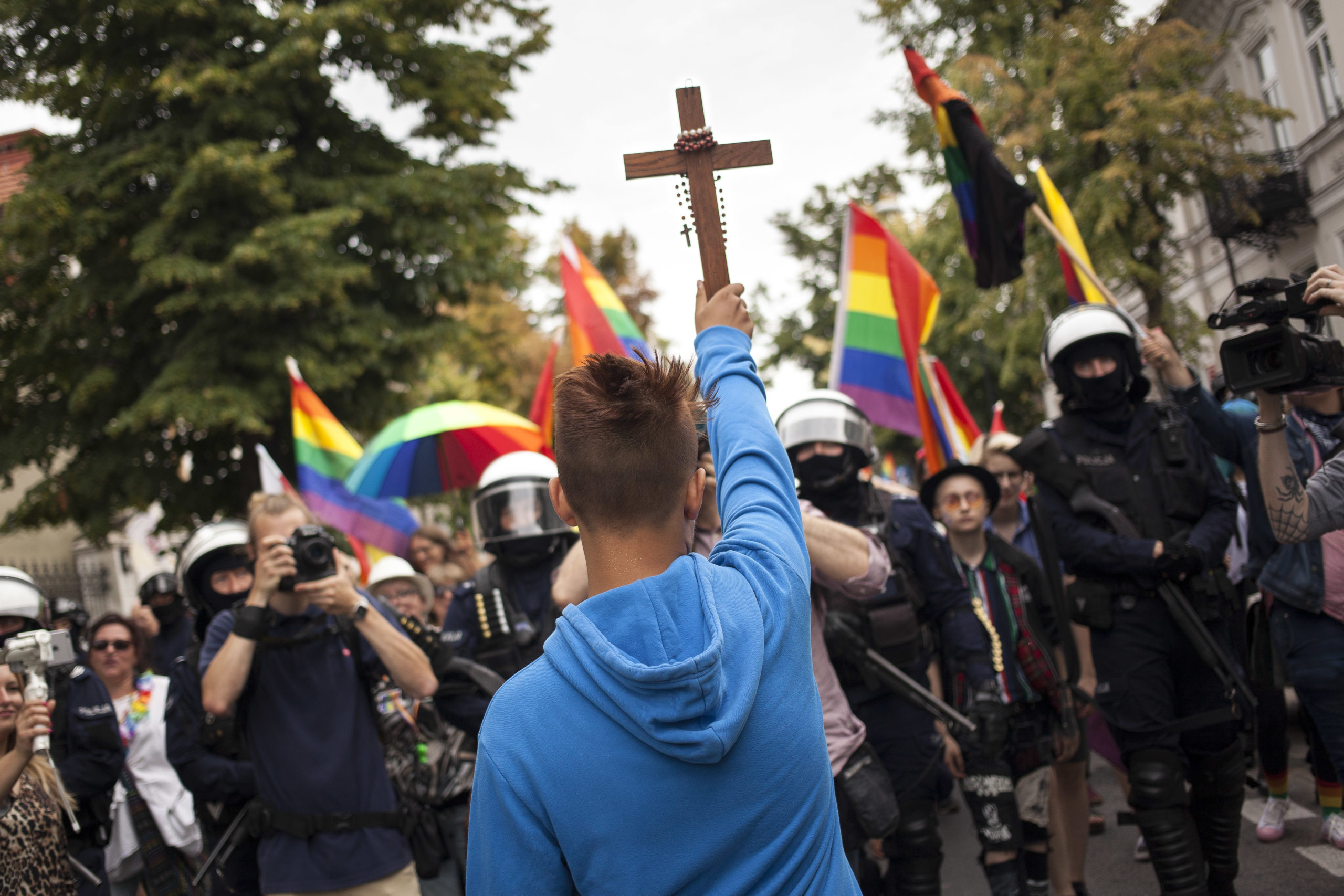
Participant of counter demo tries to block Equality Parade in Plock, Poland on 10 August, 2019. (Photo by Maciej Luczniewski/NurPhoto via Getty Images)

Now all of this is definitely not to excuse the behaviours of those who continue to play into anti-gender populism and the growing intolerance towards LGBTQ+ communities, it does provide a basis to understand how these issues are allowed in their own countries to continue to grow without any direct consequences. In the Vice mini documentary it introduces Aleks Bach-Gapinski, a member of the LGBTQ+ community who lives in a constant uncertainty over the direction Poland will go during the 2020 elections, there is one part of his interview where he discusses being the victim of homophobic related attack. The video does not provide any sense that this attack was taken into just action by the police, seemingly being ignored with Aleks being left with no real justice. The Guardian article highlights a similar issue that took place with two women being targeted and assaulted in another homophobic attack, the only difference being that the attack here became blasted across national media, condemning the attack, the growing far-right, and the attackers themselves. Two completely different responses to two attacks that stem from the same problem, and while it may be easy to champion the national response in the UK over Poland’s, the problem still doesn’t go away, in fact it only provides a façade that populism isn’t as much of a concern in comparison to countries like Poland. Which is part of the problem itself, a condemning reaction can only provide so much protection towards political ideologies.

Sources:

https://www.youtube.com/watch?v=2g2IQoALZUA&t=2s

https://www.theguardian.com/uk-news/2019/jun/07/two-women-left-bloodied-in-homophobic-attack-on-london-bus

Sarah Marsh, Aamna Mohdin and Niamh McIntyre, “Homophobic and Transphobic Hate Crimes Surge in England and Wales” The Guardian, 14 June 2019, https://www.theguardian.com/world/2019/jun/14/homophobic-and-transphobic-hate-crimes-surge-in-england-and-wales

Trans teens in today’s Hungary https://www.pinknews.co.uk/2021/03/24/colors-of-tobi-bfi-flare-alexa-bakony-hungary-transgender/

Transphobia and gender studies

While the reading on homophobic and transphobic crimes increasing in Wales and England is of course something that should be of concern, I certainly wonder if Right-Wing populism is really the key factor in this increase. While I of course do not mean to undermine the dangers of populism and their antagonism towards the LGBTQ+ community, I feel that the article fails to consider perhaps the opposite lens, which I would assume is a general increase in openly trans and homosexual identification. I assume that in the same years that these crime rates increased (in this case between 2013 and 2018), there was likely a similarly large increase in openly LGBTQ+ members in the community. Especially because the article focuses on crimes per capita (rather than crimes proportional to the size of the community or perhaps the increase in crime in proportion to the growth of LGBTQ+ communities in the UK), I feel that the conclusion drawn is largely meant to incite fear of a proposed “huge” growth in homophobic and transphobic crimes. I feel the article is right in addressing right-wing populism hate, but the methodology of this article certainly seems flawed.

On another note, I felt it important to talk about the CEU. While our reading talks about a bill in April 2017, it was written at the time of it happening. Of course not to the authors fault, but this means it fails to highlight that the CEU was actually forced to move its main campus to Vienna as a result of this bill, which I feel is a big loss and alarming thought for gender studies in the country. In this regard, the article was perhaps a bit over-optimistic in their outlook on the situation, which certainly looked much grimmer only a year later.

Anti-Genderism vs Right-Wing Populism

Megan MacRae


The content covered this week made it very notable that although anti-genderism and right-wing populism share similarities, it would be incorrect to consider them to be entangled with each other. Specifically, the reading from Paternotte and Kuhar explicitly emphasizes the fact that these two topics should not be considered ‘the same’.

In all transparency, prior to reading this week’s materials, I would have associated anti-genderism with right-wing populism. This is due to the discourse that surrounds both of these issues. However, Paternotte and Kuhar made a great point by noting the differences between these two issues.

It is noted that while anti-genderism stems from the Catholic project and can be found in debates amongst the New Evangelization project, right-wing populism is not necessarily a religious phenomenon. Although this does make complete sense and is something I agree with, perhaps it still struck me because of how often right-wing populism uses religion in its discourse. Whether it is using religion to make a pregnant woman feel guilty for having an abortion, or imposing their faith on two gay men who are looking to get married, I do strongly feel that right-wing populists utilize religion in their discourse. Of course, I do not want to generalize right-wing populism as it is such as complex and vast issue, but this is just what came to my mind throughout Paternotte and Kuhar’s article.

The material for this week definitely brought more awareness to the needed separation between anti-genderism and right-wing populism. Although I would personally consider both of these issues to stem from places of xenophobia, I do understand that they involve various discourses and therefore it is not accurate to label all right-wing populists as attackers of gender identity.

Gender = Communism – Is Poland’s right-wing discourse lazy or sinisterly simple and effective?

By Frank

Going into this week’s readings, in particular the ones about Poland, I had a thought: Is there a dynamic going on where mainstream politicians and institutions are borrowing (and normalizing) anti-LGBTQ rhetoric from fringe far-right parties, similar to what happened in Hungary with Islamophobic discourse (if you recall Ivan Kalmar’s article from last week)? It appears to me that, in the Polish case, this discourse is actually coming straight from Law and Justice politicians, President Andrej Duda, the Catholic Church.

One example (of many) was the comparison of “gender” to Marxism and communism. As Zuk (2019) highlights, this is a conscious act of persuasive inference to discredit the LGBT gender and sexual identities, as well as pro-abortion policy. This discourse also lumps together many of the Catholic Church and right-wing’s “enemies” into a single, easy-to-denounce category, absolving any of the nuance or differences between these issues. In the vice video, Duda’s campaign speech that denounces “gender” as the (even more dangerous) successor to Marxism. To the Catholic Church, “gender” is supposed to be a new version of dangerous, leftist ideologies, a new disguise of Marxism, which this time took the ‘cultural’ rather than the ‘economic’ form (Zuk, 2019)

This type of rhetoric not only positions gender as an ideology (which is highly problematic), but also portrays it as a threat tantamount to communism that the Polish people must be protected from. It fans the fear of national fragility, that when Poles or Hungarians or French nationalists, fear a perceived tyranny of a minority (LGBTQ, Muslim, Romani, etc.) that is seeking to undermine the values of the majority.

The Fight Over Gender

By Blaise Rego

Anti-gender thought and ideas have become mainstream across Europe over the past few years. States ranging from the UK to Hungary have tried to combat the idea that gender should be taught as a construct. There are massive difference’s though on ow and why this occurring.

In countries like Hungary and Poland the pressure of anti gender/LGBTQ+ comes from top down pressure that is initiated by the government in power. Their leaders have made pushes that try to eliminate discussions about gender and sexuality, this has allowed and normalized attacks and violence against this community. In theses communities we have seen resistance in the form on new media as discussed in the pink news article, about the transgender teen in Hungary.

In comparison in the UK the anti gender/LBGTQ+, the push is coming from bellow. swells of anti LGBTQ+ feeling have come to the surface following Brexit and further rightwing leaders coming to power. These leaders don’t wish to push off a larger swath of the population so they are not as extreme as eastern European leaders in their anti-gender and LGBTQ+ rhetoric so the swell of violence comes from the population. A greater swath of the population has begun to view discussions later as the “enemy”, stating that it’s a woke liberal agenda that is destroying conservative views.

this is the same and result as we see in Poland and Hungary but with this main difference being that where the push of this anti-LGBTQ+ sentiment comes from is inverse. This is an uninspiring result that is worrying for the future of gender discussions going forward.

Gender and Sexual Orientation discrimination: the New Racism

The concept of genders as we know them have changed and transformed in the last years. They have been molded to accommodate the situations the best they could to fit the individuals that did not find themselves fitting in any other gender class. Sexuality on the other hand is something that has been around for a long time, and people can’t seem to accept persons that are homosexuals or members of the LGBTQ community. As Judith Butler reported in her article, Hungarian schools have started to eliminate gender teachings under the pretext that it could turn their children to different sexual orientations. England as well as Poland have also picked up homophobic and transphobic movements as they fear that left uncheck, they will corrupt their youths and change their society for the worse. But like it was showcased in Sarah Marsh’s text, the members of LGBTQ groups are ordinary people that are scared of the right wing aggressiveness and are now uncomfortable to be themselves in public. When we think about it, it does not seem that there are reasons that sexual orientations and gender association would be bad, but the keyword that is exploited here is difference. People don’t like changes and their fear of it becomes exploitable, just like with racism and antisemitism. It makes these minorities easily targetable for right wing hate as they just try to live and exist just as anyone else. Since racism is perceived very poorly, it gives another reason to target the LGBTQ community as it is a “disguised” form of racism.

No entry:

The Exploitation of Italian Borders:

Created by: Francesco Sacca

An article form the New York Times tells the story of a Pakistani man who suffered countless difficulties and abuse when trying to find a way from the problems of his homeland. He survived a journey of no less than 18 months across Croatia and Slovenia only to be turned back by Italian guards patrolling the border. The article then goes into detail about the treatment he received by Croatian police, stating that he was beat with “batons wrapped with barbed wire as he lay handcuffed”.

This story, however horrific, is not an isolated incident within the Northern border of Italy. In the year of 2020 alone, it is said that over one thousand people that received this ‘informal return’ upon their arrival at the Italian border.  

This image was taken by Marko Djurica and it is described as a line of migrants waiting in line for food in the northwestern region of Bosnia and Herzegovina.

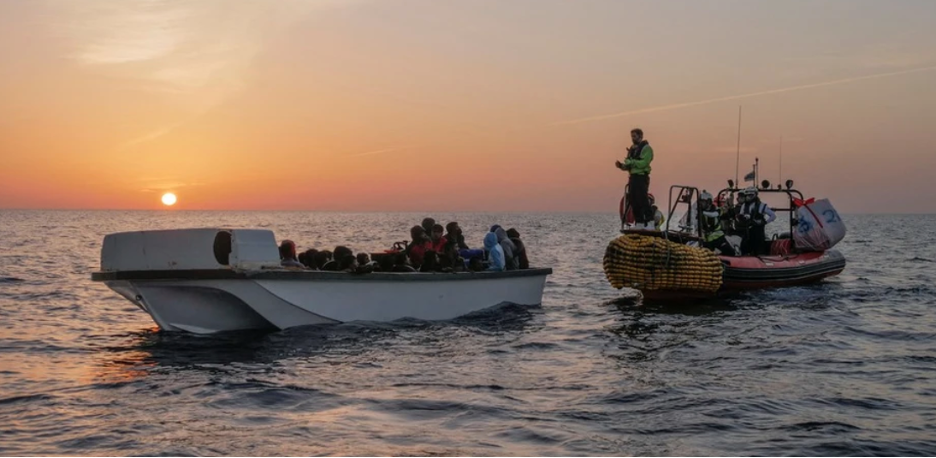
While the government of Italy has produced explanations for these “returns” as actions to prevent the spread COVID-19 in Italy, the state in which people are found in when rescued by independent NGOs, qualify as conditions that should not warrant a refusal by Italian border control. This statement is reinforced by more recent events that are discussed in the Ottawa Citizen, which discuss the arrival of NGO vessels in Italy carrying people who were rescued at sea. The article states that Italy “has been instructing them [NGOs] to ports, where authorities allow only vulnerable people to disembark. Italian authorities insist the boats must then return to international waters with those not deemed vulnerable.”. To force these “non vulnerable” people (who have experienced such treacherous conditions in the middle of the Mediterranean sea) to re-enter International waters, should not be an option. It should not be up to the Italian border control (whom all act through the directorate of the Italian government) to decide whether or not all rescued people deserve asylum. This statement is also touched on in the article, as “ships are refusing to leave, saying that under international law all people rescued at sea are vulnerable and entitled to a safe port.”.

Image taken from the Ottawa citizen, taken by Camille Martin Juan.

“The far-right-led government of Premier Giorgia Meloni is insisting that countries whose flag the ships fly take on the migrants, and that the burden shouldn’t fall on Italy alone.”. Should NGOs than be forced to take those who are not qualified as (what the Italian government believe to be) “vulnerable” out of Italy to other countries that are more accepting? The refusal for action and responsibility for lives that are at risk should not be classified as a “burden” as Italian politicians like Meloni have classified them to be.

While the argument of this article has shown how forcefully guarded the borders of Italy have been over recent years, the impact of COVID-19 within Italy has not been minimal. Recent statistics have shown that Italy has had over 23 million cases of COVID-19, that is close to half the entire population of Italy, not to mention the almost 180,000 deaths that have occurred within the country. While there are other nations around the world that have had worse results over the COVID-19 pandemic, the importance of this impact on Italy should be an important factor when considering the actions of the Italian government. With that said, these articles have shown that the government of Italy has chosen to utilize these results to further press the resistance/refusal of letting migrants into Italy (even those that are suffering from poor physical or mental conditions). In 2020, according to the Ministry of Health in Italy, during the period of August, less than 5% of those infected with the virus were new immigrants in Italy. In fact, most of the new found cases came from “Italians who had traveled abroad, and many others were foreigners who already lived in Italy and were returning to the country”.

In summary, while there are a various array of explanations given by the Italian government for the refusal of immigrants, the reality is quite cruel. The state in which many of these people are in as they are being turned away is fragile and they should not be treated so reluctantly in the face of such desperation.