I found Charlie Jarvis’ article extremely interesting and telling of fascism in past and present Italy. Jarvis explains that after the 1969 bombing in Milan, neofascist units waged terror in Milan through massacres. Often, Italian authorities were aware of the actions of these neofascist groups. However, the museum established to commemorate the violence that occured does not make reference to the state’s involvement in this period. This is yet another instance in which a fascist state refuses to admit their part in the actions of fascist groups.
I feel that thus far in our course, we have been continuously discussing the fact that most often, fascist’s refuse to recognize that they are fascist’s. We have seen it in Italy, Germany, the United States etc. Despite the fact that individuals and groups will exhibit the core beliefs of fascism, they will vehemently deny that they are fascists. Jarvis’ article seems to echo this continuous theme. Jarvis explains that not only was Italy aware of the role neofascist’s played in the terror of 1969, but currently, the country is closer than it has been since World War II to a fascist regime. At the time in which this article was produced, the leader of Fratelli d’Italia, Giorgia Melino had yet to be elected as Italy’s first woman Prime Minister. However, she recently did secure victory and this made Italians and other democratic nations around the world quite concerned. Despite the fact that Meloni and Fratelli d’Italia descended from a fascist party, Meloni refuses to admit that her party has inherited fascist views. Perhaps this is because she knows that admitting that she and her party are fascists will cause those apart of the moderate right-wing to hesitate on voting for her. Regardless, Jarvis’ article and the current leadership of Meloni both remind me of a common theme present throughout this course; fascists are reluctant to admit their political beliefs, but their actions prove what they truly believe.
Ruth Glynn’s “Writing the Terrorist Self: The Unspeakable Alterity of Italy’s Female Perpetrators” applies the concept of “Women-as-other” to narratives of violence committed by female perpetrators. For Glynn, these women used recognized socio-cultural discourses to navigate both victimhood and guilt in ways unique from their male peers. While Glynn focuses on how these discourses enabled women to publically express their role in political violence, I found myself wondering if the use of established socio-cultural gender discourses lends itself to the erasure of women from our popular memory of violent politics. As Glynn highlights, many of these representations present women as “token terrorists” or “unnatural killers”, and thus as somewhat enigmatic. Meanwhile, Chrisafris also writes about women’s connection to extreme politics. Chrisafris points to numerous examples of far-right female politicians attempting to legitimize their positions in these misogynistic movements by presenting themselves as “tough-skined warriors”, taking on traditionally masculinized traits. Additionally, Chrisafris points to several examples far-right women presenting themselves as protectors of women who were “pushed” to join movements because inadequacies in the current system. As such, it became apparent to me that this continuation of gendered discourses allowed women to situate themselves in these movements, both as “natural” and “unnatural” political figures. As such, the use of established socio-cultural discourses on gender present both victimhood (particularly associating femininity with vulnerability) and guilt (by presenting women as masculinized warriors), distancing femininity from blame for these actions. Furthermore, I feel that it becomes easier to erase women perpetrators from our popular memory of extreme political violence as the naunce it requires questions the gender binary, which prefers to associate masculinity with violence and femininity with vulnerability. Overall, Glynn’s use of the “women-as-other” concept was quite thought-provoking for me as it can simultaneously be used by perpetrators to situate themselves in popular memory but also encourage us to exclude women from popular memory of these events.
One thing that really stuck out to me in the readings for this week was the Guardian article, by Angelique Chrisafis in Paris, Kate Connolly in Berlin, and Angela Giuffrida in Rome; as well as the Hyperallergenic one by Charlie Jarvis. Perhaps this is because my major is journalism, but reading more recent examples of a fascist-leaning movement than older ones brings a more meaningful understanding as it is happening in real time.
In the Guardian reading, it really struck me how more women are moving towards a nationalist populism that was once so dominated by patriarchal ideology. Perhaps it is suggested that they are moving away from feminism as the article says. However, Le Pen rejects the term “feminism” because they associate it with an instrument of leftwing nonsense, replacing it with what the definition is, “women’s rights”. The Italian rightwing populist parties are targeting women as well with controversial messages that immigration brings misogynistic cultures that threaten freedom in Europe. These immigrants are mostly from countries with high Muslim populations. It all seems like a very manipulative scheme which we have seen in the west too, particularly in the United States.
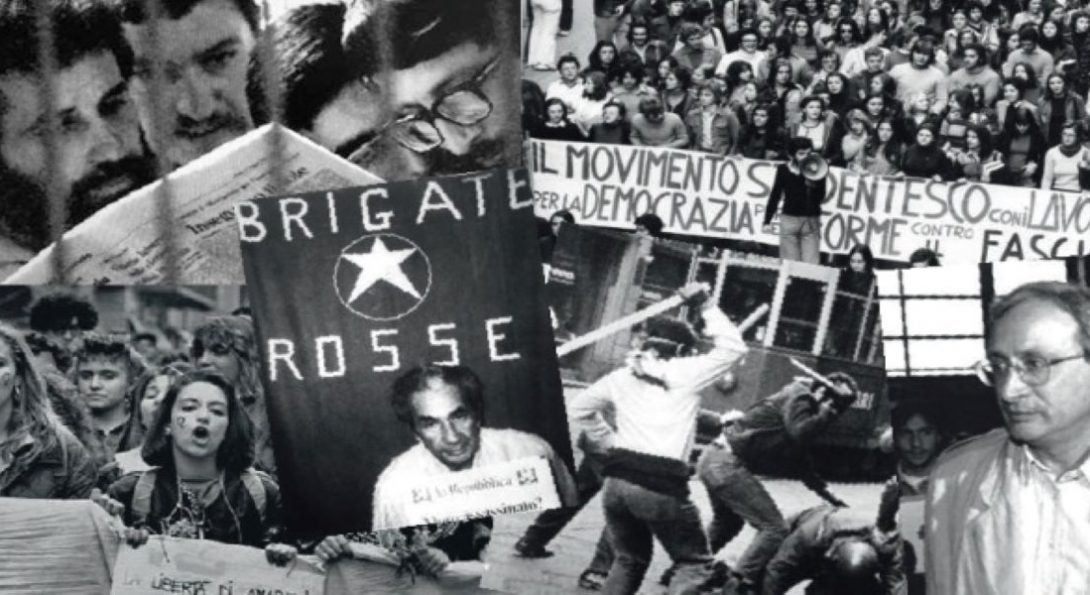
Jarvis talks in his article about a massacre at Piazza Fontana in Milan, Italy. He also touches on how far-left groups (yes, left. Not right) like the Brigate Rosse waged war against the state through kidnapping and targeted assassination. However, the neofascist cells also sowed terror with massacres such as the one at Piazza Fontana. I liked how one journalist worded it, “the bombs that changed Italy.” Jarvis makes a connection with these relationships in regard to a museum. He explains that remembrance enables reconciliation between victims and perpetrators and also between the far left and extreme right.
Of course other articles this week also touched on Italy and its fascist past and present. But these two went really well together in explaining not only what has happened previously between the left and rightwing parties and supporters in Italy, but also what has been going on recently as a “look forward” type of ideal.
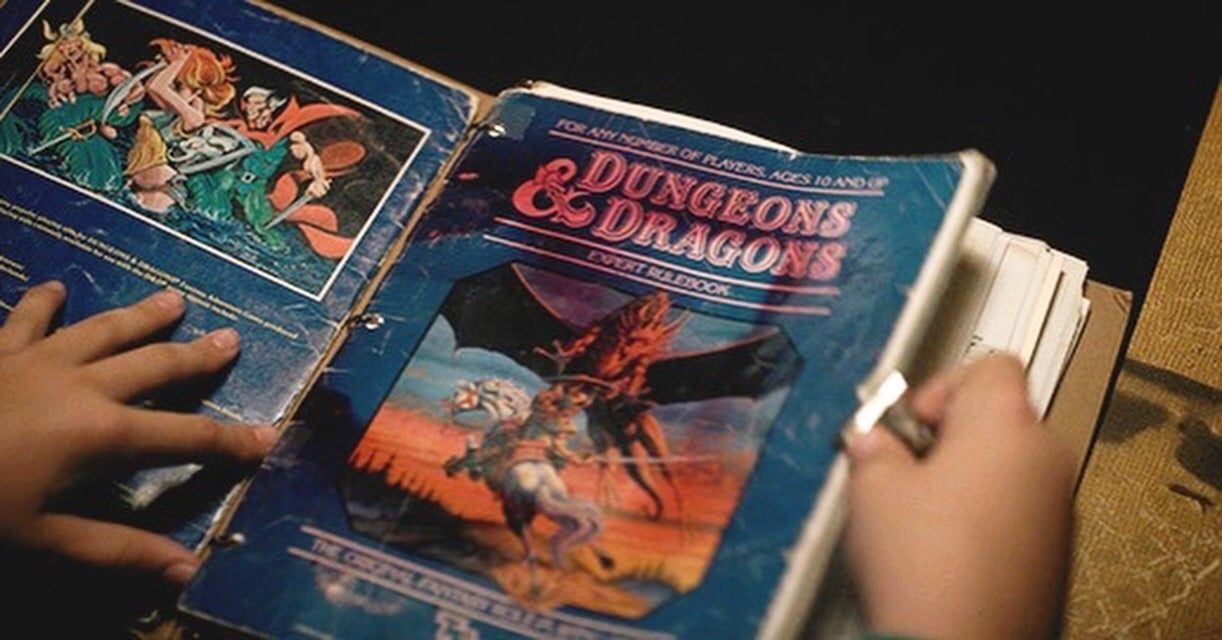
With this D&D renaissance, the stereotypical image of the anti-social cis-hetero white guy is no longer reflective of its diverse fanbase. Yet, despite the company’s commitment to inclusivity, players remains doubtful that the game may ever reconcile the harmful beliefs that underlie its core mechanics; namely, how themes of biological determinism reinforce White Supremacy in Dungeons and Dragons.
Biological Determinism
Biological determinism refers to the belief that human characteristics are determined by hereditary factors, reducing fluid social identities into strictly biological characteristics. The dangers of this type of thinking should not be understated. Biological determinism is often linked to racist and misogynistic stereotypes, where race and gender are understood not as social constructs but as biological realities that determine someone’s behaviours and overall “character”.
At its most extreme, biological determinism can fuel ethnocentrism and xenophobia. Since behaviour is understood as a heritable quality, biological determinists believe that it is imperative to prevent the proliferation of “bad genes” that occurs when “undesirables” reproduce. Eugenic policies become enforced in the name of strengthening the nation or preventing social collapse, ranging from restrictive immigration to forced sterilization and genocidal extermination.
The biological deterministic foundations of D&D are most visible in the blatant racial essentialism that underlines character creation. The fantasy “races” that populate D&D are ascribed with fixed a set of behavioural and physical traits, represented in the form of “racial abilities” and “ability score increases” that shape character’s personality and skillset.
This situation is made worse by the game’s heavy reliance on racially coded language that reaffirms historical narratives of white supremacy. As many have pointed out, fantasy races act as the vessel to reproduce racial stereotypes, where the physical and behavioural descriptions echo the harmful rhetoric used to demonize non-Europeancultures and People of Colour. The concept of moral alignment within D&D makes these values judgments explicit – dehumanizing “primitive” races like Orcs while justifying the moral supremacy of white-coded races like Elves. Concerns have also been raised over how combat as a core mechanic allows players to enact racialized violence. With entire races classified as “evil”, the game encourages slaughter-without-empathy as part of the player’s crusade to defend an idealized, white-washed, medieval fantasy.
Looking Backwards – Misogyny and Gender Essentialism
Lacklustre attempts to address race essentialism within D&D have left many concerned that the game may never overcome its biological deterministic foundations. However, these critiques fail to consider how biological determinism has been previously dismantled – this time, in the form of gender essentialism.
In very real terms, D&D was not designed for female players. The biological deterministic perspective of D&D creators conceived of the game as a “boys club”, citing that women could never truly appreciate the game like men, who had evolved to enjoy simulated fantasy combat. It’s for this reason that the earliest editions of the D&D playbook exclusively use male pronouns, failing to even consider the possibility of serious female players.
While not meaningfully included as playable characters, essentialist representations of female bodies remained present within the game’s monsters. Female monsters often reproduced misogynistic tropes of women as animalistic and emotionally irrational, unable to control their bodily urges and requiring rational male heroes to tamed them. The monstrous representation made clear that the source of women’s evil was rooted in their hyper-sexualized physicality – a dehumanizing condition that was impossible to overcome and justified violent intervention.
When considering how to manage playable female characters, concerns revolved around how to appropriately quantify women’s physical differences from men. One early solution involved capping the abilities of female fighters’ by reducing their strength modifier and preventing them from surpassing level 10. This ensured that female fighters always fought at a disadvantage that reflected their “natural” weakness and created a sense of “realism” within the game. The appeal to a supposed “biological reality” that made it inconceivable for women to be as strong as men within a fantasy setting underlines exactly how gender essentialism served to reinforce misogynistic and patriarchal ideas about women.
Possibilities for the Future
Examining the evolution of D&D from its 1974 origins to the most recent 2014 release, scholar Antero Garcia traced the shift towards empowering images of female heroes over the course of multiple editions. This change is paralleled by the increasing use of gender-neutral language – going from justifying male exclusive language as “neutral”, to more frequent references towards female players, to eventually vetoing gendered language all together. The result was that by the 5th Edition, D&D has erased the gender essentialist rules and representations that plagued early versions of the game, encouraging an understanding of gender grounded in identity and not biological fact.
Garcia argues that this gradual shift was the result of the changing social context. Just as much as D&D is influenced by its prior editions, it is also informed by cultural forces that shape how the game is understood. However, this explanation fails to highlight the active role of community protest in re-defining the rules of D&D, who’s efforts are visible as early as the 1970s. Dismantling gender essentialism wasn’t achieved passively, but through resistance among female and male players alike. With women making up only 10% of the playerbase in 1979, this solidarity among fans was vital to removing misogynistic rules within D&D.
These protests were strengthened by the presence of Homebrewed content. While the official Players Handbook acts as a starting point for gameplay, it only holds as much power as the adventuring party allows. In a game predicated on imagination, Homebrewing can act as a vital space for resistance and experimentation against the distasteful elements of biological determinism.
Just as meaningful change was implemented to address gender essentialism, similar possibilities exist for dismantling White Supremacy within D&D. Vocal disapproval and solidarity among the fanbase is vital to ensure official rules are inclusive and reflect the needs of modern players. In the meantime, Homebrewed content offer alternatives paths to dismantle White Supremacy within personal campaigns – a process already underwayby the community.
While there is no mistaking the harmful rhetoric that underlined the game’s creation, it is ultimately up to the players to determine for themselves the future of Dungeons and Dragons.
For me, this week’s readings worked well to show us how the neo-fascist actors in three countries operated in the midst of their wilderness years. The connection with the idea of an interregnum period was clear.
I was surprised to see the term “deep state” used for a phenomenon that actually seemed appropriate (unlike its reuse in the US in recent years). Embedded fascist sentiment among “leading members of the armed forces, the security services, and the bureaucracy” was poisonous in Italy during the “First Republic” – and likely beyond. They were involved in terror attacks – and due to their positions in the state were often able to falsely implicate leftist actors.
During this time, the MSI – in spite of its transparent neo-fascist nature – was able to participate in legislative elections and was actively concerned about increasing its support.
Britain’s National Front dreamed of transnational links with dictatorial regimes in Libya and Iran as well as the Nation of Islam in the US. The link seemed necessary to the establishment of a Third Way (between capitalism and communism) which had to be on a global scale. The fact they were not taken seriously by any of these makes them seem rather comical.
The Mammone reading highlighted for me the lack of a coherent doctrine among neo-fascists in Italy. This was not actually a surprise given our discussion in recent weeks of the “whatever works” nature of fascist politics. To the rescue came Benoist, with his ND (Nouvelle Droite) structure and Gramscian ideas about building an altered culture to the right’s benefit. This was immediately embraced by Italians who cloned their own ND (Nuova Destra). This was the way out of the interregnum.
The Jarvis article for this week very much reminds me of many of our discussions in previous weeks about German reconciliation with their past. The article describes the terrorist style killings that occurred within Milan, Italy from the 60’s-80’s, which would become notoriously known as the “years of lead”. “The city of Milan’s new “diffuse urban museum” is an attempt to reckon with the violence of the years of lead” (Jarvis). It is undeniably a noble undertaking to commemorate the past, and as the article states, “Confrontation with the past enables us to heal in the present, it claims. Remembrance enables reconciliation between victims and perpetrators, between far left and extreme right, between communities whose own memories have long been fiercely opposed” (Jarvis). Though it isn’t all sunshine and rainbows here, the museum may reconcile with the past, but what it needs to look for what still remains here in the present. Fascist violence is here and now, and you do not need to look very far. The article literally mentions how a far-right Italian politician shot and killed a Moroccan man recently. On this note, the Glynn reading on page 2 talks a bit a bit about how in the immediate aftermath of the “years of lead” in Italy no-one wanted to take part in any kind of wide-spread discussion on what had happened. While it’s understanding that mass killings will obviously be hard to talk about, if discussions aren’t had, and if understandings cannot be created between differing parties as to how and why these things happened, then what is stopping the violence from continuing? As we can see with the aforementioned recent killing of the Moroccan man apparently nothing.
The far-right, traditionally, has been characterized as climate denialists; however, there has been a shift amongst some far-right parties to adapt their messaging on climate change as a means to appeal to a broader range of voters, who are concerned by and feel the effects of climate change. Attempts to address environmental policy within the far-right’s political platform has been met with criticism, namely for being nationalist and ineffective. The approach that has been taken by the far-right to the environment is not novel and can be seen as a re-emergence of previous and was already widely accepted solutions posed to environmental concerns.
In how it is understood today, the field of environmentalism has been considered to be left leaning with international efforts that focus on cooperative solutions. However, the earlier developments on solutions to environmental issues were perceived had to have strong racist underpinnings.
Scholars such as Thomas Malthus and Paul Ehrlich were two influential figures in the environmental space both of whom framed impacts on the environment as stemming from the overpopulation occurring in the global south. Solutions to the perceived issues of overpopulation was framed as a call for depopulation and was an idea that was widely embraced by prominent environmental groups, such as the Sierra Club. This approach overlooked the impact of consumption and how developed countries have a greater contribution to environmental degradation than those with larger populations and that populations within the global south will be impacted the most by climate change. Consequently, the ideas promoted by Ehrlich were used to promote anti-immigration agendas.
The re-emergence of these racist and anti-immigrant responses to address environmental concerns can be illustrated through France’s far-right party’s, the National Rally, inclusion of environmental policy in their platform. This shift most notably occurs between the leadership of Jean-Marie Le Pen and Marine Le Pen.
As previously discussed, Jean-Marie Le Pen falls into the traditional category of far-right leaders’ response to the environmental politics, which consists of denying the human contributions to climate change. Even with his dismissiveness towards climate change, Le Pen echoed Ehrlich’s concern to overpopulation and stated that Ebola could serve as a solution to the population explosion and Europe’s immigration problem.
Although Le Pen has incorporated the environment into the National Rally’s platform, it has been met with a wide variety of criticism for being nationalistic and a form of greenwashing. Additionally, Le Pen has also tied the environment to anti-immigration rhetoric in stating that migrants “do not care about the environment [because they] have no homeland”.
In turn, the far-right’s approach to environmental policy has gone beyond being simply denialist and has rather drawn from previous widespread and racist interpretations of environmental solutions. This can be exemplified through France’s National Rally’s nationalist, xenophobic, and anti-immigrant solutions to environmental problems. However, these approaches to the environment are concerning as they can lead to larger implications than just ineffective policy. Ehrlic’s framing of overpopulation as being an environmental issue is still fairly recent and the recirculation of these ideas into public discourse can lead to racist environmental policies being considered as an acceptable solution.
What stood out to me again in this week’s reading is the simultaneous hatred and overlap between far right populism and far left populism. The Mammon article notes that both groups sought to end the neoliberal capitalist order, and in that respect they had common goals and actions. From last week’s readings we also know that some members switched sides. At the same time, the Amyot and Glynn articles discuss Italy’s Years of Lead where the common enemy was the Italian Communist Party rather than neoliberalism, and the fascists and (neoliberal?) conservative sides worked together against them. Yet when the Italian conservatives (Christian Democratic Party) accepted the socialists into the governing coalition, they aggravated the right and a fascist coup started brewing. What all of this tells me is that, probably throughout Western Europe, all three sides generally hated each other and only worked together if they perceived one side as growing too strong.
Somewhat separate from this was the British National Front, which vehemently opposed both neoliberalism and communism, perceiving them as being the same. Rather than trying to balance out the aforementioned sides, they instead worked with islamists and black nationalists. Another, less bizarre alliance is that of the populist far right and the women who join it. The Chrisafis article says that the populist far right has a sexism problem but women still join it (primarily, but not necessarily) because they fear immigrant cultures. On the other side, there were also women active on the communist side in the Years of Lead, which might be less surprising but it should be noted that the Italian communists were also heavily male-dominated. Perhaps the common theme, then, is that populist groups will make alliances with just about anybody if they feel it’s in their mutual interest or if they feel some sort of kinship.
What do we know about Fascism? Are the only markers to which people can identify these forms of ideals dressed in the colours of red, black, and white and in a time that has long since passed? Or, is fascism much more prevalent in modern society then we care to know or freely admit?
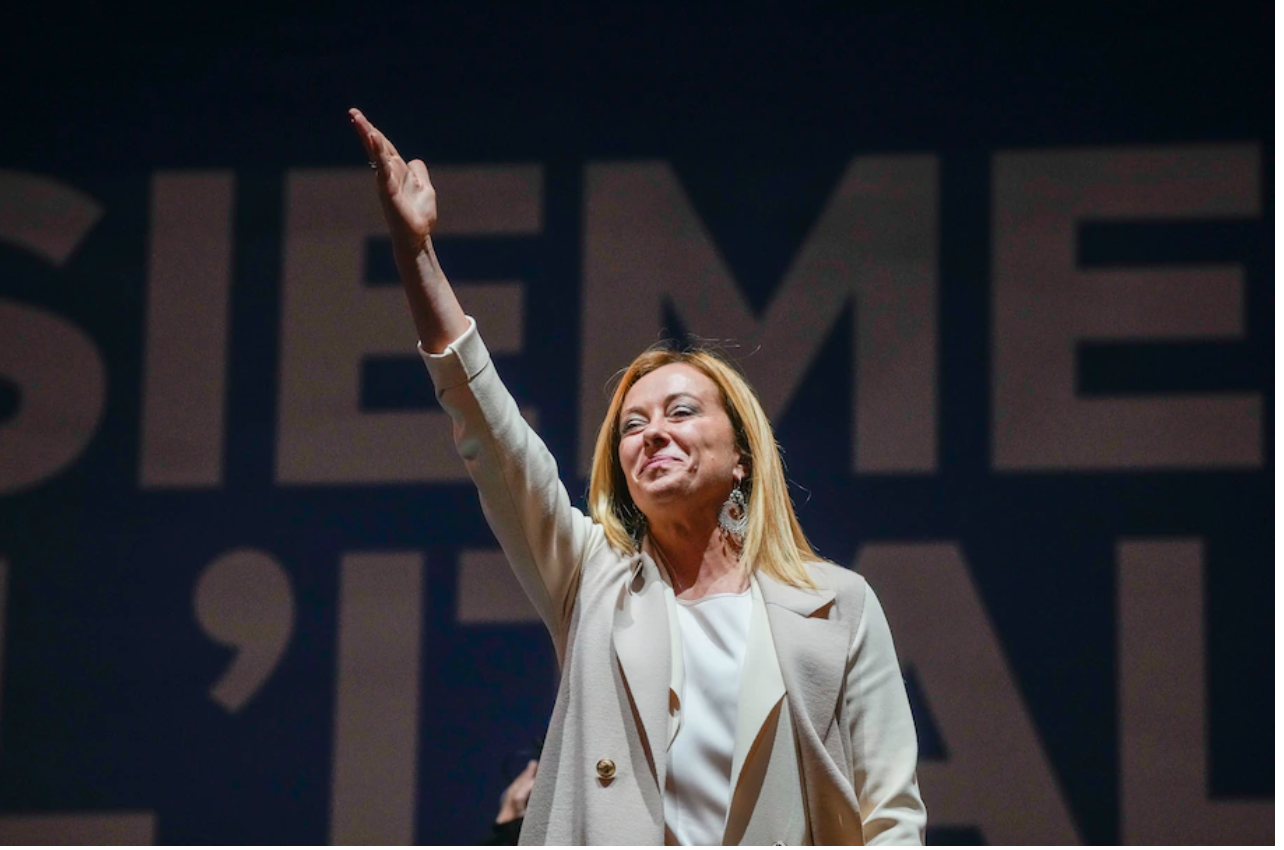
To truly understand the impact of modern fascism, we must challenge our assumptions and not allow ourselves to compare it to so literally to the totalitarian school which we so easily do. We must look at the foundation, the root of fascism and how modern governments and people of the global north have conducted themselves in ways that are in accordance with the practices of fascism. In this opinion piece, a focus will be placed upon the future prime minister of Italy and leader of the far right party Fratelli d’Italia, (brothers of Italy) Giorgia Meloni.
As a politician, she has also succeeded in creating a veil around her campaign openly claiming that she is not a fascist, yet still representing the ideals of fascist parties that came before. Meloni creates this vagueness around her ambitions by following trends on media and approving the more accepted ideals; “She condemned Russia’s invasion of Ukraine and has been vocal in support of NATO and military aid for Kyiv”. This is an intelligent political move on her part because this adds to her portrayal to the public. If she were to admit herself to being a fascist publically, approval ratings would be sure to drop as committing to such a title would inspire fear and go against her campaign.
What may be forgotten in history as well are the roots to which the party that Meloni is apart of; “Meloni’s Brothers of Italy can trace its origins to the Italian Social Movement, a small neo-fascist party founded out of the ashes of World War II by Giorgio Almirante, a former chief of staff to Mussolini.”. Meloni is a symbol of ambiguity, she preaches and portrays hope for Italians in times of difficulty all the while hiding the goals and history for what she represents.
What Will Be the Result?
With all of this information to digest on Meloni and her ideals, there comes the question of “where could the next domino fall” ? Whether this was done on purpose or not Rachel Sanderson seems to have made a connection to the “domino effect” theory that originated in the United States during the Vietnam War, focusing on the issue of Russia and the spread of communism around the world. Is Meloni a mere change of reform that will have little impact on Italian history as a whole, or is she yet another stepping stone to the control of far right enthusiasts in Europe. If the latter, will this mean a return of the “roots” of the old power hungry and hateful regimes that we are so familiar with? Who can say for certain.
When the term Far-Right is used, the images that usually come to mind are of polarizing leaders, from Mussolini to Bolsonar, this coupled with harsh regimes and above all else an active animosity towards those who question this way of life are often regarded as the definition of this ideology. However in recent years people’s association with the far-right has come to extend to the role of female presence as well, leaving many of us to wonder why women are becoming more involved in a political arena that includes discourse and legislation that have historically been against women.
The construct and concept of gender has been a long running discussion in society, shifting to meet different social changes overtime, however the perspective of gender and its place in a societal construct has remained the same in the eyes of the far-right for some time. Whereas, other political schools of thought constantly shift attitudes for any given period the Far-right does not, rooting their principles in traditional values linked to the great societal effects of industrialization and nationalism. The presence of women appears to rise after major historical disturbances, as many of the effects felt by women cause a dissolution between themselves and mainstream society, feeling forgotten and isolated. The feeling of Isolation is a common occurrence throughout history that has often led to great division, a division that can be felt and seen socially, politically, and environmentally in societies. The feeling still remains in today’s societies as the death of loved ones through tragedy, layoffs during recessions, a general dissatisfaction of current life, all of which push many women to seek the far-right and its doctrine as a means to reinstate what they believe to be theirs. And while women have certainly not been on the minds of the right-wing agenda, in recent years it seems as if present groups today have realized the significance women hold to not only the support of their party, but the future of it as well. In the late 2010’s a study conducted over Germany’s populist group, Alternative for Germany along with other right-wing parties and movements found that women were becoming more drawn towards this sector. Elisa Gutsche who was an editor with The Friedrich Ebert Foundation (the facilitators of the study) suggests that the AFD’s catering towards child benefit initiatives coupled with the idea of prompting a society that will provide these future children with a “welcoming culture,” are key reasons.
The promise of providing a better tomorrow is nothing new in politics, especially when it comes to the right and traditional push towards ideas of motherhood a concept that was present in the Weimar and Nazi eras. With the fascist’s of this period appealing to women that their marriages and children would see the country into a wonderful future, an eerie similarity when you take into account that the state just like the present day AFD did so to in sure that desirable births would outweigh the undesirable, meaning that women were only a means to achieve their end goal. I think it is plainly obvious that the belief of recognition is at the core for those who do chose to support misogynistic and anti-feminist rhetoric, there is a detachment between far-right women and those who remain outside of fascist ideology. Creating a separate sphere that women both past and present could feel a greater providence towards what they believe targeted their core social needs. These needs have largely remained the same over time, such as “fears of social exclusion and financial strain,” as well as access to child related services. It is a common concern that transcends both time and place as many American mothers post Second World War and many current day blue collar workers in Austria, share the same opinions, and are both contributing factors to the diminishing gender gap in the far-right. The exact length of women’s involvement in right-wing politics is a long and complicated saga, something that can definitely not be explained within this post. However, what can be analyzed is how past events, fears and the overall treatment of women in our societies has led for many to see these extreme views as the right way to go.




 Hate 2.0
You must be logged in to post a comment.